
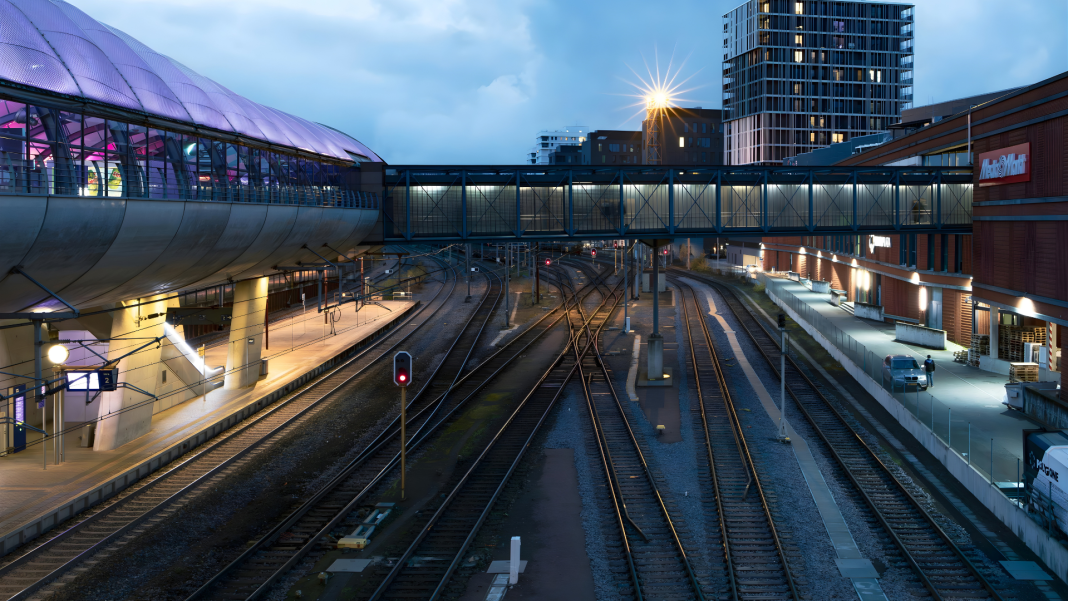
In March 2020 Luxembourg became the first country to abolish public-transport fares. Five years later, the experiment has moved from bold promise to everyday infrastructure, reshaping commuting habits, easing financial strain for students and low-income households, and reinforcing Luxembourg’s appeal as a cross-border economic hub. Can €0 mobility keep delivering as demand grows and the system scales?
“Free public transport makes a genuine difference in people’s everyday lives,” said Yuriko Backes, Luxembourg’s Minister for Mobility and Public Works. The removal of fares lowered the upfront cost of moving around the country and simplified access for people previously deterred by tickets or administration, contributing to sustained growth in ridership across trains, trams and buses and to higher use of park-and-ride facilities as commuters combine modes.

“It eases financial pressure, particularly for low-income individuals and households, gives people greater freedom and more choices in how they move,” said Backes. For students, apprentices and low-wage workers, the cost of each trip effectively fell to zero, widening access to education, work and services and lowering the friction of daily mobility.
Building the cake before the cherry
Luxembourg’s pioneering policy has attracted global attention, bringing a reputational boost that has translated into urban gains. Proximity to frequent tram and rail connections has become a location factor for employers competing for talent in a cross-border labour market. It can also boost property values. Office rents located near major transport hubs rose 30%. City districts like Cloche d’Or and Howald, have seen their attractiveness grow sharply thanks to the tram extension, the minister says.
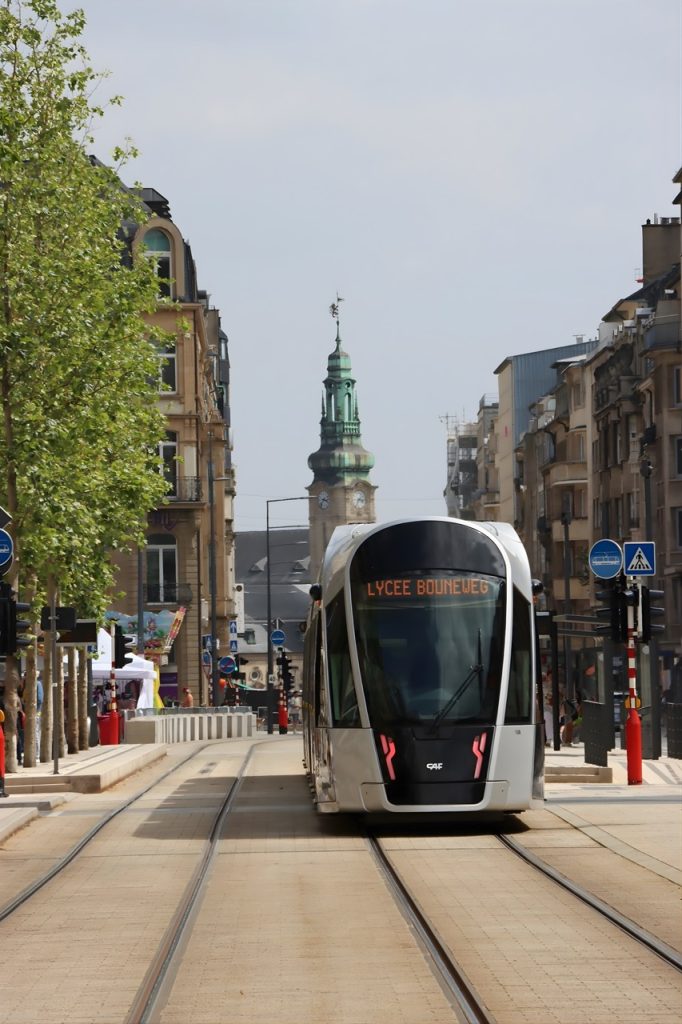
“Free public transport is only the cherry on the cake, you must first build the cake,” said François Bausch, who was mobility minister when the measure was implemented. By the time fares were scrapped, investments in tram extensions, rail upgrades and park-and-ride hubs had already reshaped how commuters moved through the capital.
“If you introduce free transport without investing in quality and capacity, you risk overcrowding and public frustration,” Bausch said. Senior mobility planners involved in the national mobility plan note that peak-hour crowding on certain routes reflects both the popularity of fare-free travel and the need to keep adding trains, trams and more frequent services to keep up with demand.
Interchanges such as Pfaffenthal-Kirchberg, linking train, funicular, tram and bus, illustrate how first- and last-mile barriers can be reduced so that driving becomes one option among several, rather than the default for the entire journey.
“Free transport must be accompanied by ongoing investment to remain effective and sustainable”
“Free transport must be accompanied by ongoing investment to remain effective and sustainable,” said Bausch. This sequencing has informed Luxembourg’s long-term planning horizon to 2035 and beyond, with corridors designed to handle significantly higher volumes of daily mobility as population and employment continue to grow.
Data on “free” public transport
“Fare-free public transport is a universal measure, and universal price subsidies are generally less precise redistributive tools than targeted transfers,” said Dr. Cesare A. F. Riillo, senior economist at STATEC Research. Household-level gains hinge on how frequently residents use the network and how effectively it supports their home–work travel patterns, meaning benefits are greatest where service coverage and frequency are strongest.
Depending on assumptions STATEC 2019 analysis estimated that average household savings from fare abolition at roughly €80–€100, or €60 per resident. Savings were estimated to be higher for lower-income households than for wealthier ones. In addition, the analysis indicates that a majority of households remain car-dependent, while a substantial minority combine private and public transport, underlining that price is only one barrier to modal shift alongside coverage, frequency and travel time.
Car use remains high
Before fares were abolished, Luxembourg’s national mobility survey showed that around 56% of daily trips were made by car, with public transport accounting for roughly 19%. More recent commuting data indicate that close to 70% of journeys to work are still made by car, underlining how deeply entrenched car use remains despite free fares. This translates into congestion, with GPS firm TomTom suggesting that motorists in Luxembourg City spend the equivalent of three full days a year in traffic.
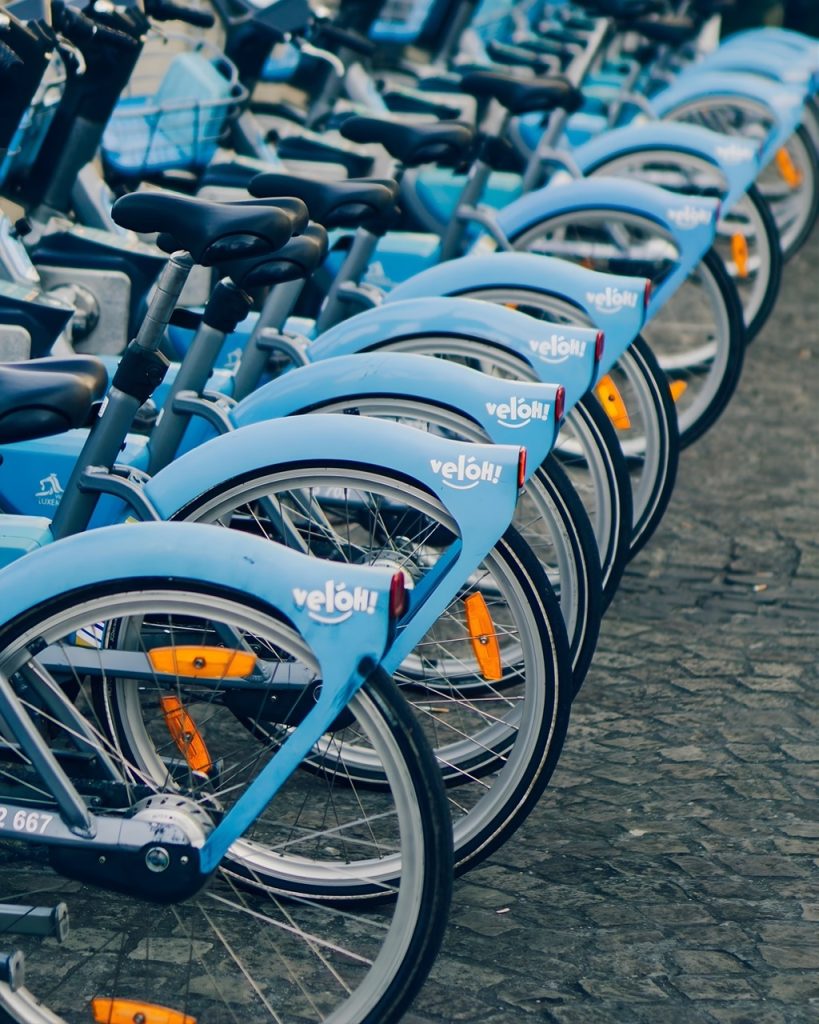
According to Luxembourg City’s official Mobility Plan, ongoing improvements in public transport quality, frequency and connections are central to shift commuters away from cars and achieve long-term sustainable mobility goals. The results could be transformational. In a small, high-income country facing intense commuter inflows, external benefits carry particular weight for air quality, road safety and the resilience of urban public space.
Further investment
Senior mobility planners note that peak-hour crowding on key rail and tram corridors has accelerated capital commitments, with the mobility ministry’s budget set to reach €3.5bn in 2026 (+8% YoY), funding tram extensions to the southern growth axis, rail capacity and signalling upgrades, and expanded regional bus frequencies, linking social ambition to infrastructure capacity.
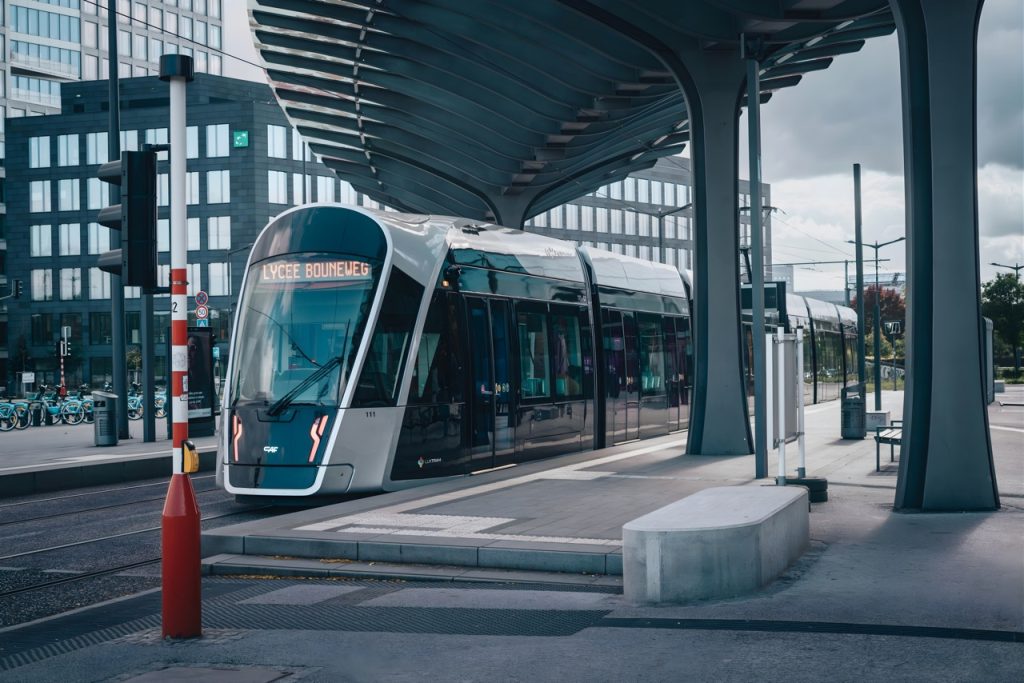
Cross-border constraints limit the policy’s reach. As a result, fare free mobility does not automatically translate into seamless public transport for cross-border workers. Most commuters still travel to work by car, reflecting the convenience of door-to-door travel and the limits of last-mile connectivity in suburban and rural areas.
Building the next phase
“To achieve these goals, a massive rise in the ministry’s investment capacity is necessary,” said Backes. The funding increase signals a strategic shift from pilot policy to long-term infrastructure build-out, aligning social mobility goals with the hard capital required to keep the system reliable at scale. This forward-looking vision frames fare-free transport as part of a broader systems overhaul, where long-term capacity, integration and climate goals take precedence over short-term policy wins.
Luxembourg’s experience suggests that fare-free public transport is exportable as a policy framework, not a copy-and-paste solution. For larger or more fiscally constrained countries, abolishing fares without first expanding capacity risks amplifying congestion on platforms and vehicles, eroding public support for public transport rather than strengthening it. In systems where ticket revenue funds a substantial share of operations, zero fares also imply a far larger and more visible tax burden, raising sharper distributional and opportunity-cost questions.
Luxembourg’s lesson, then, is less about the price of a ticket than about the price of a system.
Luxembourg’s lesson, then, is less about the price of a ticket than about the price of a system. Free fares can accelerate uptake and normalise multimodal travel, but only when embedded in a sustained, capital-intensive build-out of capacity, reliability and redundancy. For most countries, the transferable insight is not “make it free,” but “make it competitive first.”
This article was published in the 9th edition of Forbes Luxembourg.
Read more articles:
Rebuilding Luxembourg’s Food Autonomy
People Engagement, The missing Piece Of AI Performance In Luxembourg?