
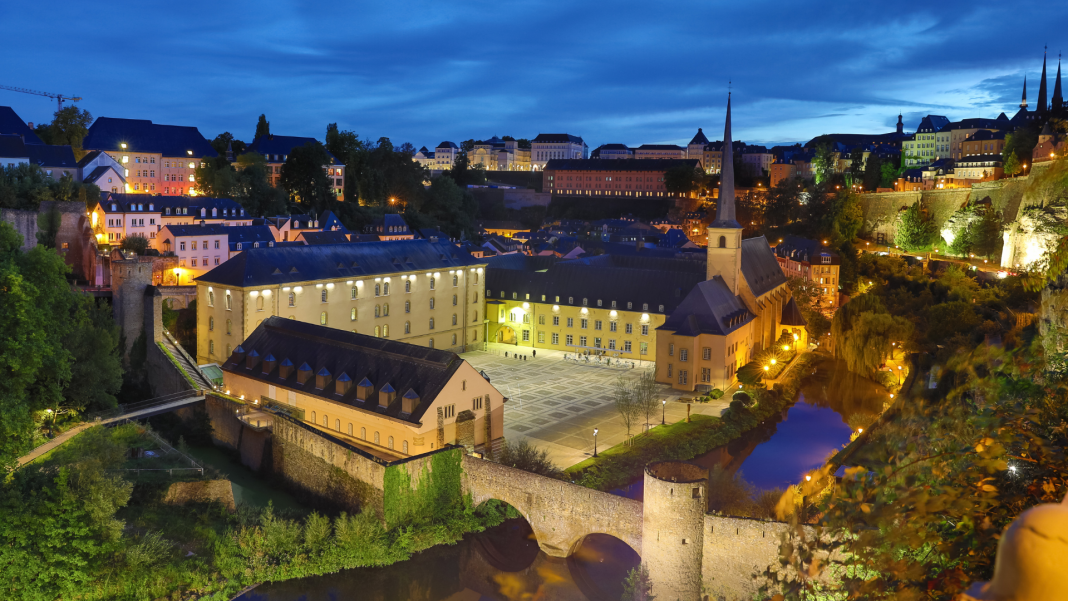
Neimënster is one of Luxembourg’s most photographed sites, but it had many lives before becoming the iconic and inclusive cultural centre it is today.
Neimënster Abbey has occupied its picturesque location in Luxembourg City’s Grund district for centuries and has served many roles over the years. “The first purpose was as a Benedictine abbey,” director Ainhoa Achutegui explains in a conference room on the venue’s first floor. There had previously been a monastery in the upper part of the city, but it was destroyed by fire, and a new monastery, or “Neumünster” in German, was built at the start of the 17th century.
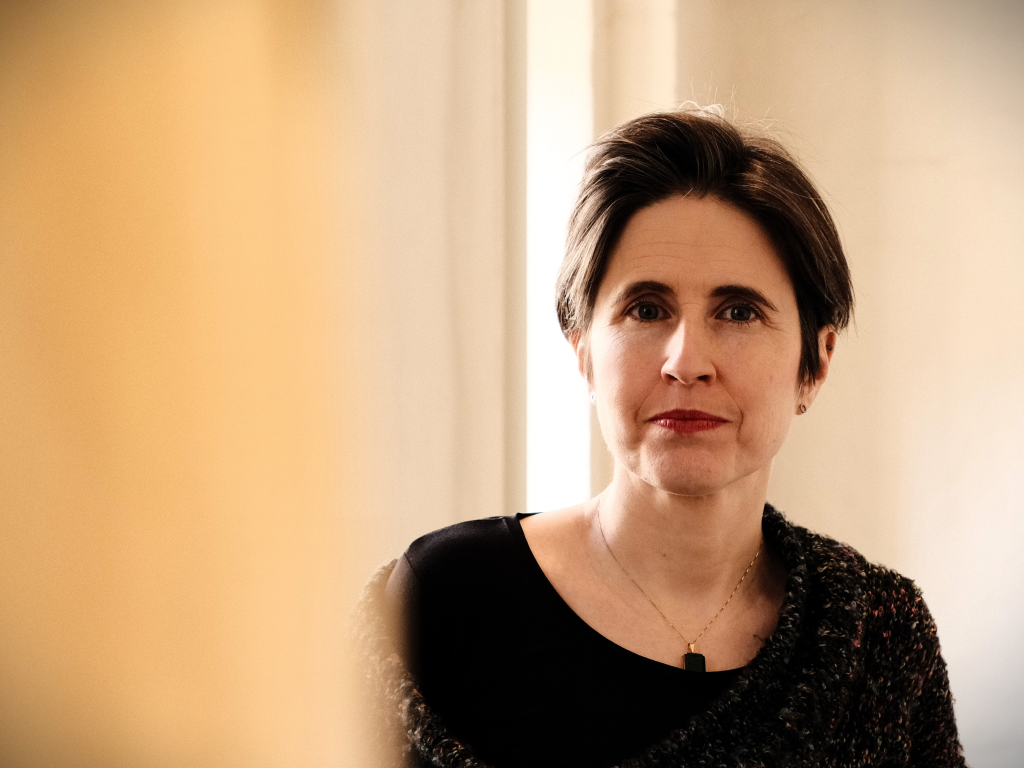
“It was a very spiritual and intellectual place, specialised in calligraphy,” Achutegui says. But with the arrival of French troops at the end of the 18th century, the abbey was secularised. It became a garrison for soldiers, and later a prison. In fact, “it was a prison for much longer than it was an abbey,” the director points out, “even if it is now called ‘abbey.’”
During the Second World War, it was used as a deportation centre by the Nazis and was the site of many deaths, Achutegui continues. After the war, the abbey returned to its purpose as a prison, but conditions were harsh and unsanitary. The prison remained in operation until 1985, when the last prisoners were transferred to the more modern facility in Schrassig.
From prison to cultural centre
Following the closure of the prison, a debate opened up as to what the abbey should become. A hotel and even a car park were some of the possibilities put forward, but it was finally decided that the abbey should be a “centre culturel de rencontre,” a specific French label that refers to a historical monument that offers space for artistic and cultural activities, explains Achutegui.
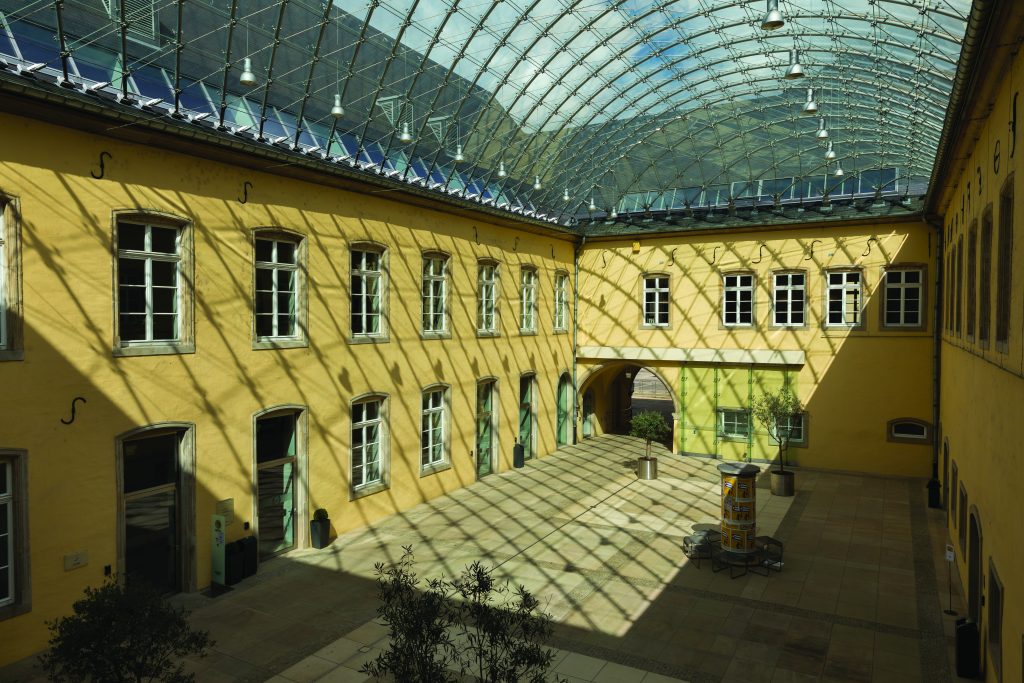
In 2001, Luxembourg’s parliament voted in favour of a law to create a cultural centre. Renovation took a total of 10 years, says Achutegui, and focused more on restoring the monastic characteristics of the buildings rather than maintaining elements of the prison. For that reason, no examples of prison cells remain. The venue, the only cultural heritage centre of its kind in the grand duchy, opened its doors to the public in 2004.
The name of the site reflects Luxembourg’s complex history, and it’s not as straightforward as it seems. It started out as “Neumünster,” but was renamed the “Abbaye de Neumünster” under the French. This designation, however, was redundant, says the director, as it translates to “abbey of the new abbey.” What’s more: there are several towns called “Neumünster” in Germany, and even a parish near Zurich that shares the same name.
Its official name today, “Centre Culturel de Rencontre Abbaye de Neumünster”, is “very typical for Luxembourg,” Achutegui says, employing a mix of French and German words. But the site also uses the Luxembourgish name: “Neimënster.”
“Because we are the only ‘neimënster’ in the world, we decided to take the Luxembourgish name!”
“When I became director in 2014, we had so many spellings. People called us ‘abbaye,’ ‘Abbaye de Neumünster,’ ‘CCRN,’ ‘Neimënster,” Achutegui explains. “So we asked people, and they responded: it’s ‘Neimënster.’” That’s the Luxembourgish word, which has a slightly different pronunciation from “Neumünster” in German. “And because we are the only ‘neimënster’ in the world, we decided to take the Luxembourgish name! So this name also has a copyright.”
“We were really happy with this decision,” she says, adding that the centre also received a lot of positive feedback. “The idea was that people appropriate this place, that they say: ‘This is our place.’”
A place for all communities
So what, besides the name, makes Neimënster so unique?
“One of the things that makes it unique is our values: the humanistic values. This is very important for us,” Achutegui replies. “There’s also the cultural heritage that we defend and that we want to share. It’s like a pearl; it’s something very beautiful that we want to conserve and to share.”
But the site’s distinctiveness goes further than that, it’s embedded in the very laws that govern Neimënster. “We are the place for all communities in Luxembourg, in dialogue with the Luxembourgish community,” says the director.
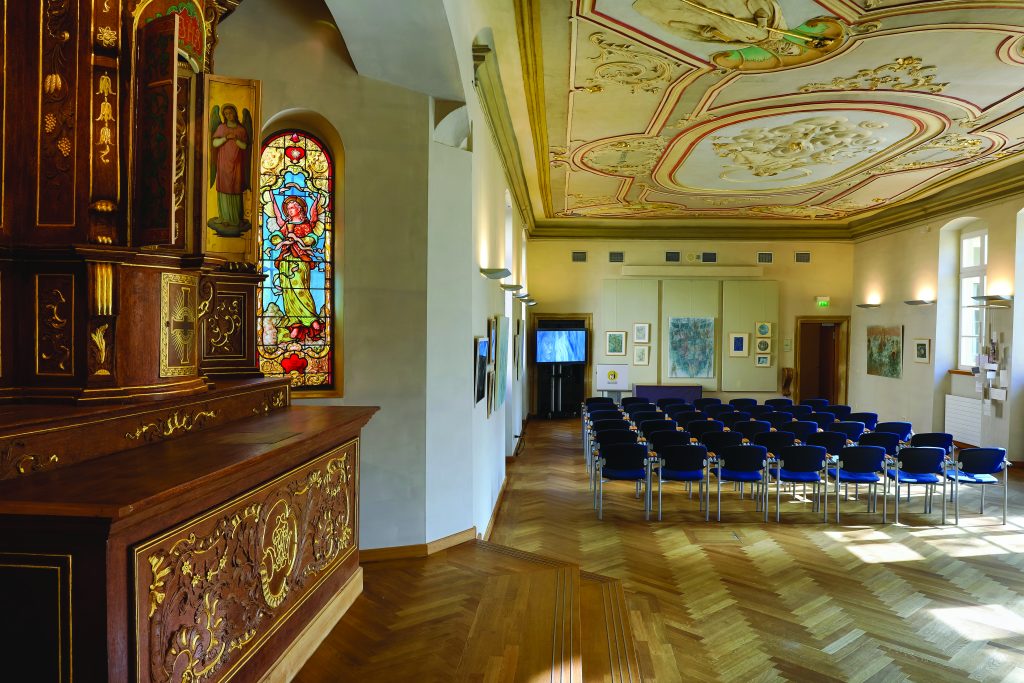
Besides hosting concerts, exhibitions, cinema screenings, artistic residencies, and corporate events, the multi-disciplinary cultural centre also works with local associations, providing them with “professional accompaniment” such as assistance with their workshops, as well as a location to hold events.
Inclusiveness a key value
Inclusiveness, whether that’s physical, cultural, or social, is at the heart of Neimënster. Wheelchair access has been integrated into the design of the restored abbey, ensuring that people with reduced physical mobility are able to access all spaces at the cultural centre.
“All the time, we think about it: how to be as inclusive as possible.”
All exhibitions and events are free or have very low entrance fees to ensure that everybody, no matter their income, can enjoy the cultural activities held at the abbey. But Neimënster also organises events that specifically target vulnerable populations, says Achutegui, like workshops for migrant women or the implementation of tools enabling deaf children to participate in concerts. And for the director, it’s key to look beyond the European Union and open up dialogue across different geographic regions. When it comes to artistic residencies, Neimënster has invited people from countries like Lebanon, Argentina, Ukraine, Iran, and Burkina Faso. “Inclusion is always a topic for us,” she notes. “All the time, we think about it: how to be as inclusive as possible.”
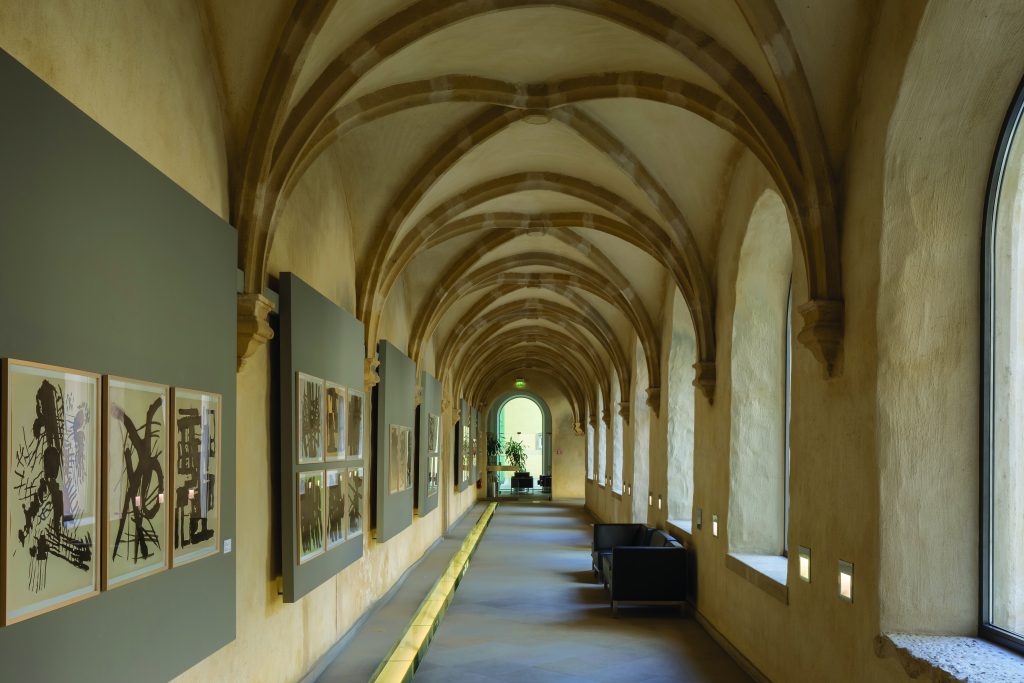
This reflection extends to the selection of subjects featured by the cultural centre. “We have a lot of topics that focus on migration, gender equality, feminism, violence against women, or genital mutilation,” says Achutegui. “Because of our values, we also choose the topics that we show from this point of view, from a humanistic point of view.”
Looking back, moving ahead
Beyond the continued development of artistic residencies in the future and continuing to be an inclusive cultural centre, Neimënster aims to shine a light on its history and heritage. “We are working with a museograph to make a little ‘museum,’” explains the director, “with a major mediation element to explain our place to visitors.”
The project started a few years ago with a call for testimonies from former prisoners and staff. “We thought: ‘Okay, 10 people will write to us.’ It was much more. So many people wanted to talk to us! It was one of the most beautiful experiences that we’ve had and one of the most beautiful projects in our history as a cultural centre.”
“We interviewed everyone: guards, psychologists, prisoners, people who lived in the Grund, the daughter of one of the guards, the person who was in charge of bringing potatoes for the prisoners. We collected so many interesting anecdotes! It was completely insane. We never thought we would have so many stories,” says Achutegui. “The project became so big. All of these interviews will go into the visitor’s centre, so people can see how it was in the prison.” The interpretive centre will also cover Neimënster’s time as an abbey and its transformation into a cultural institution.
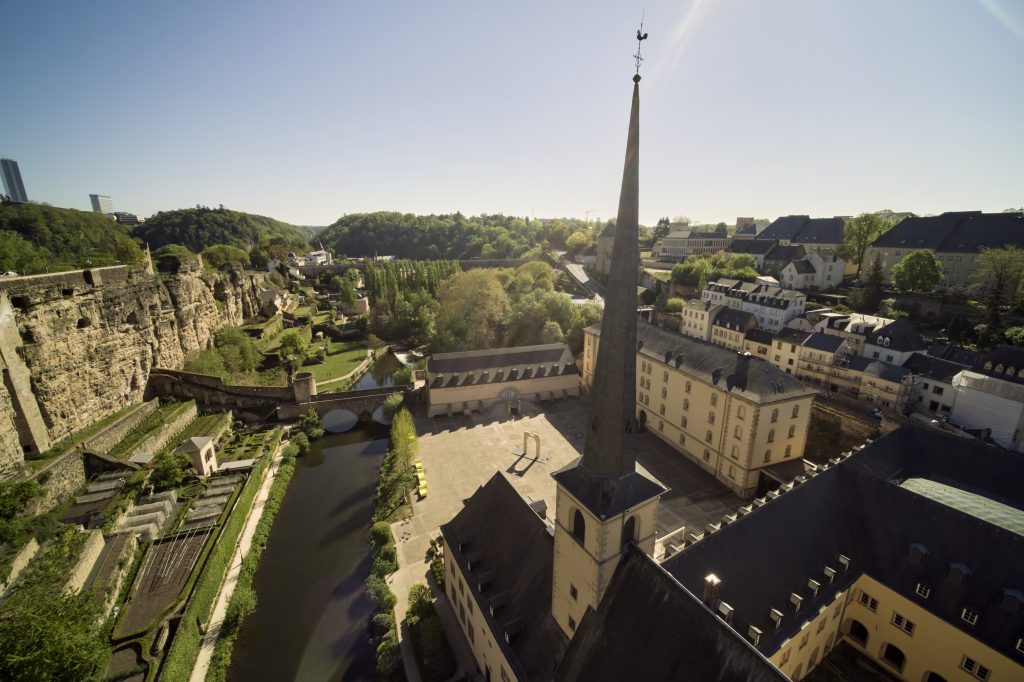
It’s a bit of a “contradiction,” says the director. Neimënster is “beautiful, is part of a UNESCO world heritage path, and is also listed as national cultural heritage (“patrimoine culturel national”), but a lot of its history is unknown to the general public. “We also have this very horrible history; we have had many people who died here, who suffered here, who were innocent. And also the prisoners who were not innocent, but who had very bad conditions in the 1970s. There were even strikes and revolts. And we want to talk about all this, we want to share this place and our history.”
A “secret” garden
At the end of our interview, I ask Achutegui if there’s anything in particular she wants to draw attention to regarding Neimënster.
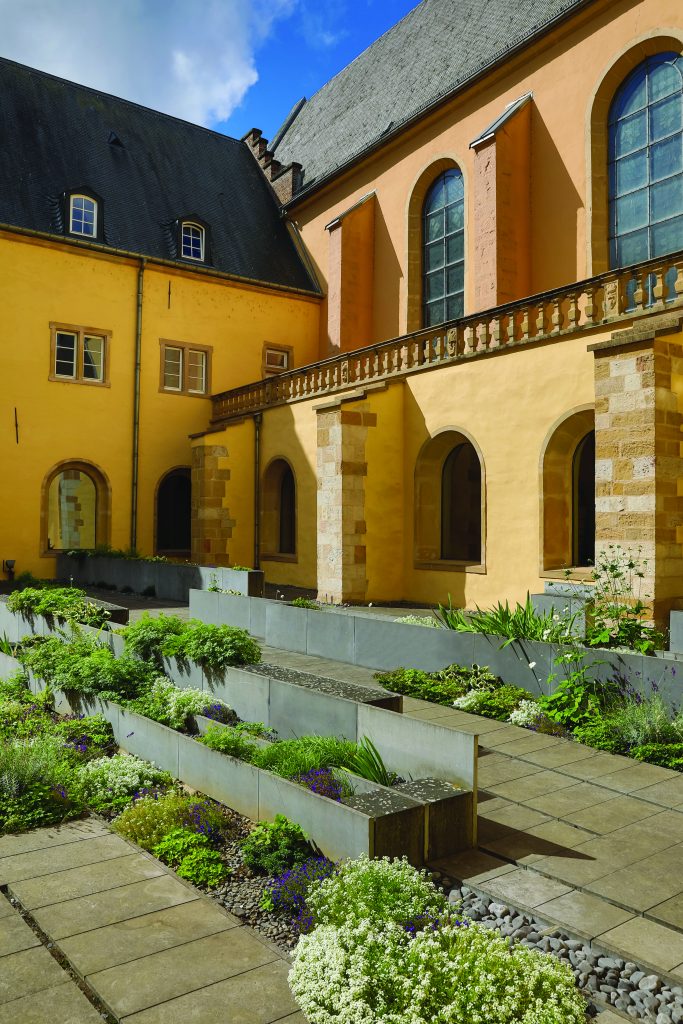
“We have a very beautiful garden,” Achutegui replies, “and it’s not so well known.” Designed by the French landscape architect Agnès Daval, the fragrant herb garden is open to all and can be accessed through the cloister. It’s the perfect place to enjoy a few calm moments, she adds. “This garden is a secret, but it shouldn’t be!”
This article was published in the 9th edition of Forbes Luxembourg.
Read more articles:
Lux Tour Solidarity 2026: Where Automotive Excellence Meets Philanthropy In Luxembourg
