

In a country built on performance, calm may be the smartest investment of all. Yoga in Luxembourg has evolved from lifestyle choice to strategic tool for resilience and leadership.
On a grey Luxembourg afternoon, a yoga class is underway in a quiet studio in Strassen, near the country’s financial pulse. Students lie on their mats as teachers move gently through the room, adjusting postures with calm precision. Outside, inboxes fill and deadlines mount. Inside, breathing slows. The studio increasingly draws busy professionals discovering that stillness can be a powerful counterweight to modern work life.
Yoga La Source, Luxembourg’s longest-running yoga school, started life in an ashram in Canada in 1990. It was here that Luxembourger Denise Pesch met Fredric Bender, a Californian who was drawn to the joy and clarity yoga brought.
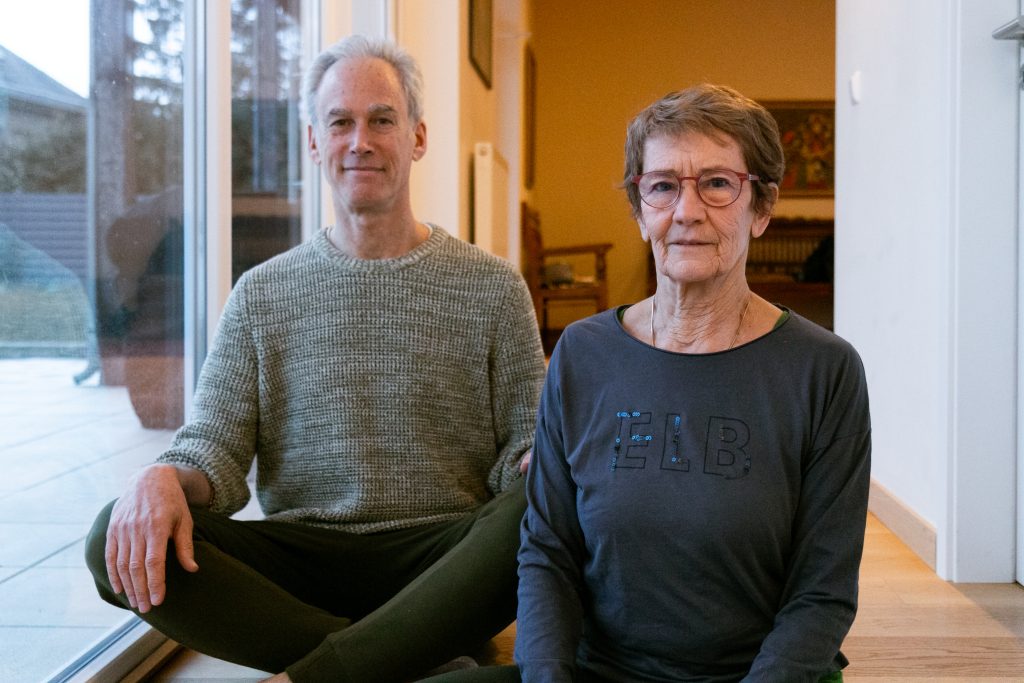
They fell in love between meditations and chanting. Five years later, Fredric moved to Luxembourg. By then, Denise had converted a former barn beside her home in Walferdange into a yoga room with space for twelve mats.
At the time, registration happened by post. People drove across the country to attend. Not because yoga was fashionable, but because it worked.
Denise was part of a small circle of yoga teachers, most of them women balancing family life with a deep commitment to the practice.
Fredric brought a classical philosophical foundation. Together, they expanded, renting rooms by the hour. There were no growth targets, franchise ambitions or branding strategy. By the mid-2010s, classes were full across several locations. In 2014, they made a strategic decision: to buy a studio in Strassen, a consolidation aligned with their principles.
“We never wanted yoga to become just another activity,” Fredric says. “It’s not something you squeeze into a schedule between spinning and Pilates. It’s a space to slow down, reset and return to yourself.”
Yoga as regulation rather than stimulation has become increasingly relevant in a country defined by high performance.
When success becomes strain
Luxembourg’s workforce is highly qualified, internationally mobile and often under sustained cognitive pressure. Long hours, constant connectivity and competitive environments blur the line between commitment and chronic stress.
Fredric describes seeing people locked in a prolonged “fight or flight” response. Adrenaline and cortisol continue circulating even after work ends. Breathing stays shallow. Muscles braced. “The boss goes home,” he says. “But the stress stays in the body.”
He says that, properly taught, yoga can help regulate stress responses and improve well-being, benefits that arise not from performance, but from consistency and depth of practice.
“Here, yoga functions less as fitness and more as a way to bring the nervous system back into balance”
A former student, he recalls, was under so much pressure from work that she attended classes almost daily. “She told me, ‘Without this, I don’t know where I would be.’” When she later changed jobs, her need for constant classes eased. “Here, yoga functions less as fitness and more as a way to bring the nervous system back into balance,” he says.
Fredric’s understanding of therapeutic yoga is personal. At 23, he herniated two spinal discs and lived with chronic pain for sixteen years. Relief came from specific practices to stabilise and decompress the spine. “I haven’t had back pain in twenty-five years,” he says.
Those practices evolved into what is now the studio’s most attended offering: “Lower Back Yoga”. According to Fredric, roughly one third of students attend this class regularly.
Modern stress is not only mental, it is postural. Hours at a desk and screen-focused work accumulate in the lower back, shoulders and along the spine. Some students arrive with discomfort; others come preventively.
The class’ goal is not athletic performance but structural support and regulation. “It’s therapy,” Fredric says. “But still yoga.”
While “Lower Back Yoga” draws the largest numbers, the variety of classes reflects the school’s broader vision.
“Hormone Yoga”, taught by Denise, who trained directly with the method’s founder, combines breathwork, dynamic sequences and focused relaxation to support hormonal balance and nervous system regulation. It is valued by women navigating hormonal transitions, but also by those seeking renewed vitality.
“Yoga for Staying Young” emphasises joint mobility, circulation and sustainable strength, offering a measured counterpoint to a culture that equates intensity with progress.
“Rise & Shine Yoga” introduces a lighter, more energising rhythm, a way to awaken the body and steady the mind.
Running a yoga school for over three decades demands financial realism. Classes must be viable. Teachers must be paid. Rent must be covered.
La Source operates on what Fredric calls a “low-risk, peace-of-mind” model: no aggressive expansion plans and no pressure to chase every wellness trend.
As the global wellness market grows, parts of the industry are shifting toward what Fredric describes as “yoga aerobics”: fast, music-driven formats prioritising calorie burn and intensity.
“They can be stimulating,” he says. “But for many already stressed people, they add more load to a system that is already overloaded.”
Yoga La Source emphasises breath, down-regulation and inner awareness, a less marketable, but increasingly necessary side of yoga.
Today, five additional yoga teachers, all long-time students trained in their approach, help preserve the studio’s lineage, delivering around 30 classes weekly across Luxembourg City.
Many of the studio’s regulars hold senior roles in finance, law, European institutions and corporate leadership. Yoga, Fredric suggests, can serve as a form of “leadership hygiene”, a way to clear mental noise, regulate emotion and respond rather than react. In an economy built on performance, calm is not a luxury. It is a strategic resource.
Inside the Strassen studio, as the class lies in stillness, the world outside presses on. Phones buzz. Meetings unfold. Deadlines edge closer. The rhythm of modern work carries on.

But for a brief time, the nervous system remembers another baseline, one where breathing is steady, attention is present, and strength comes not from tension, but from balance.
For many in Luxembourg’s performance-driven economy, that regained balance may be the most strategic return on investment of all.
This article was published in the 9th edition of Forbes Luxembourg.
Read more articles:
Misalignment: The Hidden Cost Of Success And Performance