

Professor Joel Mokyr, 2025 Nobel Prize winner in Economic Sciences, gave a keynote speech during a 9 July Luxembourg School of Business (LSB) event, in which he shared his optimistic views on technological progress and future advancements, simultaneously warning how certain trends could hamper them.
The Robert H. Strotz Professor of Arts and Sciences at Northwestern University and senior adjunct professor at Tel Aviv University’s Eitan Berglas School of Economics, Joel Mokyr has “an affinity for small, open economies” which do “exceedingly well” in peaceful times, less so in wartime, given their difficulties in being able to defend themselves.
The economic historian, who was born in the Netherlands in 1946, moved to Israel in 1955, where he received his bachelor’s in economics and history, before heading to the U.S., where he received his M.Phil in economics from Yale University. He has worked at Northwestern University since 1974. His 2025 Nobel Prize, shared with Philippe Aghion and Peter Howitt, was “for having identified the prerequisites for sustained growth through technological progress.”
Mokyr’s also a dazzling speaker, full of energy and a healthy dose of humour: “It’s somewhat ironic that I find myself living most of my life in a country that is not small and becoming less open every day.”
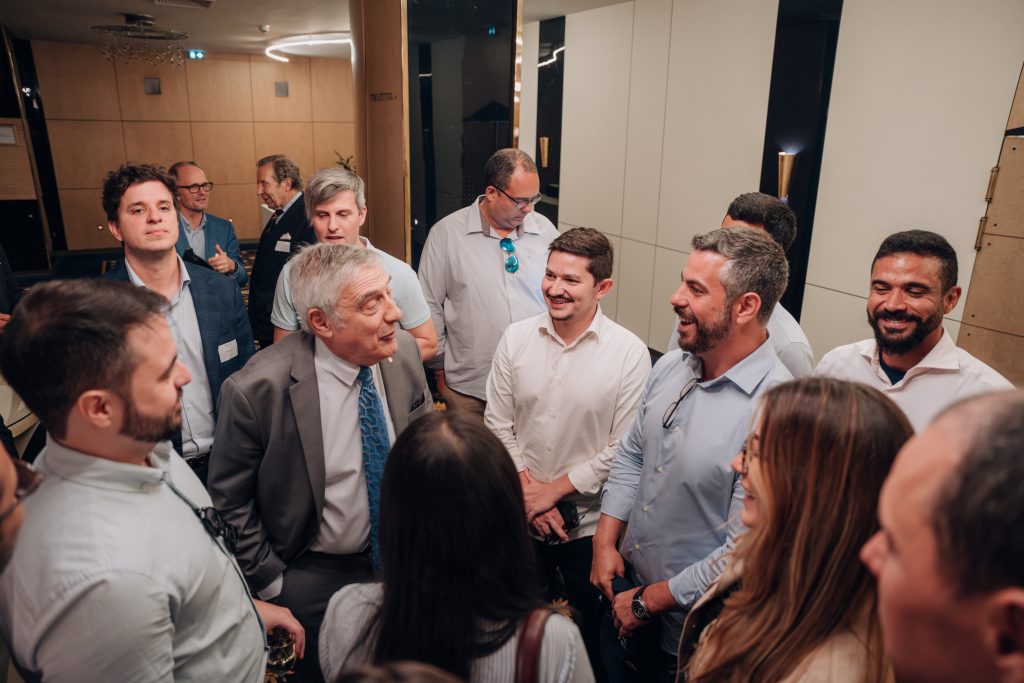
Mokyr has previously argued that European fragmentation has been critical to its innovative advancement for various reasons, including the fact that heretics, suppressed in one location, could flee to another. He talked about the “curse of concavity”, and how economic growth eventually runs into diminishing returns, as societies eventually exhaust the easiest gains, yet pointed out that after 1750, technological progress became an increasingly major driver of economic growth. The question he posed, then, was whether technology would also “fizzle out”, with the low-hanging fruits already being plucked. As Mokyr pointed out, “I’m going to be a techno optimist, and my bottom line is simple: you ain’t seen nothing yet, and the best is yet to come.”
A virtuous circle
Central to Mokyr’s argument is the relationship between scientific discovery and technological progress, and the powerful virtuous circle and feedback loop between the two areas. Each new generation of tools help scientists make new discoveries. One such example is that Denis Papin’s findings on the steam engine in 1707 and later Thomas Newcomen’s atmospheric engine in 1712 required bringing together at least two earlier inventions: the creation of the atmospheric barometer by Evangelista Torricelli in 1643 and Otto von Guericke’s vacuum pump in 1650. Mokyr also cited how Joseph Jackson Lister’s first achromatic microscope significantly enhanced the visibility of earlier microscopes, leading to the germ theory of disease—“probably the greatest welfare-enhancing scientific breakthrough in human history, which really revolutionised medicine”.
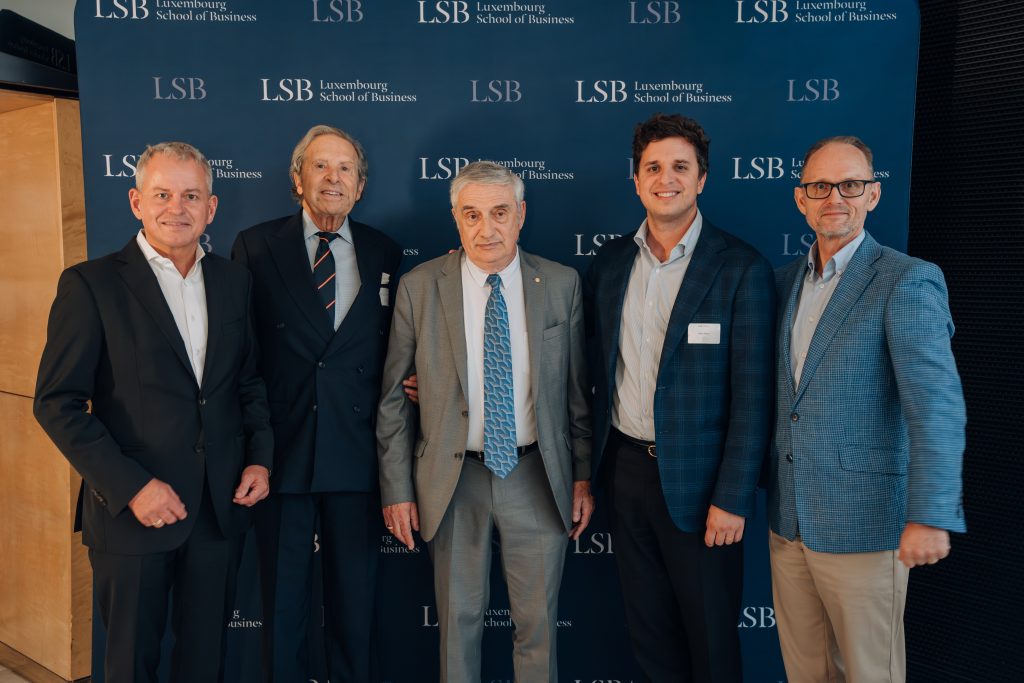
AI, of course, is one of the latest and most significant steps in the technological progress story, and one which will accelerate scientific research. Mokyr referred to AI’s role in the recent molecular biological breakthrough of a laser phase plate announced by Biohub and UC Berkeley. He also joked that AI “is the best research assistant that you can imagine,” Mokyr explained, then joked: “As somebody who worked with research all his life, I can tell you that… AI doesn’t complain about being bored, works 24 hours a day, doesn’t get drunk at night, doesn’t go to a pizza party!”
Techniques, challenges on the horizon
Mokyr is also excitedly watching several radical techniques on the horizon: the potential of nuclear fusion, e.g, to create clean energy; senotherapeutics, or cellular rejuventation, which could extend human life expectancy; and molecular biology and medicine, particularly with mRNA techniques which could have “the potential of finally vanquishing cancers, diabetes, and obesity, three of the great plagues of the modern age.”
Despite his optimism, Mokyr concluded with a warning that technological progress depends on strong institutions. Innovation requires incentives, open competition, freedom of enquiry, trust in expertise and the free movement of talented people. Populism, misinformation, attacks on universities and restrictions on immigration all threaten the environment that has historically produced scientific advances. Mokyr argued that the greatest challenge facing future prosperity is therefore not a shortage of ideas, but preserving the institutions that allow those ideas to flourish.
New programme and campus
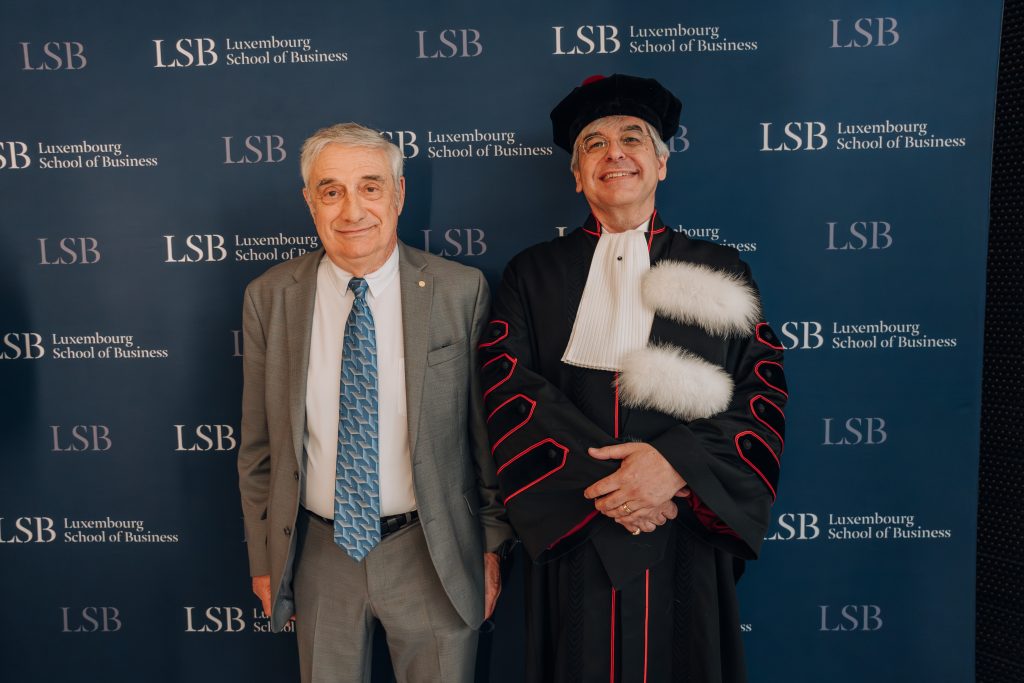
Mokyr also received an inaugural patronage to the doctoral programme in business administration between LSB and KU Leuven, a new programme which was announced during the event. LSB Dean Patrick Vanhoudt, who said he was “forever grateful” for Mokyr being one of the first professors to convince him of the importance of pursuing a PhD in long-term economic growth, presented Mokyr with a limited edition set of Villeroy & Boch coasters. He also said he was pleased to share that by the end of 2026, LSB will move into its new campus at Château Septfontaines.
Read more articles: