

When investors discuss the future of European private capital, attention usually gravitates toward the familiar names: London, Paris, Frankfurt, Zurich. Yet some of the most revealing signals may be emerging elsewhere, in a quieter but highly sophisticated corridor: the Benelux.
Belgium, the Netherlands and Luxembourg are often grouped together for convenience. They should not be. They represent three distinct cultures of capital, three different approaches to wealth creation and stewardship, and together they form one of Europe’s most instructive ecosystems for understanding where private capital is heading next.
This is not simply a regional story. It is a strategic one.
A Region Small in Size, Large in Signals
The Benelux combines several forces that are becoming increasingly valuable in today’s environment: international openness, dense entrepreneurial networks, institutional sophistication, cross-border mobility and high concentrations of private wealth.
It also reflects a broader transformation underway across Europe. Capital is no longer allocated solely around return expectations. It is increasingly shaped by resilience, governance quality, geopolitical awareness, succession planning and the ability to navigate complexity.
In that sense, the Benelux is less a geographic bloc than a live testing ground for the future of private capital.
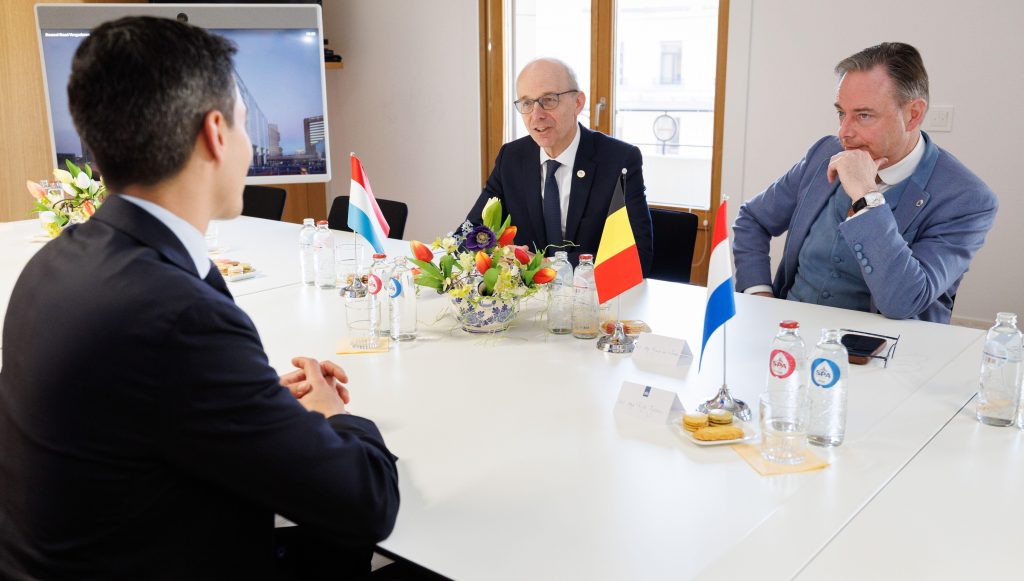
Belgium: Trusted Capital with Global Reach
Belgium’s private capital landscape is more diverse than many outsiders assume. It spans historic industrial families, entrepreneurial mid-sized businesses, holding structures, real estate capital, biotech champions and internationally minded private investors.
According to the National Bank of Belgium (NBB), the scale is meaningful: Belgium holds roughly €1.34tn in private financial wealth. Furthermore, its billionaire base remains notably dynastic, with De Rijkste Belgen tracking 49 billionaire families holding a combined wealth of around €129bn.
What often distinguishes the Belgian market is the importance of trust networks. Relationships, reputation and quality of access can matter as much as technical credentials. Capital formation is frequently embedded in long-standing ecosystems where introductions carry weight and discretion remains highly valued.
Belgian investors have also historically shown a strong outward orientation. In a relatively compact domestic market, international diversification is often part of the mindset rather than an exception.
Belgium also offers one of Europe’s clearest examples of private capital translating into globally relevant innovation. Its biotech ecosystem, supported by companies such as UCB, argenx and Galapagos, has become one of the continent’s most significant life sciences success stories.
For private banks, advisors and investment platforms, the lesson is clear: access is rarely won through product alone. It is earned through credibility, trust and relationship depth.
The Netherlands: Precision, Execution and Productive Ecosystems
The Dutch model often expresses a different logic. Wealth may be substantial, but it is less performative. There is often greater emphasis on substance over display, operational excellence over narrative, and execution over ceremony.
Reports by CBS Netherland and De Nederlandsche Bank (DNB) show that Dutch households hold some €2.6tn in wealth, with more than 452,000 millionaire households recorded in 2024.

This mindset is reflected in investment behavior. Dutch private capital frequently gravitates toward sectors where competitive advantage can be understood clearly: semiconductors, life sciences, agrifood innovation, software, logistics, energy transition and high-value industrial technology.
The strength of the Netherlands lies not only in capital availability, but in the quality of its ecosystems. Eindhoven, Wageningen, Leiden and Rotterdam represent highly specialized industrial and innovation clusters, while Amsterdam functions as a major financial, technology and international business hub.
The Dutch market also retains an important role in holding structures, corporate vehicles and capital markets access, adding a financial architecture layer to its productive strengths.
For investors, this matters. In an era where thematic investing can become overly abstract, the Dutch market remains anchored in tangible capabilities.
Luxembourg: The Architecture of Modern Capital
If Belgium illustrates the relational side of capital and the Netherlands its productive side, Luxembourg represents something else entirely: its architecture.
Luxembourg has built one of the most powerful cross-border capital platforms in the world. As Europe’s leading fund domicile and a global centre for international asset servicing, its role extends far beyond its domestic economy.
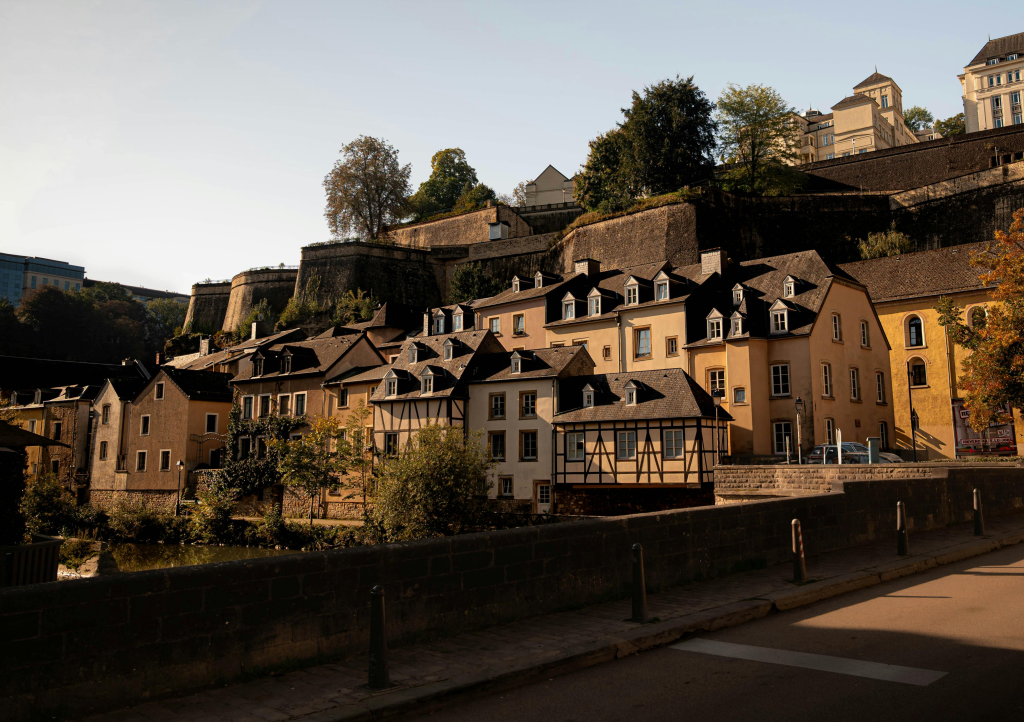
According to the Luxembourg Bankers’ Association (ABBL), Luxembourg holds roughly €756bn in private-banking assets. The cross-border pull is just as visible from its neighbours; Belgian residents alone held more than €223bn in foreign investment funds at mid-2022, predominantly Luxembourg-domiciled as stated by the NBB and FSMA.
That distinction matters more than ever.
As wealthy families become more international, as asset classes become more complex, and as regulation grows more demanding, the ability to organise capital efficiently becomes a strategic advantage in itself.
Luxembourg sits at the intersection of private wealth, fund structuring, governance, multilingual talent and European market access. It is not simply a jurisdiction. It is infrastructure.
Why This Matters Now
Across Europe, private investors are adapting to a world shaped more by fragmentation than stability. Inflation shocks, geopolitical tensions, technological disruption and generational wealth transfer have changed the conversation.
The scale of that generational shift is striking: an estimated $124tn in wealth is set to change hands globally through 2048 according to Cerulli Associates.
The old model, which preserves wealth quietly and allocates conventionally, is under pressure.
The emerging model requires new capabilities such as stronger governance, better risk intelligence, selective exposure to innovation, operational resilience, trusted advisory ecosystems and cross-border flexibility.
The Benelux concentrates many of these dynamics in one region.
Belgium shows how trust still drives allocation.
The Netherlands shows why productive ecosystems matter.
Luxembourg shows that complexity, when mastered, becomes value.
A Competitive Edge Hidden in Plain Sight
The future of European private capital may not belong only to the largest markets. It may also belong to the jurisdictions that best understand how wealth is evolving.
That is why the Benelux deserves closer attention.
Not because it is louder than other financial centers.
But because it may already be solving tomorrow’s questions today.
This article was published in the 10th edition of Forbes Luxembourg.
Read more articles:
Luxembourg’s Quiet Superyacht Empire
Investments: When Delegated Management Becomes An Option For Everyone