
After 15 years serving a single prominent European family, Orientis Partners is bringing institutional-grade fund administration to a broader range of investment structures, on its own terms.
In the tightly regulated financial centre of Luxembourg, a new name is quietly making its mark. Orientis Partners has spent more than fifteen years honing its expertise within one of Europe’s most demanding private investment environments, a single prestigious family office.
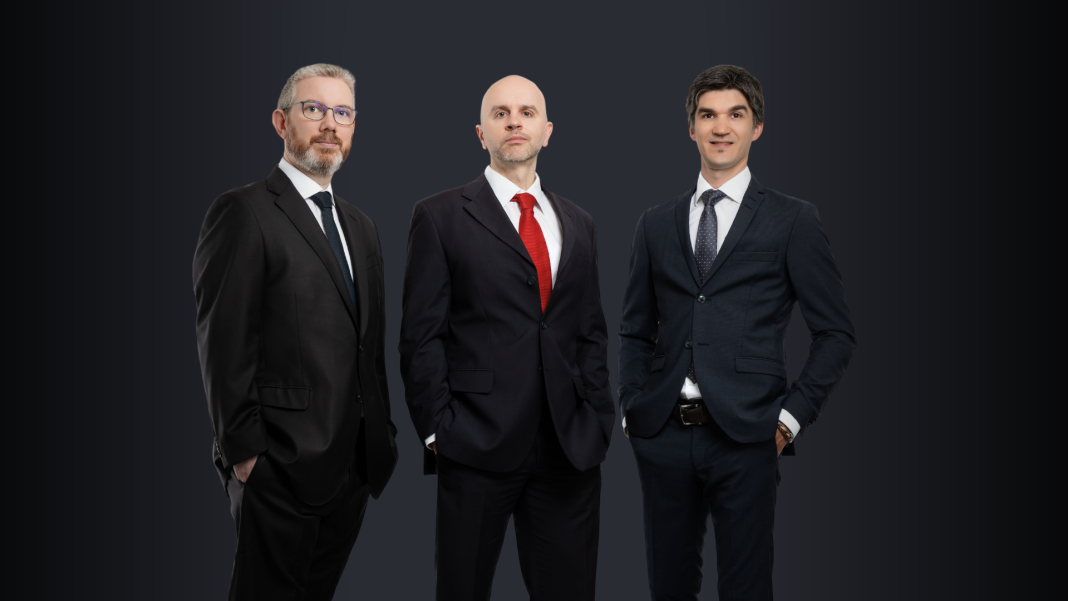
Now, for the first time, it is opening its doors to external clients. We spoke with Co-Founders and Managing Partners Mathieu Potier and Julien Brenier. Their answers reveal a firm that has thought carefully about what large institutional administrators do well, where they fall short, and how to build something genuinely different, without sacrificing the rigour that Luxembourg’s financial ecosystem demands.
After 15+ years serving a single prestigious family office, what triggered the decision to open up to external clients — and why now?
Operating in a financial centre such as Luxembourg naturally provides direct exposure to the evolving needs of the investment industry through daily interaction with market participants.
What we increasingly observed was that many investment managers, private equity firms and family offices were looking for something that large institutional models often struggle to combine simultaneously: operational robustness, flexibility, speed and direct access to senior decision-makers. This seems to be particularly true for smaller and mid-sized investment structures, emerging managers or highly specialised portfolios, where operational complexity can be significant despite a more limited organisational scale.
Therefore, after more than fifteen years working alongside seasoned hedge fund managers operating sophisticated investment structures, we felt that the time was right to make this expertise available to a broader market.
While we initially operated within a dedicated family office environment, our platform progressively evolved into a mature operational infrastructure capable of supporting a much wider range of investment activities and reporting requirements. Today, we are experts in designing operational frameworks, reporting methodologies and technological processes tailored to highly demanding investment structures.
Luxembourg’s fund administration market is dominated by large institutional players. What makes Orientis Partners’ offer meaningfully different?
Large institutional administrators have built highly efficient and robust operating platforms, and such models are extremely effective for a significant part of the market. However, heavily standardised service frameworks can sometimes struggle to accommodate highly specific reporting requirements or evolving operational needs. We know this environment well through direct experience. Two of the partners previously worked within large institutional structures and witnessed first-hand both the strengths and limitations of highly industrialised operating models.
Our approach is different. Rather than offering a fully predefined reporting architecture, we build customised operational frameworks around the client’s actual needs. Clients are actively involved in defining what information they want to receive, how they want to visualise it and at what frequency. This flexibility is particularly important in situations where reporting requirements evolve over time. Investment managers should not have to engage in lengthy internal escalation processes or incur disproportionate costs every time they need to adapt a reporting package or monitor a specific situation more closely.
We also develop tailored analytical frameworks extending beyond traditional fund accounting reporting, including performance attribution, benchmark integration, liquidity monitoring, risk measurement or tax-oriented reporting considerations.This becomes particularly relevant in the context of diversified portfolios combining listed equities, private equity, hedge funds, commodities or derivative exposures within the same investment structure. Such environments often require the coexistence of different valuation methodologies, liquidity assumptions and performance measurement approaches.
Modern investment structures increasingly require reporting frameworks capable not only of consolidating information, but also of reconciling fundamentally different investment logics within the same decision-making environment.
In practice, we aim to combine the robustness typically associated with larger institutions with the agility and proximity of an entrepreneurial structure.
You speak of turning financial data into “actionable insight” — can you give a concrete example of how that changes decision-making for a client?
Traditional accounting reports explain how you got here; actionable reporting helps determine where you go from here.
Once performance attribution, liquidity management and tax considerations are integrated into the reporting chain, investment teams can react faster, make more informed decisions and operate with greater confidence.
A first example concerns reporting during periods of market stress. Large fund administrators typically operate through highly standardised service models, where deliverables and reporting frequencies are defined in advance through strict SLAs. For example, in a traditional masterfeeder structure investing in listed products, it is common practice for the administrator to provide official month-end NAVs and weekly estimates at master fund level only.
This approach is understandable from an operational standpoint: large institutions manage extensive client bases through highly structured resource allocation models. However, such frameworks can become less effective in periods of extreme market volatility, where significant movements may materialise within a matter of hours rather than weeks.
Events such as the market dislocations following tariff announcements in April 2025 or the sudden escalation of the US-Iran tensions in 2026 demonstrated how quickly investment conditions can change. In such situations, a weekly estimate may simply arrive too late to support portfolio adjustments, liquidity monitoring, investment committee discussions or communication with investors.
Our approach is different. We provide daily and highly customisable reporting datasets and can rapidly accommodate additional requests in order to monitor specific situations. This may include performance figures, exposure analysis and valuation monitoring not only at portfolio level, but also across individual share classes and investor structures.
A second example concerns longer-term performance analysis.In one situation, we investigated the persistent performance gap between a portfolio and its benchmark index, with the objective of understanding whether the portfolio had become excessively defensive and therefore lagged a strongly rising market.
Using exclusively our internal data infrastructure, we analysed changes in beta, relative risk and portfolio behaviour across multiple time horizons, leveraging more than fifteen years of historical data. We ultimately produced a reporting framework combining quantitative analysis with visual modelling and scenario comparisons.
The outcome went well beyond traditional accounting reporting. The analysis was actively used by the client’s investment team and helped bring greater clarity to portfolio strategy discussions by introducing objective, data-driven evidence into areas that are often influenced by subjective interpretation or internal debate.
In many ways, this illustrates how the role of fund administration is evolving.
How do you reconcile CSSF regulatory discipline with the agility and direct access you promise clients?
Regulatory discipline imposed by the CSSF is essential to the financial industry and should not be perceived as an obstacle to flexibility. In our view, operational rigidity rarely comes from the existence of controls themselves, but rather from the way organisations choose to structure their operating models around those controls.
The real challenge is therefore not whether controls exist, but how intelligently the operational framework is designed around them.
In many ways, our size plays in our favour. Operating with a lean and agile structure makes governance more straightforward: process owners are easy to identify and decision-making channels remain short and highly responsive.
We believe it is important to clarify what we mean by “direct access”. For us, it means maintaining continuous dialogue with clients in order to understand their informational and operational requirements in depth, and to adapt our reporting frameworks as their business environment evolves. This takes place through short and highly responsive decision-making channels, allowing clients to interact directly with the key professionals overseeing operations, reporting and technology within our organisation. Once these requirements have been clearly identified, we design and develop the most appropriate framework to address them in a manner consistent with regulatory standards, operational robustness and information-security requirements.
In other words, clients define the information they need; our role is to structure, control and deliver it through scalable and compliant operational frameworks.
It is essential to underline that we maintain strict control over our accounting infrastructure, user rights and data-governance framework. Cooperation with external parties, including clients and auditors, takes place through controlled and custom-built interfaces designed to provide the required information while preserving the integrity, traceability and security of the underlying operational environment.
Technology naturally plays a central role in this approach. We maintain an internal development function responsible for designing and implementing reporting solutions reporting solutions and data interfaces, while relying on a specialised IT support provider regulated by the CSSF for the maintenance of the underlying infrastructure, including servers and cloud architecture.
So, in our view, regulatory requirements and entrepreneurial agility are not contradictory concepts, provided that the operational architecture is designed coherently from the outset.
Where do you want Orientis Partners to be in five years in terms of AuA, client profile, or geographic reach?
Geographically, Luxembourg will remain our operational anchor, but our scope is naturally international. We are comfortable supporting investment activities across the broader Western financial ecosystem, including major European and Anglo-Saxon financial centres as well as established international jurisdictions that continue to play an important role in cross-border investment structures.
For us, long-term growth is not measured purely by Assets under Administration: AuA says very little about the number of structures administered, the complexity of underlying portfolios or the level of operational customisation required. What matters to us is to continuously expand our operational know-how, through exposure to increasingly diverse investment structures, portfolio configurations and reporting challenges.
In our view, this is where the future of fund administration increasingly lies: not only in processing transactions efficiently, but in structuring, harmonising and transforming complex financial information into reliable decision-making infrastructure.
We want to build a reputation among investment managers, private equity firms and family offices that require reporting, data management and operational frameworks capable of matching the growing complexity of their investment activities: this is where we want to be in five years.
