
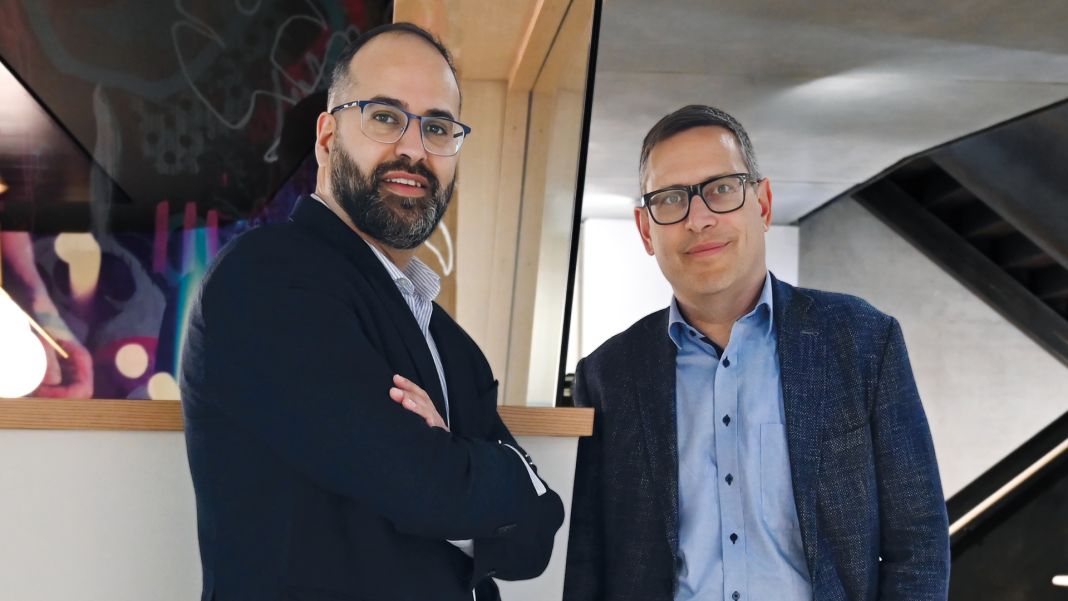
In high-stakes real estate and infrastructure projects, complexity is no longer merely a challenge — it has become the primary source of risk. In Luxembourg, Schroeder & Associés is repositioning engineering as a strategic lever to secure decisions, control outcomes, and protect long-term value.
Luxembourg’s real estate and infrastructure landscape is entering a new phase—defined by scale, regulation, and interdependence. Environmental constraints, energy standards, financial pressures, and stakeholder expectations interact continuously, shaping projects in ways that are difficult to predict.
For decision-makers, this shift is fundamental. “Today complexity is not just technical—it is systemic,” explains Thierry Flies, managing director of Schroeder & Associés. “Every decision has implications across cost, timelines, compliance, and long-term performance.” Traditional linear approaches quickly reach their limits. When disciplines operate in silos, misalignment becomes inevitable—and with it, risk.
Where value is truly decided
Large-scale projects are defined by decisions made long before construction begins. “The most critical risks emerge in the early stages,” says Marco Da Chao, associate engineer and head of the Services Department. “This is where key assumptions are made—often without full visibility on their long-term consequences.” Cost overruns, delays, and redesigns often reflect decisions taken without understanding how technical, environmental, and financial parameters interact. “By the time issues surface, the possibility to make adjustments are limited—and costly,” he adds.
From engineering to strategic risk management
Schroeder & Associés has evolved beyond its traditional role. Rather than acting solely as a technical expert, the firm positions itself as an integrated partner from the earliest phases, when decisions remain flexible and impact is greatest. “Our role is to bring clarity when uncertainty is highest,” Da Chao explains. “We help clients structure decisions, challenge assumptions, and anticipate constraints before they materialize.”
“What we are seeing is a fundamental shift in expectations,” adds Flies. “Clients no longer come to us with a fully defined project—they expect us to help them structure it, challenge it, and secure it from the outset.”
This approach brings together structural and civil engineering, infrastructure, mechanical, electrical and plumbing (MEP), environmental expertise, project management, safety coordination and digital engineering within a unified framework. Engineering is no longer confined to problem-solving; it structures complexity by connecting disciplines for informed decisions.
Eliminating fragmentation
Fragmentation remains one of the most persistent sources of inefficiency. “When multiple stakeholders operate independently, gaps appear,” Da Chao notes. “Each discipline optimizes its scope, but overall coherence can be lost.” Integrated alignment makes trade-offs visible earlier and enables more coherent outcomes. “It is not about adding layers of expertise,” he adds. “It is about connecting them in a way that creates clarity.”
“Fragmentation is one of the biggest hidden risks in our industry,” Flies adds. “When responsibilities are split, accountability is diluted—and that is where projects start to drift.”
A shift driven by market expectations
Clients today are more informed and demanding. “They are not only looking for execution—they want visibility and control,” observes Da Chao. For investors, developers, and corporate leaders, the challenge lies in securing capital while limiting downside and ensuring sustainable performance. Integration becomes a strategic tool—allowing decisions with a clearer understanding of consequences.
From strategy to execution
This integrated approach is visible across Luxembourg—from mixed-use developments like Ettelbruck One to corporate headquarters such as STI in Kockelscheuer and RTL Group in Kirchberg. Large-scale urban developments, including the Metzeschmelz district in Esch-sur-Alzette, further illustrate the firm’s capacity to manage complex projects where technical, environmental, and strategic considerations are interconnected. “These projects are complex not because of size, but because of the number of variables and precision required,” Da Chao explains.
By aligning disciplines early, Schroeder & Associés reduces late-stage adjustments, improves execution predictability, and strengthens overall performance.
Engineering, redefined
As complexity increases, engineering is moving upstream. “It is no longer only about delivering solutions — it is about enabling better decisions,” Da Chao concludes. Flies adds: “Ultimately, our role is to give clients control where complexity could otherwise take over — that is where we create the most value.”
This sponsored content was published in the 9th edition of Forbes Luxembourg.
Read more articles:
Forbes Luxembourg Cover Story: Alex Giorgetti – Building For Generations
Family Offices Are Not Late On Risk. They May Be Late On Transformation.
When The Ground Speaks Before The Crisis: The Human Impact Of Mergers And Acquisitions