

Regulatory clarity and DLT rules are turning pilot projects into live funds and skills across Luxembourg’s investment fund industry.
For much of the past decade, tokenisation occupied a cautious middle ground in Luxembourg’s fund industry. Pilot projects multiplied, proofs of concept were tested and market participants debated efficiencies. What remained elusive was not technological capability, but legal and supervisory certainty. That constraint is now receding, allowing tokenised fund structures to move from experimentation into execution.
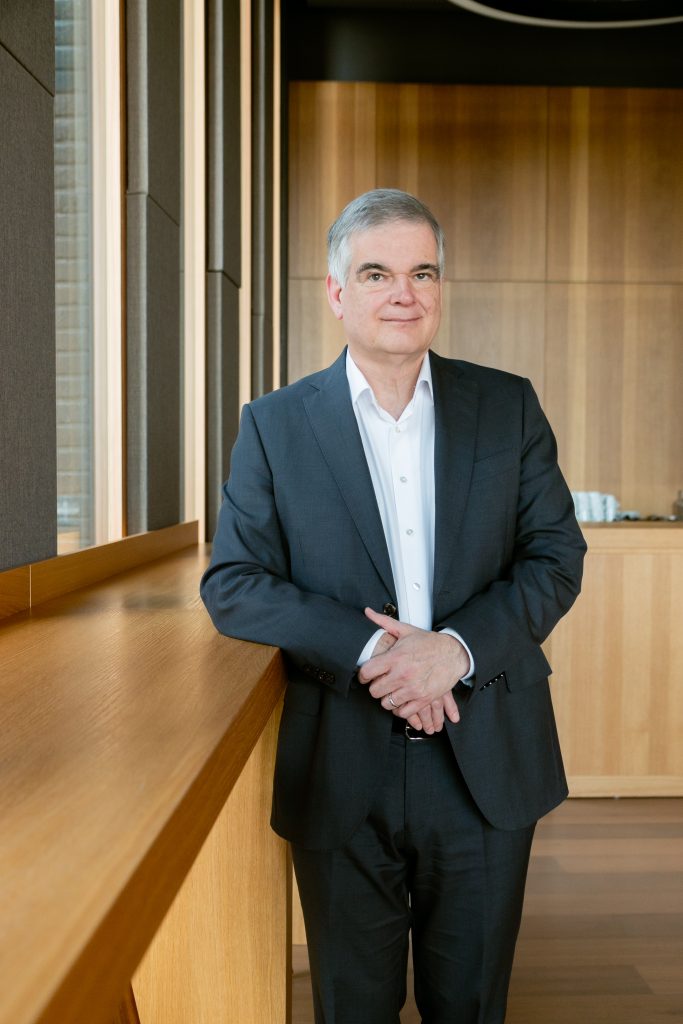
“Market players conduct the same activities and target similar types of investors. The underlying technology may change, but other than that the risks remain largely the same,” said Patrick Hoffmann, economist in the Investment Fund Department at the Commission de Surveillance du Secteur Financier (CSSF). This principle of technological neutrality has become central to how Luxembourg evaluates, authorises and supervises tokenised funds.

The timing is significant. According to official CSSF statistics on undertakings for collective investment, net assets of Luxembourg funds exceed €6tn, reinforcing the country’s position as one of the world’s leading cross-border fund domiciles. Against that scale, the transition from tokenisation pilots to live products signals not a marginal innovation, but a structural evolution of the industry.
Regulation as an enabler
Luxembourg’s investment fund framework has long focused on economic activity and investor protection rather than prescribed technologies. Recent European initiatives have reinforced this approach. The Distributed Ledger Technology Pilot Regime, implemented in Luxembourg through the Law of March 15 2023, allows regulated market infrastructures to use distributed ledger technology for trading and settlement under supervisory oversight.
In parallel, the Markets in Crypto-Assets Regulation (MiCAR), and the Digital Operational Resilience Act (DORA), have clarified expectations around governance, operational resilience and risk management.
From the CSSF’s perspective, innovation originates within the market. Supervisory authorities respond by analysing whether new business models introduce new risks and whether existing regulatory frameworks already address them. “We always start by asking ourselves what new risks an innovation brings. That requires understanding the business model and the operational set-up before assessing compliance,” said Hoffmann.
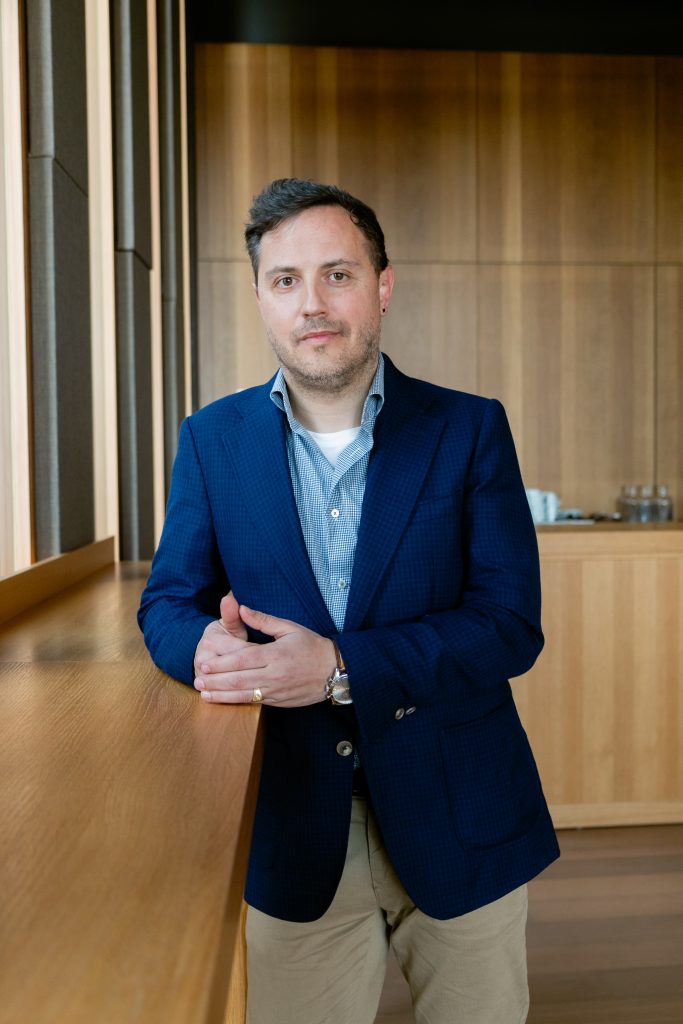
From a market and legal standpoint, the same regulatory developments have removed long-standing operational constraints. “For a long time, the technology worked, but the surrounding rules didn’t. The DLT Pilot Regime made it possible to use blockchain for issuance and settlement without forcing everything back into traditional market infrastructure. That removed a major operational blocker,” said says Daniel Rodríguez Miguel, co-founder and board director at The Luxembourg House of Web3.
Why tokenisation advances gradually
Despite growing interest, tokenised funds have not emerged overnight. Implementing distributed ledger infrastructure across transfer agency, settlement and record-keeping functions requires significant investment and long development cycles. “You don’t change your system to blockchain within three months, it takes years of development and substantial resources,” said Hoffmann.
Distribution has also slowed adoption. Luxembourg funds are still predominantly distributed through traditional networks. Fully blockchain-native distribution models risk bypassing intermediaries and established client relationships. As a result, early tokenisation initiatives have focused on internal efficiencies rather than immediate changes to investor access.
Skills, governance and supervision
From the industry’s perspective, this shift represents role evolution rather than job displacement. “This is not about fewer jobs. It’s about different jobs, manual processing will decline, but the need for oversight, coordination and technical understanding will grow, particularly across legal, compliance and operations,” said Miguel.
While technology attracts attention, tokenisation’s most immediate impact is organisational. As funds adopt more automated and data-driven infrastructure, the skills required within organisations are changing. Manual processing roles are declining, while demand is rising for professionals who understand operational risk, systems architecture and regulatory technology.
“From what we have seen so far, all the risks remain the same, with one major difference, that difference is technological and operational risk, and that is what needs to be addressed differently,” said Hoffmann.
This evolution is mirrored within the CSSF itself, as large tokenisation projects are reviewed not only from a legal perspective, but also by specialised IT supervision teams. “If there is a major change to IT systems, such as building blockchain solutions, our specialised IT supervision department will review the operational and technological change,” said Hoffmann.
Luxembourg’s strategic positioning
For international asset managers considering where to establish their first institutional tokenised fund, Luxembourg’s appeal lies in predictability. The legal framework is technology-neutral, supervisory expectations are transparent and early dialogue with authorities is encouraged through mechanisms such as the CSSF Innovation Hub.

Crucially, the regulator’s mandate remains focused on authorisation, supervision and investor protection rather than promotion. That restraint enhances credibility, a decisive factor for institutional investors operating across jurisdictions.
Tokenised funds will not replace traditional structures overnight. Their impact will be incremental, operational and cumulative rather than disruptive. What has changed is the nature of the industry’s question. The debate has shifted from whether tokenisation is legally viable to how efficiently it can be implemented, and whether organisations have the skills to manage it.
As pilot initiatives become live products, Luxembourg’s fund industry enters a new phase defined less by experimentation and more by execution.
This article was published in the 9th edition of Forbes Luxembourg.
Read more articles:
Championing Luxembourg Technology & Female Entrepreneurship
Bernard Serin, A European Industrial Builder
How France’s Mistral Built A $14 Billion AI Empire By Not Being American