
When a company spends €25 million on housing instead of expansion, it’s no longer making an HR decision. It’s responding to a market failure.
In Luxembourg, where housing shortages have collided with an acute talent crunch, a small but growing number of employers are doing something unusual: investing directly in homes for their staff. What was once a feature of the country’s industrial past is reappearing as a strategic tool, and a warning sign for the wider economy.
Luxembourg has built its modern success on openness: to capital, to companies and to international talent. But access to housing has become one of the country’s tightest bottlenecks, shaping where people can live, work, and whether they come at all.
Housing Moves From Lifestyle Issue to Business Risk
For years, rising housing costs were framed as a quality-of-life concern. Today, they are increasingly viewed as a business constraint.
“The cost of living, particularly housing, is a major obstacle to the long-term settlement of foreign workers,” the Luxembourg Chamber of Commerce has warned in its Talent4Luxembourg roadmap.
The problem no longer affects only junior staff. Executive recruiters report that even senior hires struggle to find family housing close to schools and workplaces, despite having the financial means to pay premium rents. In some cases, start dates are delayed or offers quietly fall through.
At the same time, pressure is intensifying further down the talent pipeline. In 2023, private tenants in Luxembourg spent close to 40% of their income on housing costs on average, according to official figures, a level that makes early-career relocation increasingly unattractive.
Faced with these constraints, some employers have begun purchasing apartments and renting them directly to staff. While still rare, the practice signals a shift: housing is becoming part of the competition for talent.
A €25 Million Signal
PM-International has taken that logic further than most.
The nutritional supplements and cosmetics company, headquartered in Schengen, decided that housing allowances alone were no longer enough to attract and retain employees in Luxembourg’s tight market. Instead, it chose to build housing itself.
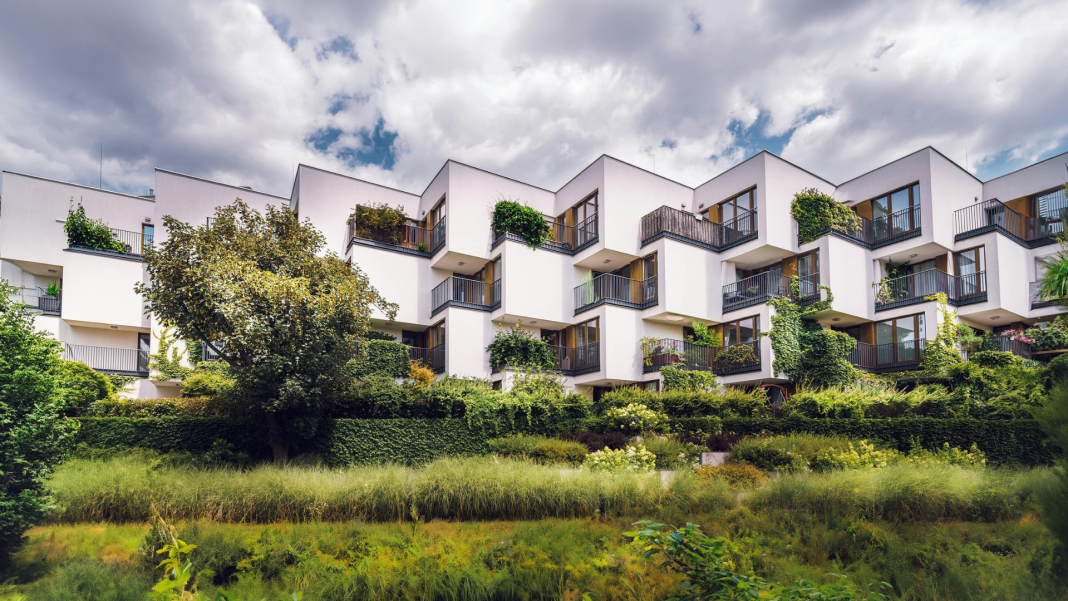
The company is investing €25 million to construct 27 apartments near its headquarters. The units, ranging from 75 to 90 square metres, will be rented at market rates, with the first apartments expected to be completed in 2026. Participation is optional, limiting internal tensions and recognising that not all employees want to live near their workplace.
The move effectively turns part of the company’s capital base into real estate, not for diversification, but for operational necessity.
When Private Capital Meets Public Policy
Employer-built housing remains the exception in Luxembourg, not the rule. One reason is the limited appeal of existing public support mechanisms.
In 2023, the government launched Aide à la pierre, a subsidy scheme designed to encourage the construction of affordable rental housing, including under certain conditions for employees. On paper, the state can contribute up to 75% of investment costs.
In reality, very few companies have taken advantage of the system.
Since its launch, just 23 companies have submitted applications, and only one project has resulted in a formal funding agreement, worth slightly more than €1.1 million. To qualify, companies must create separate non-profit or societal impact structures, accept long-term affordability obligations and operate under strict limits on profit distribution.
For most private actors, the economics simply don’t work.
The result is a widening gap between policy ambition and capital deployment, and a growing reliance on companies willing to self-fund unconventional solutions.
A Constraint on Growth, Not a Social Footnote
Luxembourg has faced labour shortages before. In the late 19th century, industrialists in the south of the country built housing to support the steel boom. The logic was straightforward: no homes meant no workers.
More than a century later, the same logic is resurfacing, this time in a knowledge economy.
Housing in Luxembourg is no longer a peripheral social issue or a niche HR concern. It is a structural constraint on labour mobility, competitiveness and growth. As long as supply remains limited and prices elevated, employers will be forced to adapt in ways that blur the line between operating company and property developer.
For a small number of firms, investing in housing has already become part of the cost of doing business. The broader question is how many others will follow, and what it says about the limits of Luxembourg’s current economic model if they do.
Read more articles:
Why Private Equity Is Suddenly Awash With Zombie Firms
Luxembourg’s New Representations Abroad: Towards A Stronger Integration Of Diplomacy And Finance