
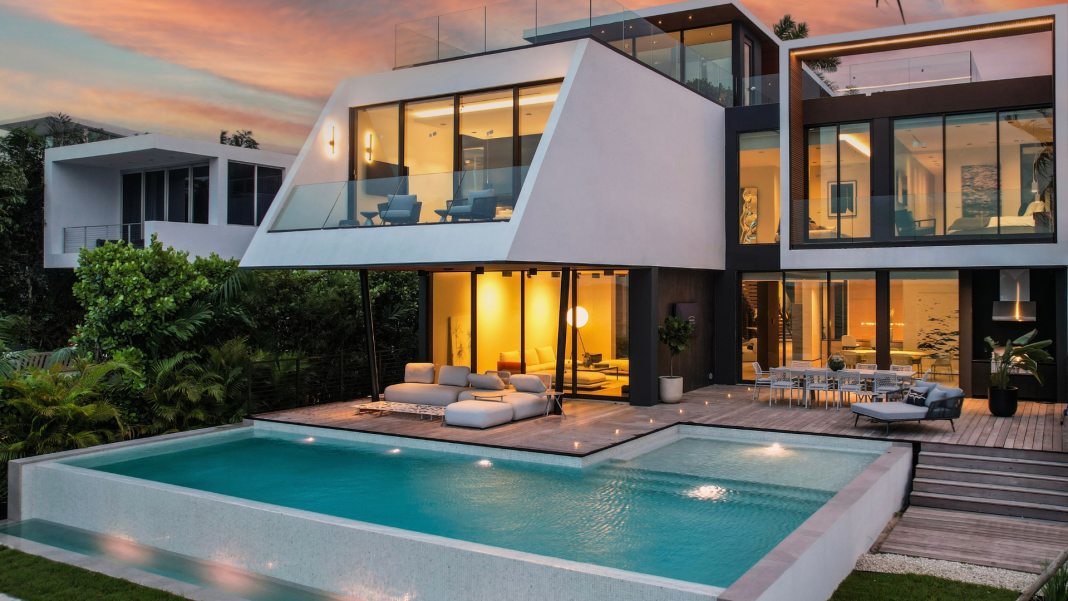
La Vie est Belle develops luxury real estate internationally, from Miami to Ibiza and Marbella, with Dubai on the horizon.
Created in 2012 by Pierre Thomas, and operated out of Luxembourg, La Vie Est Belle began in the United States, in Florida, in the wake of the subprime crisis. “I bought my first Miami property after the crisis, initially visiting two to three months a year for vacation.” As he spent more time there, the idea of developing a real estate business took shape. “I thought I might as well build a network and see who could manage deals.”
Miami as the starting point
The first operations were purchases followed by renovations and resales. “That’s how we started, with my business partner, in 2012, doing buy-renovate-resell deals.” Gradually, one criterion became central to project selection: “We realised the key factor was the location, not the property itself.”
“We realised the key factor was the location, not the property itself”
From then on, the company focused on very specific areas within greater Miami, “such as the Venetian Islands, located between Miami and Miami Beach, or Palm and Hibiscus Island, opposite South Beach.” According to Pierre Thomas, these locations play a decisive role when it comes to resale. “When you’re doing a buy-build-sell operation, there has to be a market once your home is completed. The location alone ensures an exit liquidity, alongside, of course, the product’s quality.”
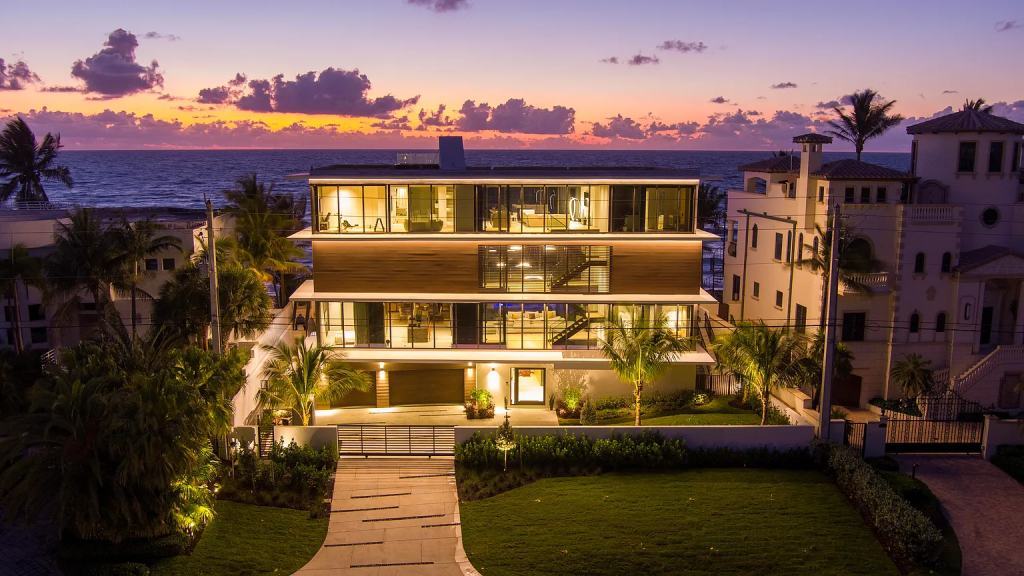
On this point, Pierre Thomas gives a concrete example. “We sold a beachfront house located between Miami and West Palm Beach for $30 million. Despite the price, it sold in under a month because the client was drawn to the location.” For him, this principle still holds in times of market stress. “During the subprime crisis, properties in prime locations lost about 25 to 30% in value. In significantly less desirable areas, we saw drops of 50 to 60%.”
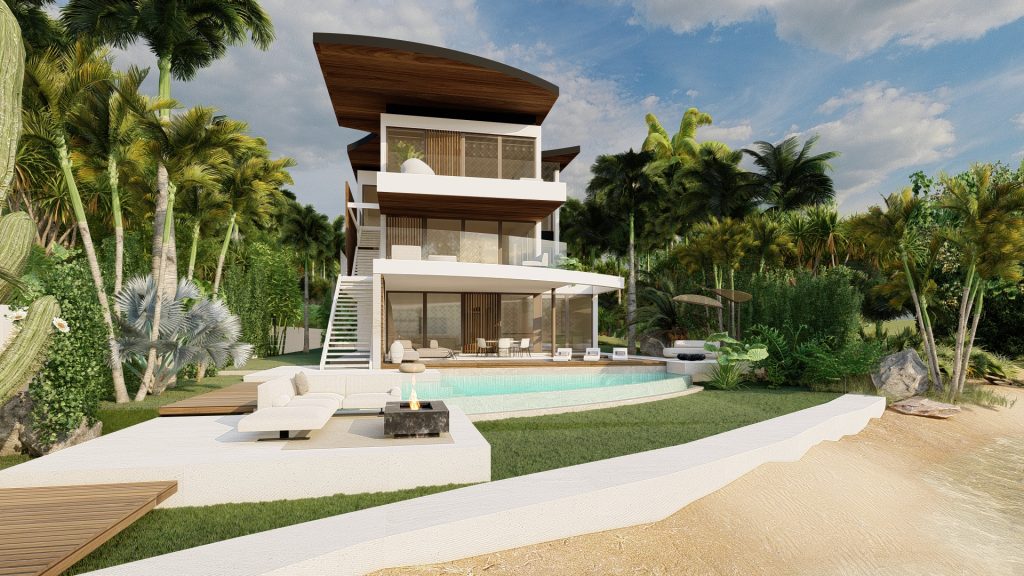
As the company grew, La Vie est Belle evolved its business model. After renovation projects, it increasingly moved toward building new luxury villas. “Today, we’re more focused on buy-build-sell operations in prime locations.” These projects involve large homes, “generally between 500 and 1,200 square metres.”
Structured projects
Pierre Thomas emphasises the alignment between pricing and execution quality. “You need to pay attention to what you build. The quality standards, the brands, the lighting, the kitchens, everything you install must match the price you’re asking and the property’s design.” This requirement also applies to how the work is organised, “always with local operators, people we partner with.” In other words, trusted partners are the cornerstone.
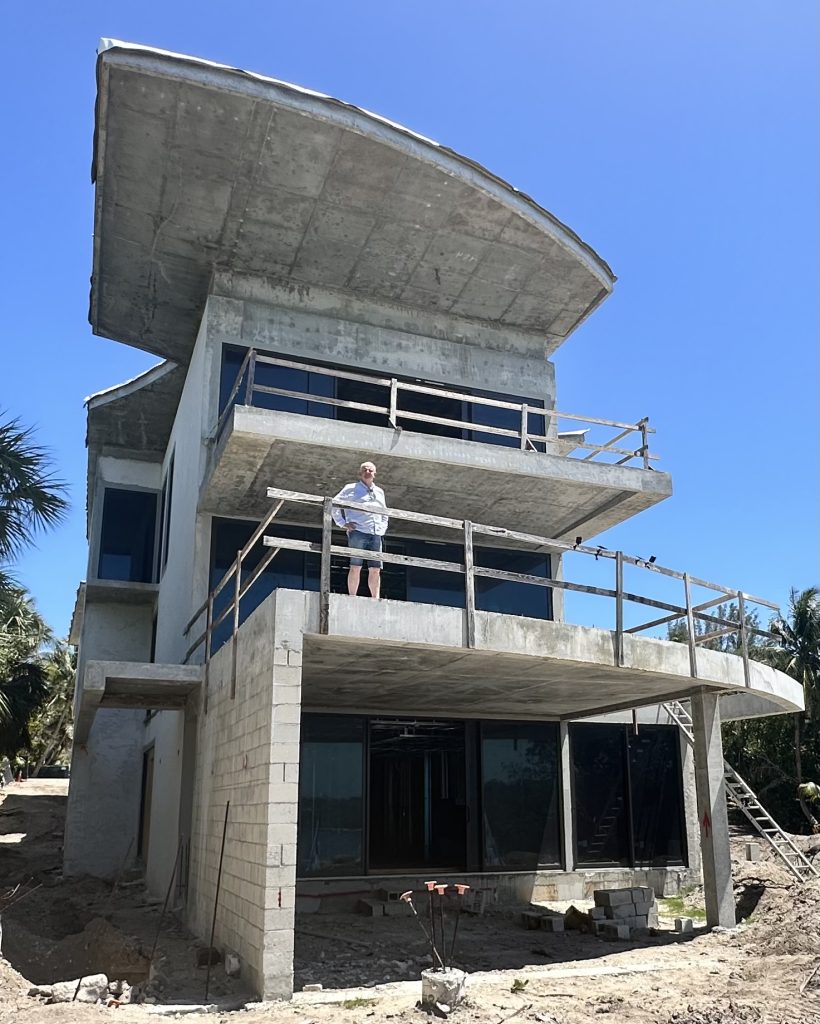
The company relies on local partners as well as in-house expertise, such as having a dedicated architect in each regional office. The goal is ultimately to ensure continuity between design and execution. “The buyer looks at everything: volumes, views, finishes, brands. At these price levels, everything is compared.”
Risk reduction
Administrative risk management is a key part of the model. “Co-investors don’t take on the administrative risk,” because in the US, La Vie est Belle only launches projects once building rights are secured. “When you’re told you have the right to build, the permit is a right, it cannot be challenged.” In Europe, however, the company prefers to initiate projects only after obtaining full authorisations. “We don’t shift that risk onto investors.”
Florida remains the company’s main operating market. Pierre Thomas describes an environment he sees as still dynamic. “That state welcomes about 1,000 new residents per day.” He mentions internal US migration, tax attractiveness in certain states, and the influx of foreign investors. “In Miami, 50% of purchases are made by Americans and 50% by foreigners.”
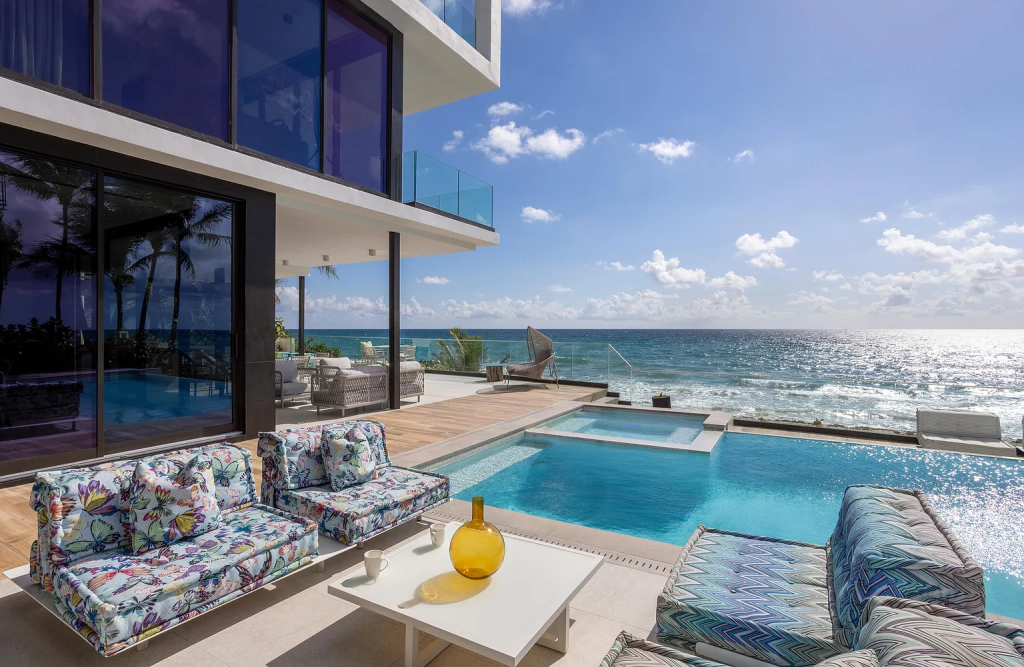
According to him, the luxury home segment in Florida shows no immediate signs of slowing. “The market is mature, so we need to be extremely careful with what we do, but we’re not seeing a slowdown yet in the luxury home sector.”
Dubai on the horizon
For several years now, La Vie est Belle has been expanding geographically. The company is now active in Ibiza and Marbella and is preparing to enter Dubai. “Diversification is key in our industry.” For Pierre Thomas, geographic diversification is also driven by contrast with the Luxembourgish market. “Today, when you invest locally in Luxembourg with a gross return of 3 to 4% before tax, and on top of that there’s a 10 to 15% risk of a price correction, it raises questions.”
“The idea isn’t to stop investing in Luxembourg, but not to put all our eggs in one basket”
The tightening of financing conditions and the rapid rise in interest rates have drastically changed the investment landscape. “When banks are less willing to lend and rates go up, you can lose several years of returns if the market corrects.” In this context, expanding geographically becomes a protective lever. “The idea isn’t to stop investing in Luxembourg, but not to put all our eggs in one basket.”
Ibiza vs Dubai
In Ibiza, limited land availability imposes strict selection. “We only work on plots with permits, with local operators we know.” In Marbella, a project involving fifteen houses has already been completed. In Ibiza, several projects are underway, with a target of two to four operations per year.
Dubai, on the other hand, is being considered mainly for tax reasons. “Dubai has no corporate tax, which changes everything.” Pierre Thomas notes, however, that caution is still essential. “The market has risen a lot. We need to remain prudent.”
Club deals
The projects are mostly structured as club deals, pooling several investors for a specific operation. Projects typically last two to three years, compared to six, eight, or ten years for traditional real estate funds. La Vie est Belle always co-invests. “In general, we contribute between 10 and 20% of the total risk.” Entry tickets start at €250,000, with an average ticket between €500,000 and €2 million. “These are sophisticated investors, often business owners or wealthy families.” The company favors limited leverage. “We operate with 30 to 40% equity.” A conscious choice from the beginning, “to avoid excessive leverage effects.”
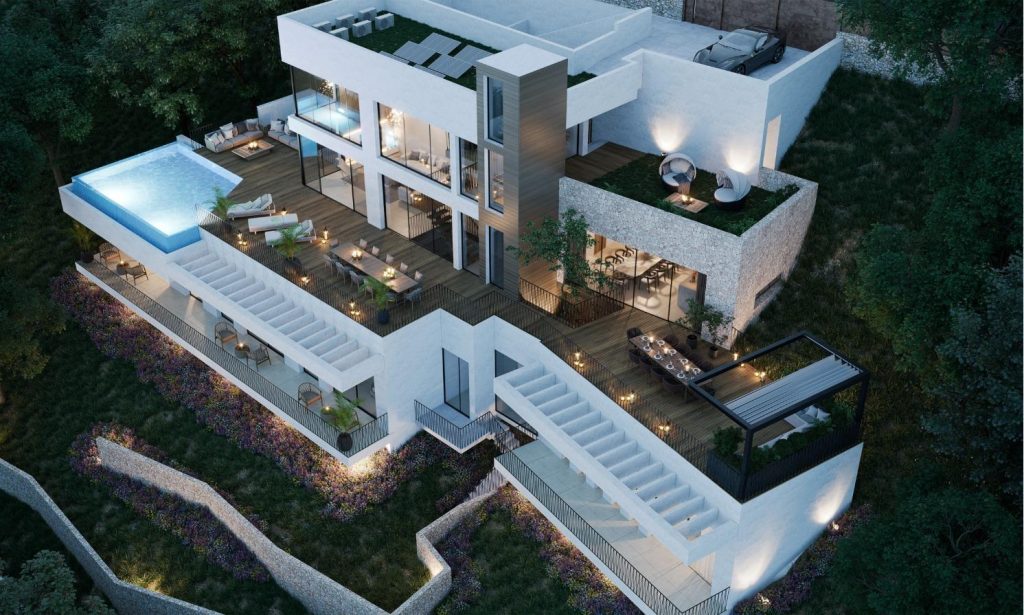
The announced investor returns generally range from 15 to 20% per year. Pierre Thomas stresses that these figures must be considered alongside the project duration and execution. “Investors often underestimate time, timelines, or financial carrying costs.” According to him, their experience helps anticipate these factors. “They’re also investing in our experience and our track record.”
After ten years at the helm of La Vie est Belle, what motivates Pierre Thomas to keep reaching further? “What interests me are the projects, the interactions with investors, and the quality of what we build.”
This article was published in the 9th edition of Forbes Luxembourg.
Read more articles:
HEKTAR, Exceptional Residential Projects In Luxembourg
Why Luxembourg Employers Are Turning To Real Estate to Secure Talent
