
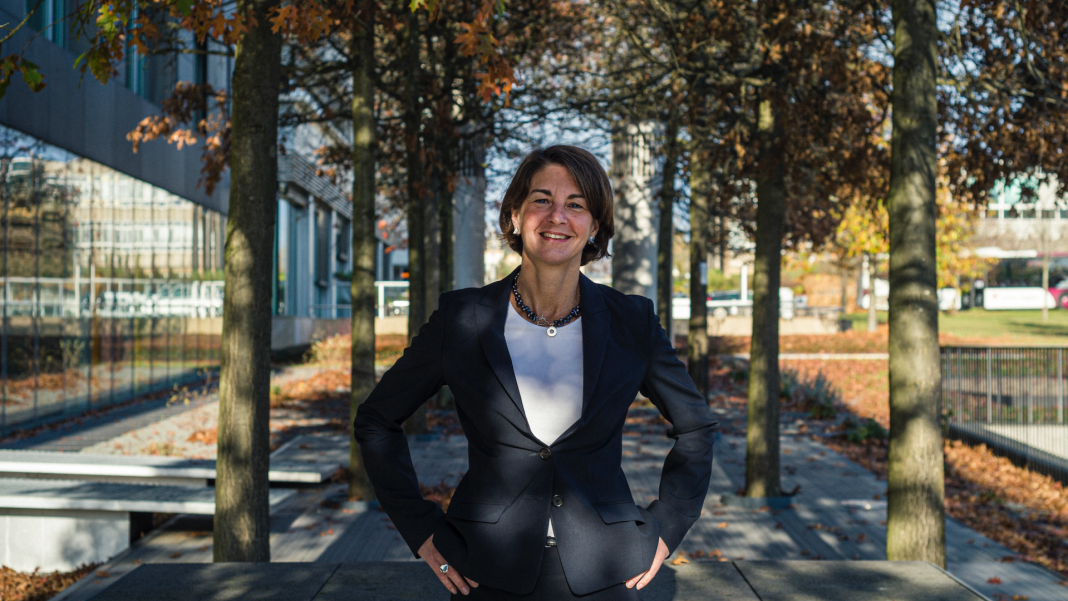
Luxembourg is an increasingly influential hub for international philanthropy, as people seek more structured ways to deploy their private wealth in response to growing global needs. Fondation de Luxembourg director general Tonika Hirdman discusses some of the recent milestones.
The Fondation de Luxembourg, founded in 2008, surpassed two major milestones this year: cumulative donations to the foundations it is hosting rose 16% year-on-year to €437 million, while total distributions exceeded €100 million for the first time. In 2025 alone, the foundation distributed a record €13.6 million to 300 different beneficiary organisations, supporting initiatives in 57 countries.
Hirdman surmises as to why the Fondation de Luxembourg is witnessing these increases. “Public aid is going down, and quite considerably,” she explains, citing the funding crisis the United Nations human rights pillar is facing, the gutting and pending closure of the United States Agency for International Development (USAID), but also public budget decreases in places like Belgium, the UK, and elsewhere.
But the other reason is that “wealth has been increasing quite significantly. We are seeing a lot of inherited wealth, and the younger generation is much more keen on engaging in philanthropy, investing according to ESG, buying consciously when they buy a car or consume, running their family companies in a sustainable way.”
Shifts in sectors
There has also been a shift in terms of where philanthropic wealth is flowing. During the covid-19 pandemic, there was an uptick in support toward health and scientific research, which remained elevated for some years, but then eased slightly, with support for education and poverty reduction increasing. But, more recently, health and research funding has rebounded sharply, helped in part by a major legacy donation from a Luxembourg citizen worth around €100 million. “Through that foundation, we have become a major accelerator for research projects with the University of Luxembourg in the area of cancer,” Hirdman adds.
Hirdman also notes a clear generational difference in terms of sector giving. “The older generation are much keener to support health-related projects [which] can be research but also care for people who are suffering. And secondly, education is important for this generation,” she explains.
Meanwhile, the younger generation has more of a desire to back issues that are “very close to their hearts”, like the environment and social inclusion.
Wide range of projects
The Fondation de Luxembourg’s annual report lists the wide range of projects and the Sustainable Development Goals to which they align. When asked about some of the unique projects that might even surprise people, she provides a few examples. One is the Fondation Chance MBD founded by a couple living in Luxembourg, both retirees. One of the projects they are supporting is building a corridor in Tanzania through which elephants can pass, since they otherwise impact the local ecosystem as they stomp through the landscape.
Another is the Fondation Christine Tesch-Goblet d’Alviella with “La Violette”, which aims to help cancer patients via art therapy at a specially dedicated rehabilitation centre in Colpach Castle in western Luxembourg. This foundation, Hirdman explains, “was created by François Tesch and his three children in memory of their mother, who passed away from cancer several years ago, who was also an artist—and by painting, it also helped her live with her cancer.”
Funding has also gone as far as the Arctic region, thanks to the Fondation Philanthropia Europe, which is supporting the Tara Polar Station, a drifting research platform which will monitor aspects like pollution, marine biodiversity, etc., to better understand the Arctic and how its transformation has effects elsewhere.
Capturing philanthropy through photos
Another record for the Fondation de Luxembourg was the number of photo submissions it received this year for its annual photo contest, which has been running each year since 2012. Each year, the Fondation asks its roughly 150 beneficiary organisations to share their best images; a jury helps with the shortlist, and the general public is then asked to vote for their favourite.
The “coup de coeur” winner for 2025 was taken by the CARE Luxembourg non-profit association and shows a young girl in Ukraine, dressed in bright colours, a balloon attached to her bike, a smile on her face—with rubble in the background from the war. As Hirdman puts it, “I think it says so much…she looks happy, she’s biking, and it’s a child, and she’s in the midst of destruction behind her.”
Read more articles:
Luxembourg’s Tokenised Funds Move Beyond Experimentation