
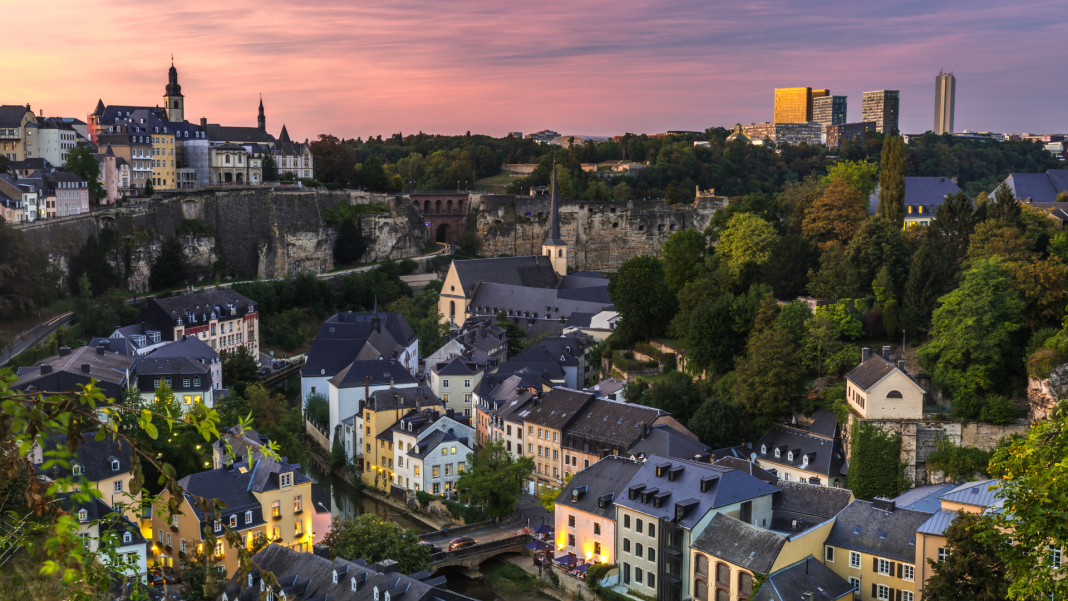
A new wave of innovators is entering Luxembourgish agriculture with the aim to build a sustainable and sovereign future through high-tech tools and sustainable farming.
Luxembourg’s agricultural landscape has changed drastically since the industrial revolution. Once a nation of farmers, the country has seen its cultivable land shrink by an estimated 23% since 1950. As economic diversification shifted labour and investment away from agriculture, globalisation made importing, even otherwise locally grown produce, much cheaper.
Today, the Grand Duchy produces between 3–5% of the vegetables and less than 1% of the fruit its population consumes. The result is a food system heavily dependent on imports, vulnerable to global events, and increasingly disconnected from its own farming heritage.
Yet a new generation of innovators is attempting to bring the Grand Duchy back to its roots, while aiming for national food sovereignty.
A sector in transition
Luxembourg’s leap towards food security and innovation is not limited to futuristic greenhouses. Legacy players like Moulins de Kleinbettingen are adapting to changing demand and environmental pressures, expanding into a diversified range of Luxembourg-made plant-based alternatives.
At the same time, a different movement is emerging, focused on hyper-local and smaller-scale farming with a strong commitment to organic practices. That’s the case at Geméiswierk, for example, an organic vegetable farm based in Contern, delivering fresh vegetables and eggs within a short radius.
Yet these efforts alone may not be enough. Luxembourg remains a major producer of dairy and beef, generating more than enough to meet domestic demand. But its limited output of fresh vegetables and fruit, combined with high land and labour costs, makes it difficult to scale toward a truly sustainable and self-sufficient food system.
This opens the door for a new wave of super-charged agricultural entrepreneurs seeing the opportunity for tech-fuelled improvements.
Breaking ground with aquaponics
Aquaponics is far from new, its origins trace back to the Aztec empire, but Fësch Haff co-founders Manuel Arrillaga and Daryl Fuchs believed the system could be pushed further.
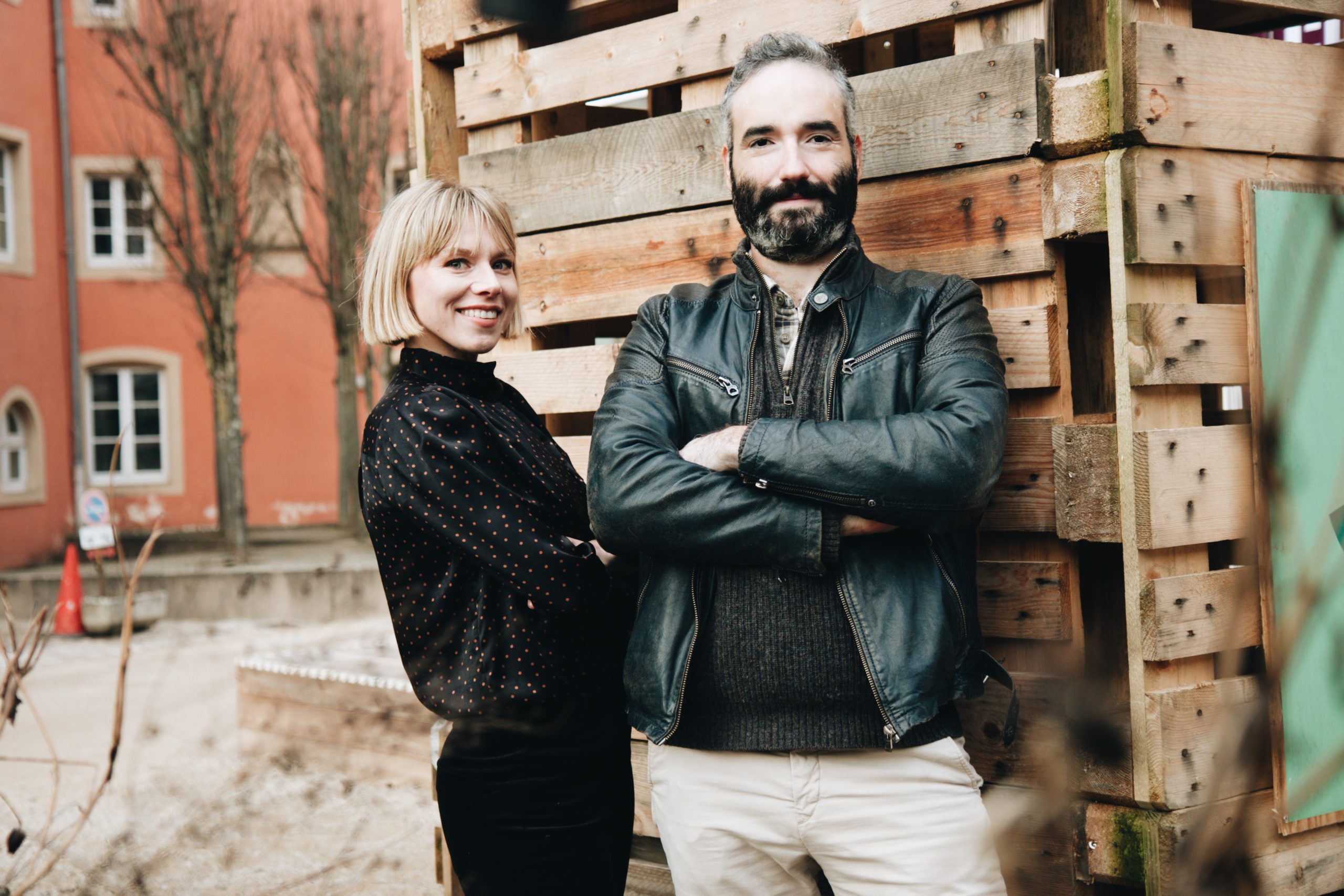
“The plants clean the water for the fish, and the fish feed the plants. A complete symbiosis, as nature intended,” Arrillaga explains.
Raised in Mexico and the US, Arrillaga met Fuchs while studying in Germany. What began as a dorm-room experiment, building tanks, feeding fish with homemade natural food, and tinkering with filtration, eventually led to a breakthrough: a biofilter capable of transforming nearly 100% of fish waste into nutrient-rich fertiliser.
The turning point came during the first Covid lockdown. As supermarket shelves emptied overnight, Arrillaga realised that even one of the world’s wealthiest countries could face food insecurity once borders closed. They contacted Luxembourg’s Ministry of Agriculture, received immediate support, and soon built their first facility in the country.
Today, Fësch Haff’s system produces fish while growing vegetables up to 15 times more efficiently than traditional farming, using no chemical fertilisers, pesticides, or antibiotics, and wasting virtually no water.
Fitotech: hyper-local greens through hydroponics and fogaponics
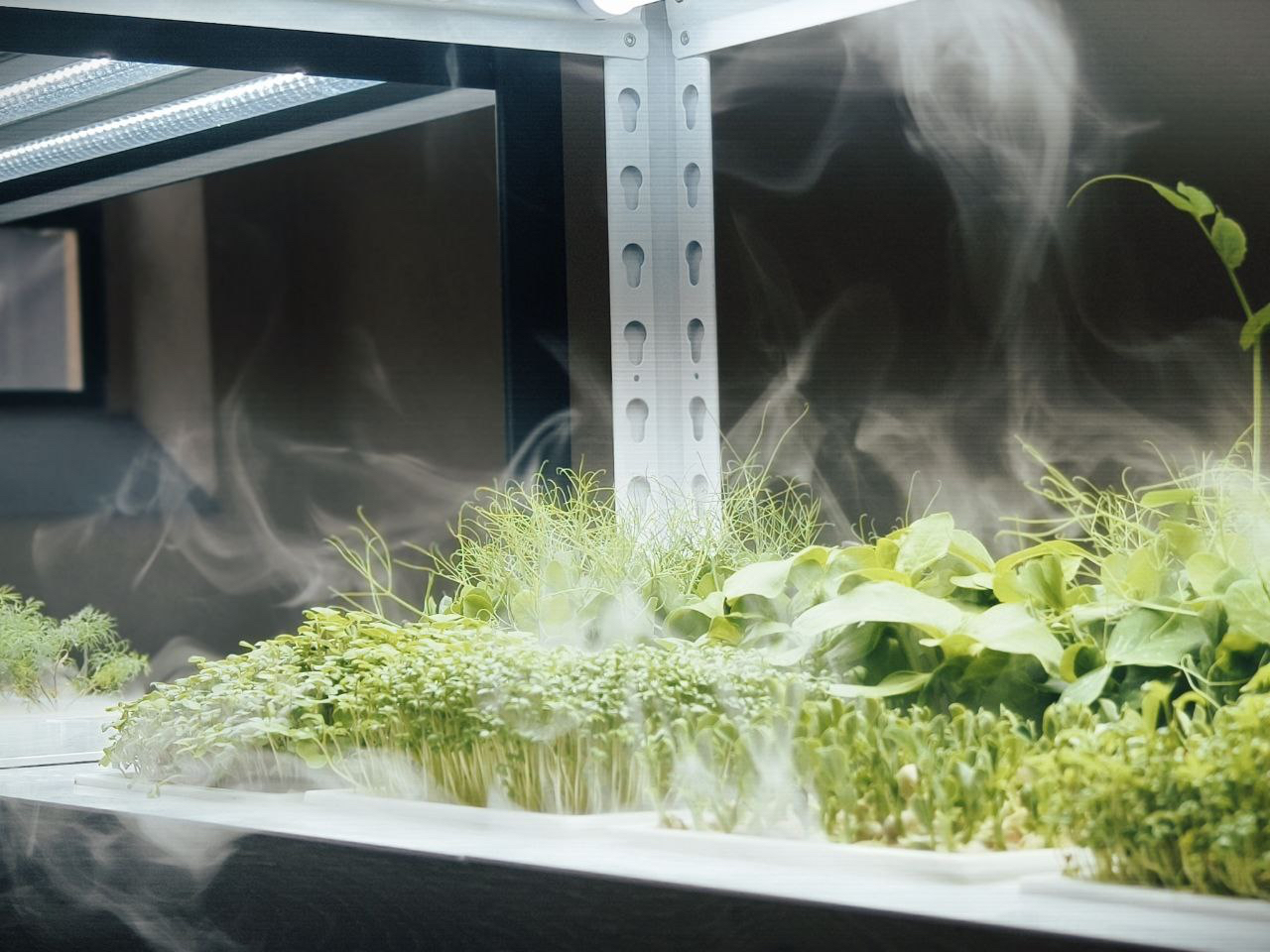
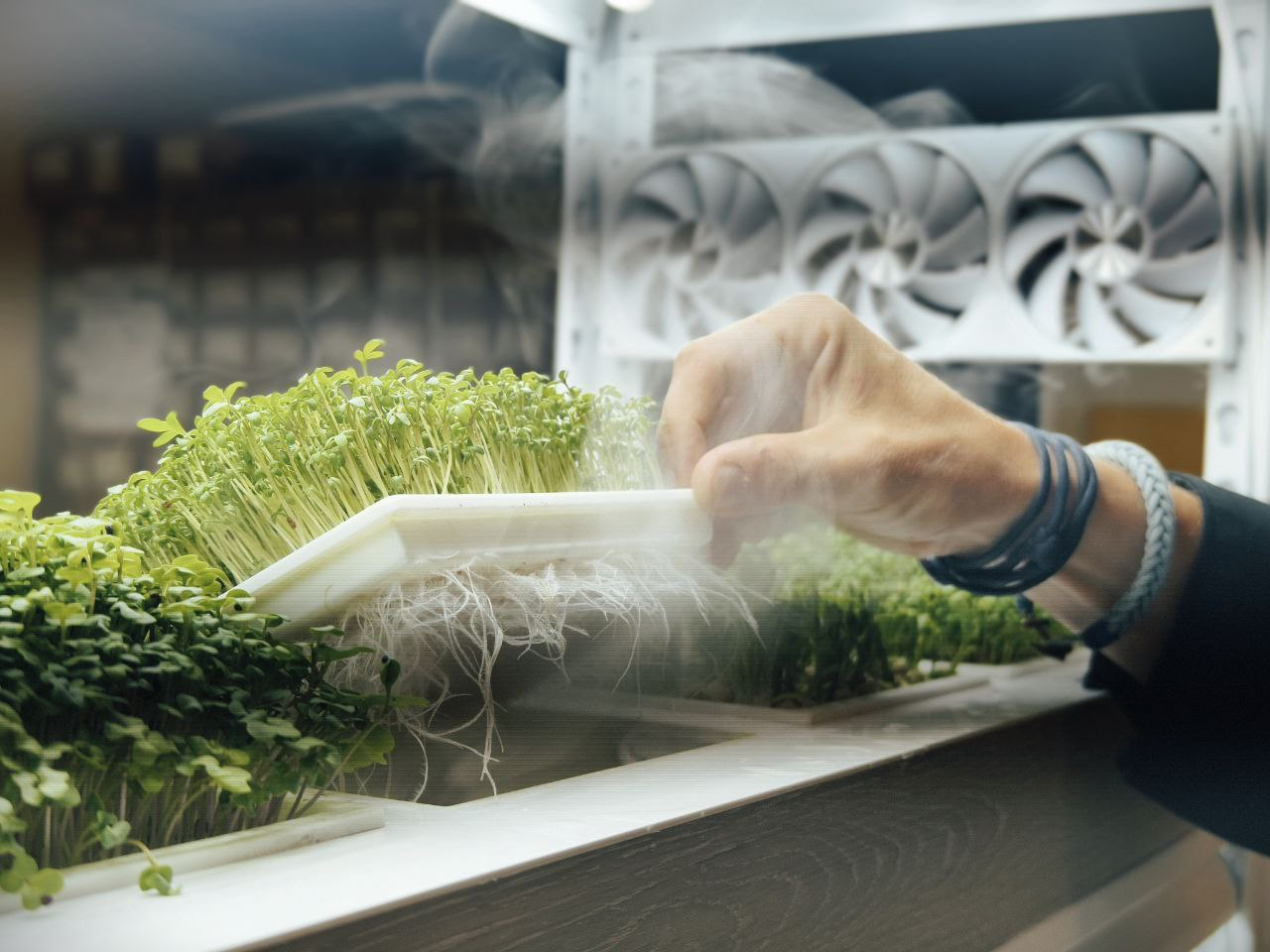
While Fësch Haff focuses on aquaponics, Fitotech brings a different approach. Founded by Vadim Gabel, the company develops hydroponic and fogponic equipment that allows plants to grow directly in water or nutrient mist, without soil and with minimal waste.
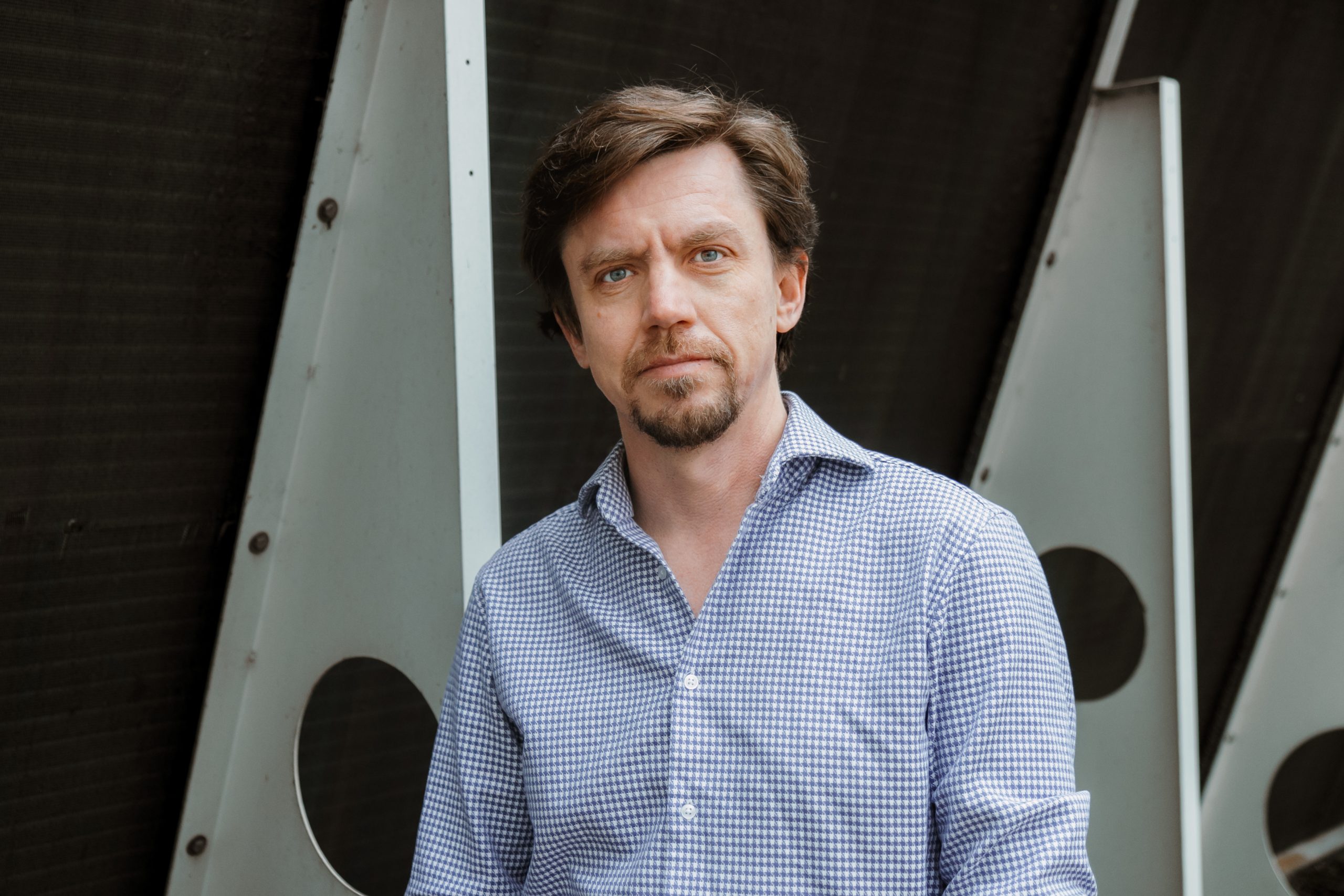
Fitotech entered the Luxembourg market in 2023 and now supplies herbs and microgreens to Cactus and Grosbusch. But, their main prospect is selling the tech they develop to other businesses in Luxembourg. Their first client is a restaurant in Bridel, Maison B, where greens are grown in-house and harvested minutes before reaching the plate.
“Our equipment can grow herbs year round, independent of weather conditions,” Gabel says. “Because the system is closed, there’s no exposure to outside pathogens.” Effectively eliminating pests and assuring output.
“It’s recent that people have been using microgreens in food, and I think it’s the future”
Their main focus is not regular greens but microgreens. Once primarily decorative garnishes, microgreens are vitamin bombs, Gabel explains: “It’s recent that people have been using microgreens in food, and I think it’s the future.” Producing them at a lower price, these could become more than just a pretty add-on to a nice meal. For Gabel, microgreens could become a dietary staple. Because they’re such young plants, they seldom encounter problems, resulting in less wasted produce, he underlines.
Through Luxinnovation support, the young company is now building AI-driven tools that analyse live camera feeds to predict plant health, growth, and potential issues. “If you know these parameters early, you reduce waste and avoid waiting weeks for a crop that won’t succeed,” Gabel explains.
Horizon Farms
If Fësch Haff is Arrillaga and Fuchs’s innovation hub, Horizon Farms is their way to scale up. The company aims to modernise agricultural facilities across Luxembourg and beyond.
“Our goal is to create access to affordable food,” Arrillaga says. Automation, he argues, is the key. In Luxembourg, where labour costs are among the highest in Europe, a hectare of greenhouse production might require 20 workers. With one or two robots, that number could drop to six.
Horizon Farms is working with The Luxembourg Institute of Science and Technology (LIST) on a 5G-powered automation project, and with Frontier Connect, a Luxembourg startup developing machine-learning tools and robotics to monitor plant growth, detect disease, and optimise harvest cycles.
A new Horizon Farms facility launching later this year will devote two-thirds of its investment to automation, demonstrating that Luxembourg can produce food at a stable, accessible price year-round. The company is also exploring the use of waste heat from local industries to warm greenhouses, reducing reliance on gas or diesel.
Investor interest mirrors momentum
“Nearly every investor we’ve talked to has said this is important,” Arrillaga notes. “There’s a huge will from the investing community to put money into sustainable agriculture.”
“There’s a huge will from the investing community to put money into sustainable agriculture”
But regulatory challenges remain. Until recently, Luxembourg had no legal framework for industrial greenhouses. And if aquaponics were deployed at large scale today, the fish produced still could not be sold commercially. Arrillaga stresses that Fësch Haff was backed by the Luxembourgish government from the beginning, showing its commitment to the same goal of food sovereignty.
Recently, the Ministry of Agriculture launched a €20 million fund to support innovative greenhouse projects, as well as a competition offering farmers and other agricultural actors up to €65,000 for innovative ideas.
Fësch Haff will soon distribute part of its production through a major Luxembourg retailer, but Arrillaga stresses that production is only one piece of the puzzle. “Our mission is to spread the technologies that will make Luxembourg’s food system more resilient, sustainable, and sovereign.”
This article was published in the 9th edition of Forbes Luxembourg.
Read more articles:
La Provençale: Exemplifying True Luxembourgish Value
Wind Of Change Blowing Through Legal Profession
Meet The Scale-up Closing The $3.5 Trillion Climate Funding Gap
