
Luxembourg is undergoing a quiet but meaningful shift as an emerging hub for defence-tech and dual-use innovation. The question is not about whether to invest in defence, but how fast, smart, and coordinated such investment should be.
For Luxembourg, “the fact is the situation has changed. We all lived believing that peace was granted forever after World War II, and that we didn’t need to invest that much in defence,” Deputy Prime Minister and Minister for Foreign Affairs and Foreign Trade Xavier Bettel said during a Luxembourg Economy Day panel on 8 March. At the start of his role as Prime Minister (2013-2023), he recalled, Luxembourg’s NATO spending was around 0.4% as opposed to 2%. And, while he sees opportunities in Luxembourg, “we are not very specialised in the defence industry… but also, if I have to spend €1 billion in the future on defence, that I can spend that in Luxembourg, so these companies are creating jobs here.”
Luxembourg is not attempting to replicate traditional defence powerhouses, but instead positioning itself in high-value, niche segments that align with its own strengths. At the core of this ecosystem are space, materials, cybersecurity, industry and, of course, finance.
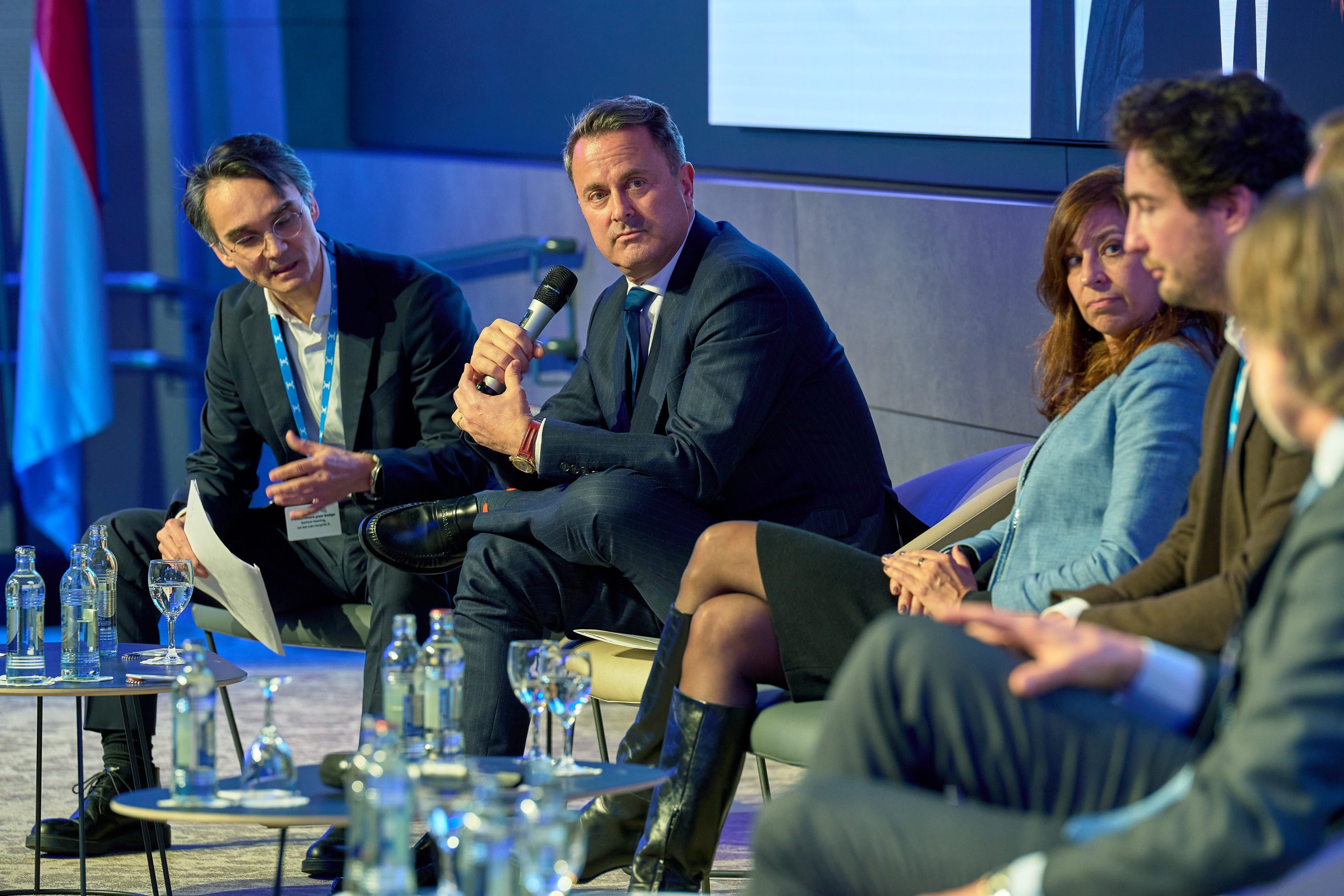
Several companies and initiatives were mentioned throughout the panel, including satellite operator SES—which recently announced its plans to build satellites in Luxembourg and vertically integrate in the country—and the GovSat public-private partnership. As Franck Thomé, LuxDefence board member and Ceratizit Group board member noted, Ceratizit produces tungsten, an extremely dense metal with the highest melting point, used in military and industrial applications. The company is “by far the biggest Western tungsten producer in the world, and most of it is processed in Luxembourg, especially for Europe.” He cited companies like ArcelorMittal, Saturne Technology, and Euro-Composities and added that, while perhaps lesser well known, defence companies, such as Rhinemetall in Germany, were already purchasing from Luxembourg.
Challenges for the country
Thomé sees several strengths for Luxembourg: “outstanding” logistics infrastructure and cyber infrastructure, political stability, strong government support, financial capabilities, etc. But there are three shortfalls, “and we have to address them quickly”: the arms and ammunition law, making it easier for companies to open bank accounts, and identifying suitable land or sites to develop such industry. The automotive campus in Bissen, for instance, “is to a large extent empty. Why not put some companies there?” he added. “If there’s a willingness, there are options—and I think there is a willingness.”
Such a willingness is picking up on the investor side as well. In January, the Luxembourg government Defence Bond—which was “intended for retail clients and is considered a non-complex financial instrument under MiFID II”—met the target of €150 million, selling out in under a day.
From Ilavska Vuillermoz Capital general partner Quentin Dupraz’s standpoint, “The people that are ringing the bell to invest in defence are more high-net-worth individuals, family offices, or traditional industry in defence that want to long-term have a play in the reshuffling of the manufacturing.” He added that Luxembourg—and Europe—need to create more visibility around the topic to help ensure the efficient flow of capital.
Three-pillar EU strategy
As several speakers pointed out, the EU’s problem isn’t a lack of funding but rather fragmented national systems (27 armies, 27 standards); lack of coordination across member states; slow procurement processes; etc. As Bettel put it: “We speak global but act local.”
Head of the European Commission Representation in Luxembourg Anne Calteux outlined three main pillars geared towards efficient spending in the EU. First, “We put real European money behind joint procurement. We incentivise member states to buy together.” Second is strengthening the EU’s industrial defence base, and third is defining targets.
The goal is that by 2030, EU member states collaboratively procure a minimum of 40% of their defence equipment and that intra-EU defence trade value should be at least 35% of the EU’s total. Programmes that are helping make these pillars happen include, for example, the European Defence Fund (EDF) and the Security Action for Europe (SAFE) fund.
Read more articles:
Vodafone Procurement Streamlines Supply Chain Ops With Mega Hub
From Founder To Advisor: Eric Grosset’s Transition After Asensia’s Acquisition
Luxembourg’s Competitiveness Strategy: Beyond Cost And Taxation