

By the Moselle, Château de Rudlingen has become Laurent’s summer art de vivre: a garden of quiet elegance, generous wines, friendly tables and historic charm.
There are people who spend years looking for balance. Laurent von und zu Rudlingen found his with a pair of secateurs in one hand and a glass of wine in the other, somewhere between Schengen and Sierck-les-Bains, on a quiet curve of the Moselle where Luxembourg, France and Germany exchange polite looks across the water.
Château de Rudlingen is not a place that tries too hard. It does not announce itself with grand theatrics. It simply appears, framed by vines, river and garden, as if it had always known that understatement is the most reliable form of elegance. The building has seen centuries pass, fashions change and borders acquire administrative enthusiasm. Today, under Laurent’s watch, it has acquired something rarer than perfection: charm.
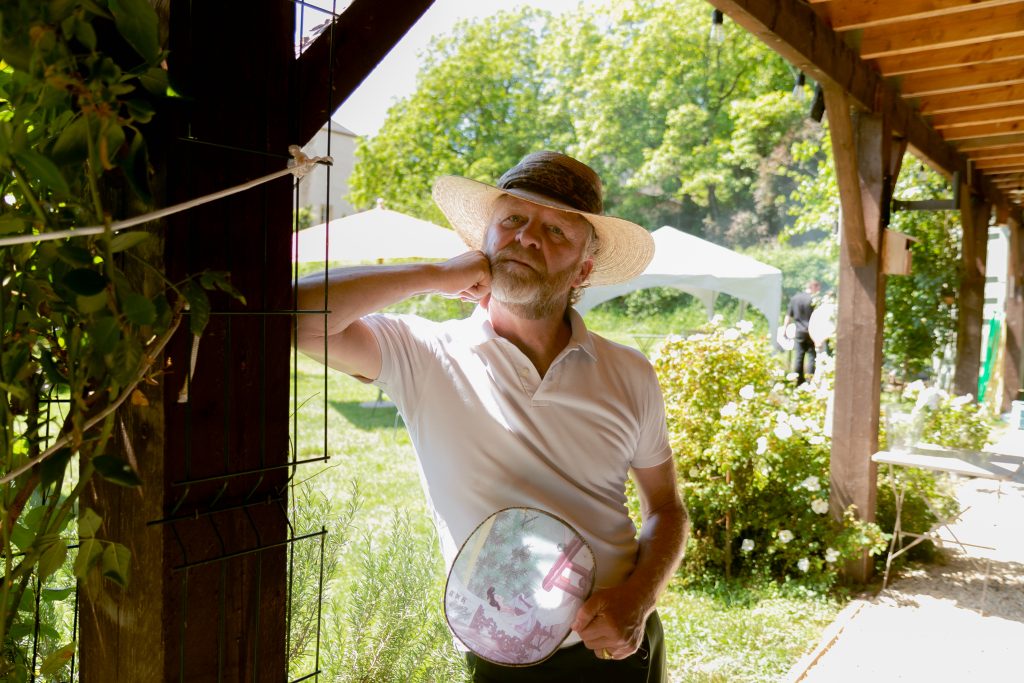
Laurent likes friends. Laurent likes wine. Laurent likes gardening. In most lives, these are hobbies. At Rudlingen, he has arranged them into a business model, a lifestyle and, one suspects, a fairly convincing argument against ever returning to a boardroom. The former finance man, once based in London, has exchanged market screens for river reflections. It is not a conventional career pivot, but then again, few spreadsheets come with a view of the Moselle at sunset.
The estate, acquired in 2004 with Italo Di Lorenzo, required more than enthusiasm. It needed roofs repaired, heating and electricity renewed, interiors reconsidered and a garden rescued from the kind of wilderness that suggests nature had been left unsupervised for too long. Two décades of work later, Rudlingen had found a new life. Not as a museum, nor as a private trophy, but as a house that breathes, receives and occasionally pours another glass.
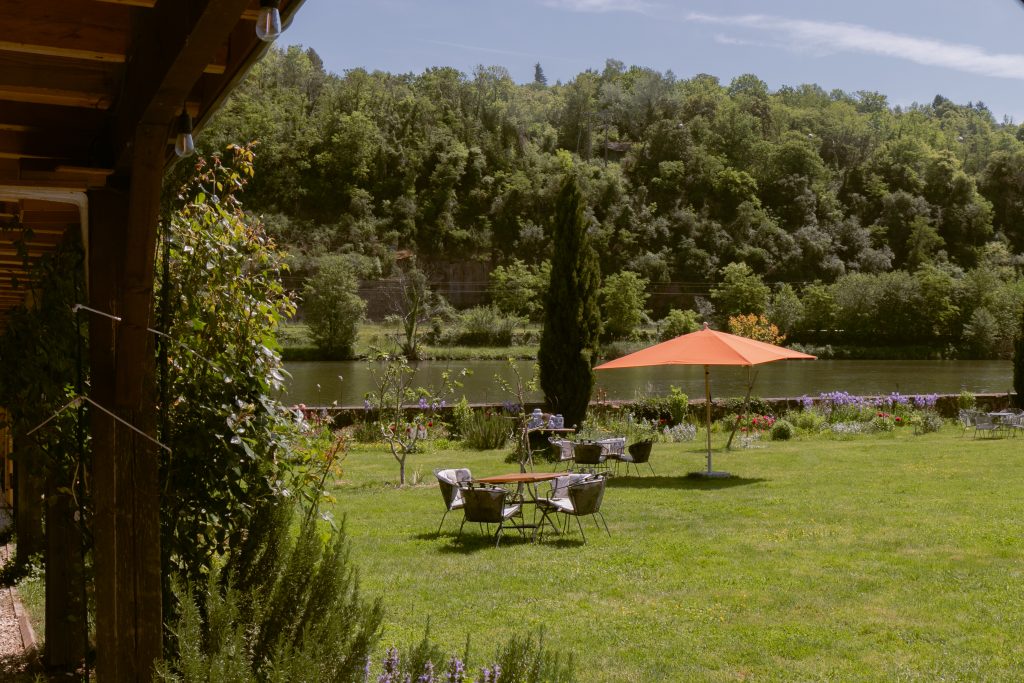
From spring to autumn, the garden opens to the public. Visitors arrive for a drink and stay for the mood. The terrace sits close to the water, the vines rise behind it, and the atmosphere belongs to that enviable category of places where time does not stop, but at least agrees to slow down. Wine from the surrounding vineyards, Crémant, Riesling, Pinot Gris, Gewurztraminer, Pinot Noir, eaux-de-vie, cheeses, charcuterie and seasonal plates create the essentials. Nothing shouts. Everything invites.
There is also a gentle sense of theatre. The château has served as a backdrop for film shoots and private events, which is hardly surprising. Rudlingen looks as though a location scout invented it after lunch. Yet the real production is daily and informal: chairs placed just so, glasses catching the late light, and Laurent moving between guests with the relaxed authority of a man who knows where the corkscrew is.
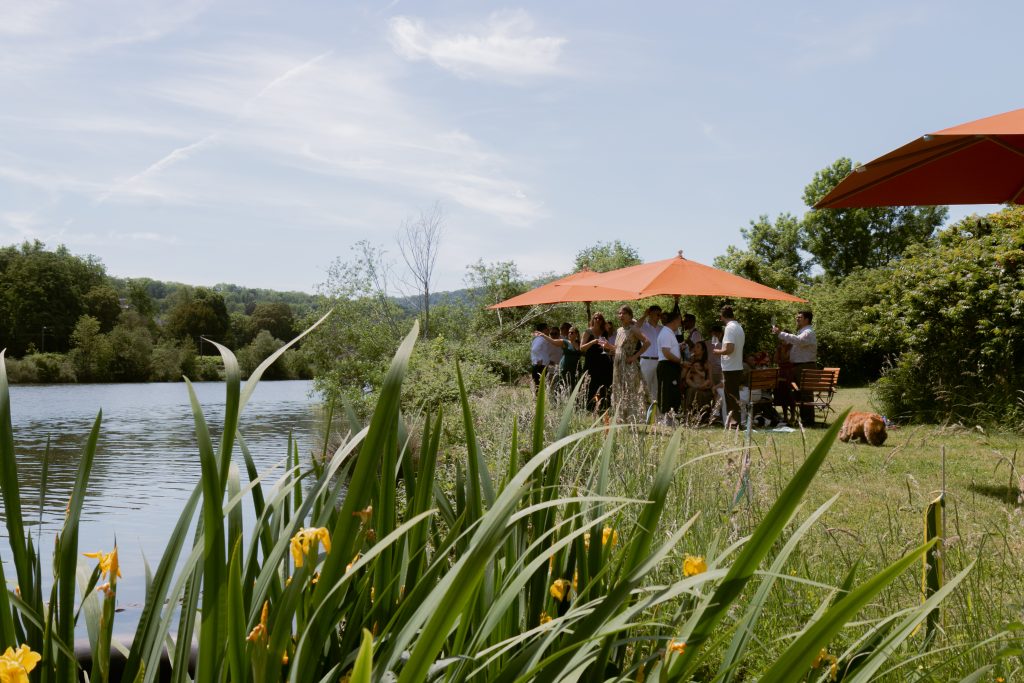
This is hospitality without stiffness. A guinguette, yes, but one with heritage in its bones. A garden, yes, but one that understands business. Laurent’s genius is to make the place feel personal without making it feel private. Guests are not treated as clients passing through a concept: they are received as visitors to a home. “You are at our place as if it were yours,” says the spirit of Rudlingen. Sensible guests, of course, still leave the furniture where they found it.
For Luxembourg readers, part of the pleasure is proximity. Rudlingen is close enough for an afternoon escape, yet far enough to feel like a small betrayal of the diary. One minute you are discussing emails, rates, meetings and school runs; the next, you are sitting by the Moselle wondering whether ordering another glass of crémant qualifies as cultural research. In the Lifestyle section, we are prepared to argue that it does.
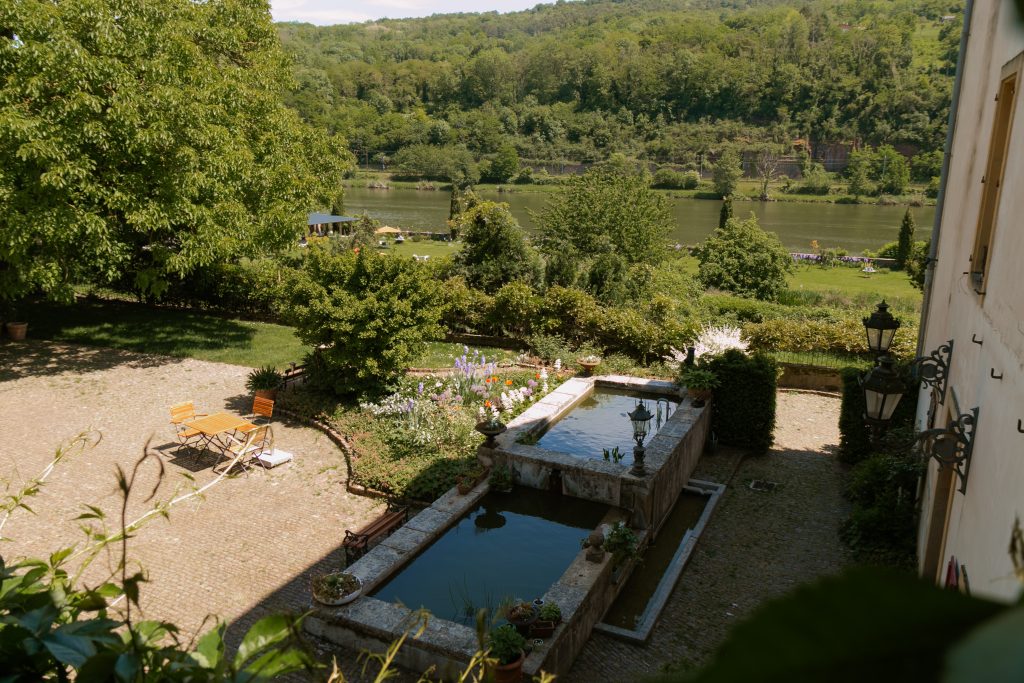
What makes the place work is that Laurent’s pleasures are not staged for effect. The garden matters because he gardens. The wine matters because he drinks it, discusses it and enjoys sharing it. The guests matter because he likes people coming by. In an age when lifestyle is too often packaged and filtered beyond recognition, Rudlingen remains refreshingly concrete: soil, stone, water, weather, bottles, friends.
Summer is the obvious season. The river softens the heat, the garden fills, and the château becomes a civilised answer to the question: “Where shall we go?” But Rudlingen is not idle when the chairs are stacked away. In winter, Laurent travels. He looks, tastes, listens and collects ideas. Then he returns to prepare the next season, because a garden may look effortless only to those who have never had one. Behind every romantic terrace is a list of jobs long enough to frighten a committee.
There is light humour in the arrangement. Laurent has built the life many executives describe in vague terms after their second espresso: more nature, more meaning, more time with friends, less nonsense. The difference is that he actually did it. He left one form of performance for another, exchanging financial discipline for seasonal discipline. The garden must open. The wine must be chilled. The guests must be welcomed.
Rudlingen also carries a lesson in scale. It does not need to be enormous to be memorable. It does not require spectacle to be desirable. Its luxury lies in access to a particular rhythm: lunch that becomes late afternoon, late afternoon that becomes evening, evening that persuades you to postpone leaving. In a region often defined by cross-border movement, Rudlingen offers a softer kind of crossing: from efficiency to pleasure.
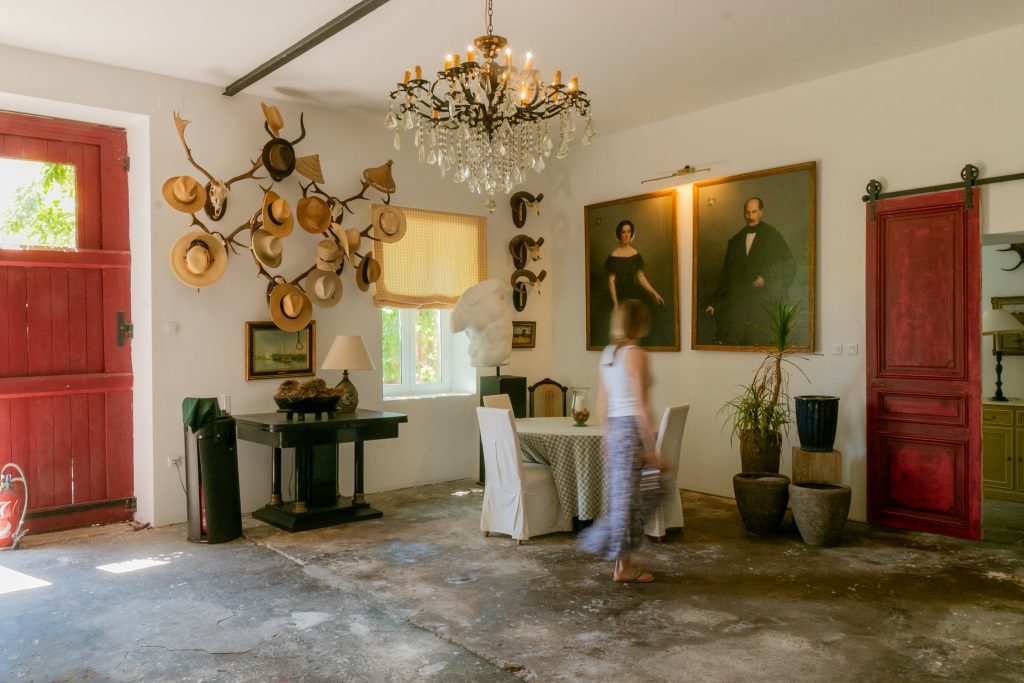
For Laurent, happiness seems to have become less an abstract goal than a working practice. He has not retired from activity; he has chosen a better-looking form of it. There are bookings to manage, suppliers to call, lawns to tame, bottles to choose, weather forecasts to mistrust and visitors to receive. But the work is attached to a place he loves, and that changes everything.
By the Moselle, at Château de Rudlingen, summer is not an event. It is a habit. The garden opens, the glasses appear, friends arrive, strangers become less strange, and Laurent stands at the centre of it all, part host, part gardener, part wine enthusiast and part proof that a well-designed life may begin with an old house, a river view and the courage to say: this is enough.
This article was published in the 10th edition of Forbes Luxembourg.
Read more articles:
A Forest That Sings: Meet The Luxembourgish Artist Behind These Impressionist Paintings
