

From Skype to Wix to Flo Health, Mangrove Capital Partners has been behind some of the biggest success stories of the last two decades. We dive into its investment philosophy and the VC firm’s past, present, and future.
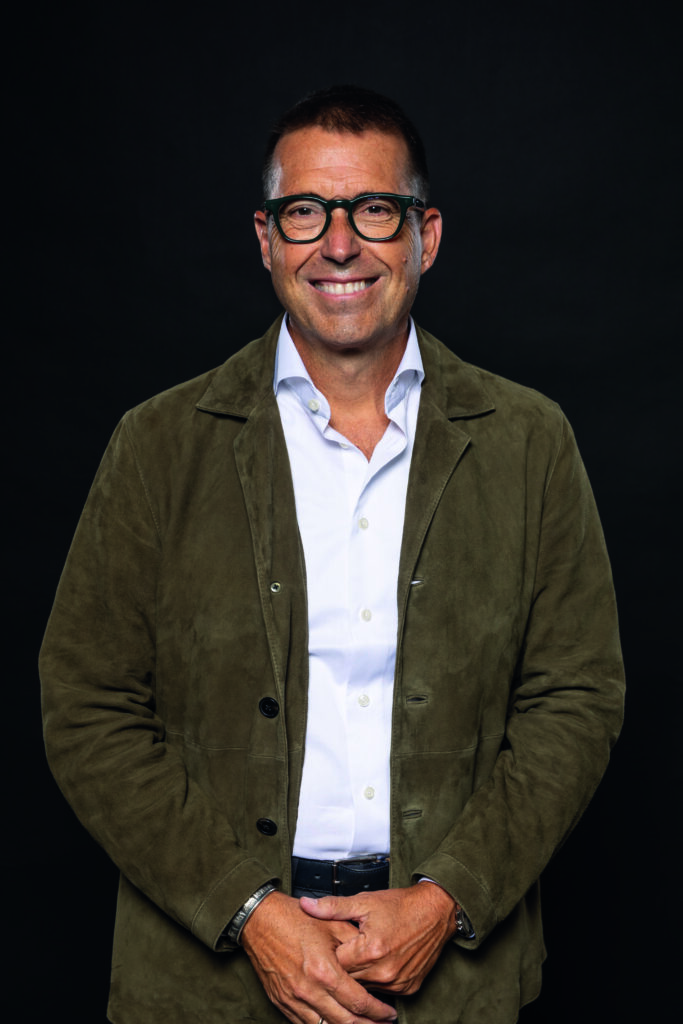
Lots of failures, very few successes. “But boy, when you have a success, it’s extremely successful – and it lasts a long time.” That’s how partner and CEO Mark Tluszcz explains the basis of Mangrove Capital Partners’ company culture.
Those successes, goes the argument, occur when you think out of the box.
Mangrove Capital Partners was founded in 2000, just a few years after the IPO of Netscape, which Tluszcz calls “the birth of the commercial Internet,” it was the perfect moment to launch something new.
“The goal was always to invest in European companies that are going to use the Internet to create change,” explains Tluszcz, who speaks with a surety befitting his reputation as a stalwart of the global venture scene. The dot-com bubble in the United States burst in 2000 and valuations “had gone nuts,” he says, “but we were still able to raise our first fund.”
“The goal was always to invest in European companies that are going to use the Internet to create change.”
And with that first fund, Mangrove invested in a little company called Skype.
Revolutionise the world
Who doesn’t remember that iconic blue logo and bubbly ringtone that signaled an incoming call? But rewind to the early 2000s, before a smartphone appeared in everyone’s pocket and well before the COVID-19 pandemic forced teleworking to become commonplace. In today’s world of constant video communication, it seems absurd to think that just a few years ago, nobody was thinking about making phone calls over the Internet.
Nobody, that is, except the team at Skype.
“We invested in Skype because we felt that telephony hadn’t been revolutionised for the consumer,” says Tluszcz. But the investment came right after the dot-com bubble burst. “A lot of people thought we were crazy. That’s the point I’m making: you have to really fundamentally think out of the box when you’re making these types of investments. What you’re really doing is trying to predict behaviour 10 years from that moment.”
The investment turned out to be a major success for Mangrove. Ebay acquired Skype in 2005 for $2.6 billion, then sold 65% of the company in 2009 to an investor group led by the US private equity firm Silver Lake for $1.9 billion, valuing Skype at $2.75 billion. Tech giant Microsoft bought Skype in 2011 for $8.5 billion, before retiring the service and replacing it with Teams in 2025.
50% failure rate: a must-have, not a nice-to-have
Today, Mangrove counts over $1 billion in assets under management and has raised six funds; the data platform Dealroom in 2025 put the company in eighth place when it came to seed investors in the EMEA region and first in the Benelux. The VC firm receives about 2.000 opportunities a year, but only makes about five investments. So how does it decide which deals to back?
“Our job isn’t to say yes,” explains Tluszcz. “Our job is to say no.” The Mangrove partners meet every two weeks to discuss fresh opportunities, and each partner has to be “on his game” when pitching new ideas.
What’s made the VC firm successful over the years is its rigorous commitment to a few essential values. One key point is that the deal must be “completely out of the box,” he explains, and “completely different than anything else out there.”
Another principle is that the investment has to be high risk. “To outperform the market,” argues Tluszcz, “we have to take a significant amount of risk when we make investments. On average, we make 25 to 30 investments per fund, and when you take significant risk, you operate under the premise that you’re going to have a lot of failures.”
Being comfortable with failure is a defining feature of the firm. Mangrove targets a failure rate of 50% in its investments, a metric that is closely tracked. “When we’re not at 50%, then we have a very difficult conversation at the partner level,” says Tluszcz. “When you look at companies early on, you have to dream. We’re not interested in a company that’s going to do well and triple its value. We’re looking to make investments that are going to go to 100x their valuation. That’s the premise upon which we invest. It has to be something that’s going to be a gamechanger.”
Look for “obsessed” founders
The founders that Mangrove engages with must also fundamentally hold a few beliefs. “They need to share with their employees,” says Tluszcz. “We are huge believers in stock options. That’s key for us. We will never invest in a company where the founders don’t believe in that.”
Another characteristic that the VC firm keeps a keen eye open for is a founder’s storytelling ability. “It’s one thing to build a business,” points out Tluszcz, but “they also have to fundraise a lot. And fundraising is about storytelling.”
“Fundraising is about storytelling.”
Mangrove partner Yannick Oswald, who joined the firm in 2015, adds that they look for a certain “obsession” in founders. Building a company is extremely hard, he says, and there are plenty of “ups and downs along the journey. Founders need to have this obsession to solve a problem, to go from seed to IPO and beyond.”
Satisfy the audience with poetry
Flo Health is another example of Mangrove’s successful strategy.
Founded in 2015 by twin brothers Dmitry and Yuri Gurski from Belarus, the app is a holistic women’s health platform that helps women track their menstrual cycles and much more. It counts 420 million downloads and 77 million active monthly users; the company says that 25% of US women use Flo. With a valuation of more than $1 billion, Flo Health became Europe’s first femtech unicorn in 2024, and counts more than 500 employees.
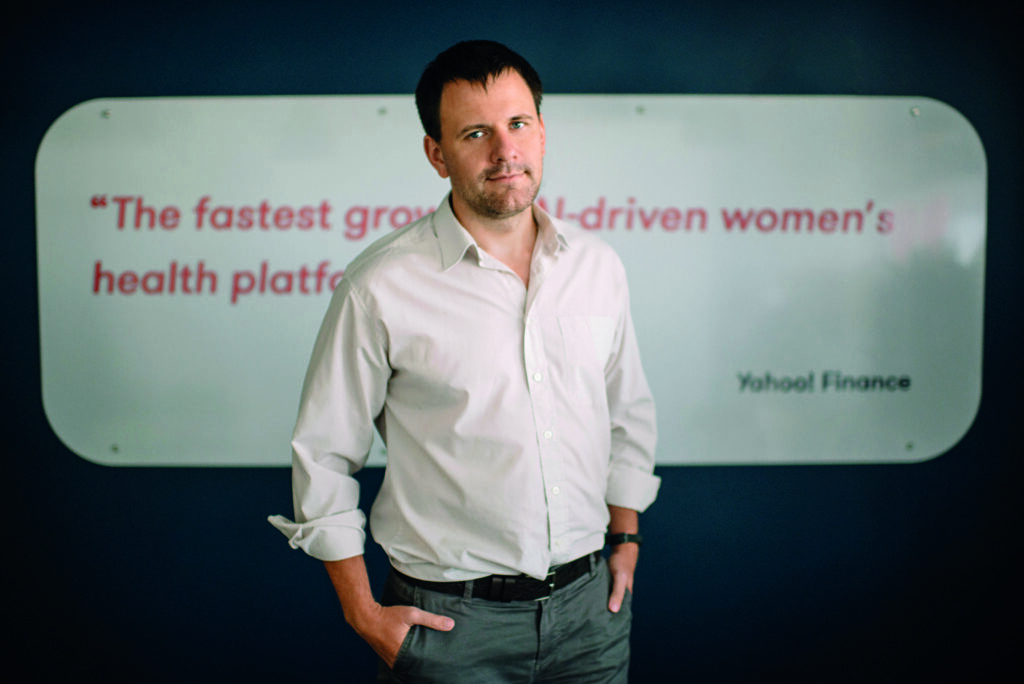
But back when Mangrove invested in Flo Health – the VC firm led the startup’s Series A extension round in 2018, bringing its total Series A funding to $12 million with a $200 million valuation – the company was just a few years old, didn’t have an established business model, and didn’t have revenue. “It was quite a contrarian move,” says CEO Dmitry Gurski. It illustrates the VC firm’s risk-taking mindset, something he calls “not too typical for European investors.” Mangrove, he adds, has been “very supportive. They have been with us for almost eight years, and they have seen how the company has developed from a pre-revenue company to a unicorn.”
What helped to convince Mangrove was the Gurski brothers’ passion and product savvy. The ability to develop “great products,” notes Tluszcz, is very difficult. Take any app on your phone: you can quickly see if it’s slick and cool, or if it’s clunky and awkward. “That’s really a skill that’s not science; it’s more poetry,” says Tluszcz. “All of our successful companies had, on their founding team, a gifted person who couldn’t always explain to you why they did something, but they were always right.”
No limits
Founders don’t necessarily need to be a sector expert, or even part of the demographic their product is targeting.
Look, for example, at the AI-driven primary care and digital health platform K Health, which counts Mangrove Capital Partners as an early investor and achieved unicorn status in 2021. Co-founder and CEO Allon Bloch is revolutionising healthcare, says Tluszcz, but he’s not a doctor. That means that he has no pre-defined constraints, “It’s precisely because he knew nothing about healthcare that he had no limitations to what he could do,” says Tluszcz.
Bloch, in turn, highlights the consistent support and partnership that the VC firm has offered over the decades. “I’ve been working with Mangrove for nearly 20 years across Wix and K Health and we have seen many ups and downs due to economic cycles and growth challenges,” he says. “Mangrove are a unique investor in their steadfast support for their winning companies and their ability to be with you in the good times, as well as cross the chasm in the bad times. It’s in their DNA to be a true partner. They are a strategic sounding board and I’ve formed deep trust with them.”
“Mangrove are a unique investor in their steadfast support for their winning companies and their ability to be with you in the good times, as well as cross the chasm in the bad times.”
The magic of Mangrove
Mangrove has seen tremendous successes over the years, taking several companies public and selling others. “Our strategy really has been vindicated over 25 years,” says Tluszcz. “I think some of the magic that Mangrove has accomplished over those years has been done by keeping an open mind and staying free thinkers.”
Looking to the future, Oswald is now taking the helm with enthusiasm. The VC firm’s latest fund, Mangrove VII, is being led by the Luxembourg native. The firm is raising its newest fund in the grand duchy, he explains, aiming to put the country on the “global stage.” The size of this latest fund is likely to be in the neighbourhood of $300 million.
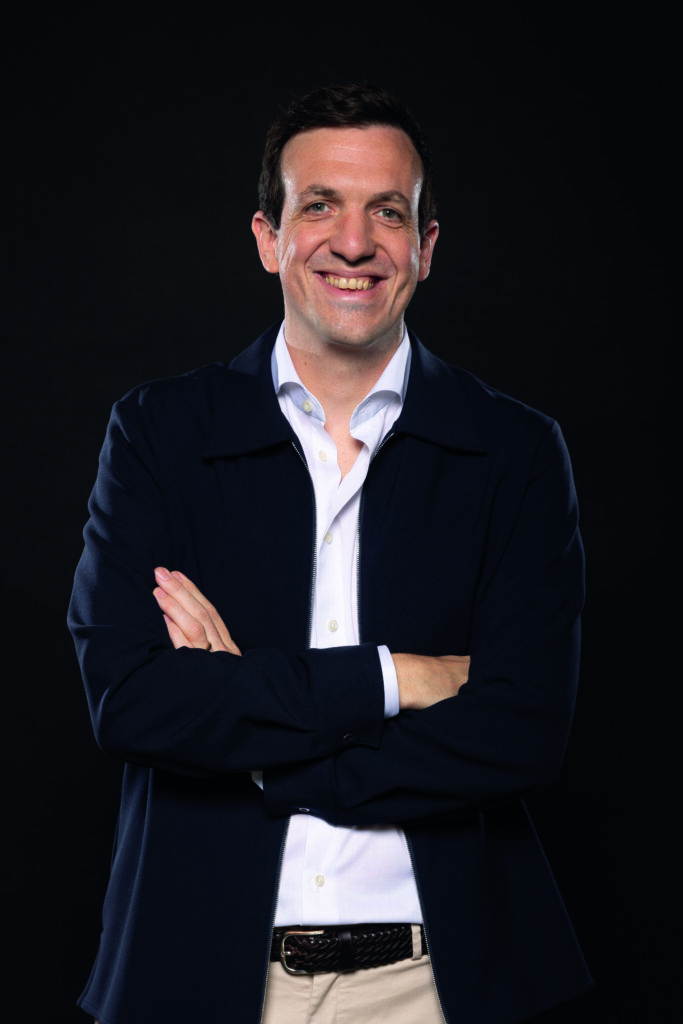
Whilst the country isn’t necessarily a startup nation, it is the “land of opportunities,” as Tluszcz puts it. It isn’t Silicon Valley or Tel Aviv, but “if you have a great idea, you will, in Luxembourg, find people who want to support, finance, and help you.”
“If you have a great idea, you will, in Luxembourg, find people who want to support, finance, and help you.”
As the age of the Internet and tech marches forward, human connections are becoming increasingly important. With this in mind, the firm has invested in Project B, which became a unicorn in January 2026. The company, which is establishing a basketball league in a way that revolutionises the world of sports, falls into one of the domains that Mangrove is focusing on for the coming years: entertainment. The other two sectors are AI and space.
The power of people
The Mangrove VII strategy continues on from the firm’s previous funds, but has a “little twist,” says Oswald. “We realised that 50% of our large outcomes were actually born from, or the result of, our previous large outcomes.” Their internal research found that some 80% of all value in venture traces back to 20% of networks with identifiable founder and peer networks. The firm, therefore, is doubling down on its “proprietary networks”; Mangrove VII’s first investment, announced in July 2026, was into the seed-stage venture firm Anorak Ventures.
Mangrove’s investment into Project B is an example of those proprietary networks in action. The VC firm is very familiar with co-founder and CEO Geoffrey Prentice, but Prentice was also determined to work with Mangrove. “The first startup I co-founded was Skype and now, with Project B, Mangrove would be the only choice to work with,” says Prentice. “They understand what great looks like and keep pushing to focus on what matters. They never let you lose focus on what matters. As a founder, we get lost in the weeds. They make you understand not to forget the main thing. That is incredibly rare.”
Wix.com president Nir Zohar has a similar perspective on working with the VC, and highlights the invaluable support that they’ve provided. “The great people of the Mangrove team have been close partners and supporters of Wix from the very early days of the company,” he says. Mangrove made an initial investment of $8 million in the company, which provides tools to help build websites; it’s now valued at $3 billion and Tluszcz holds the position of chairman.
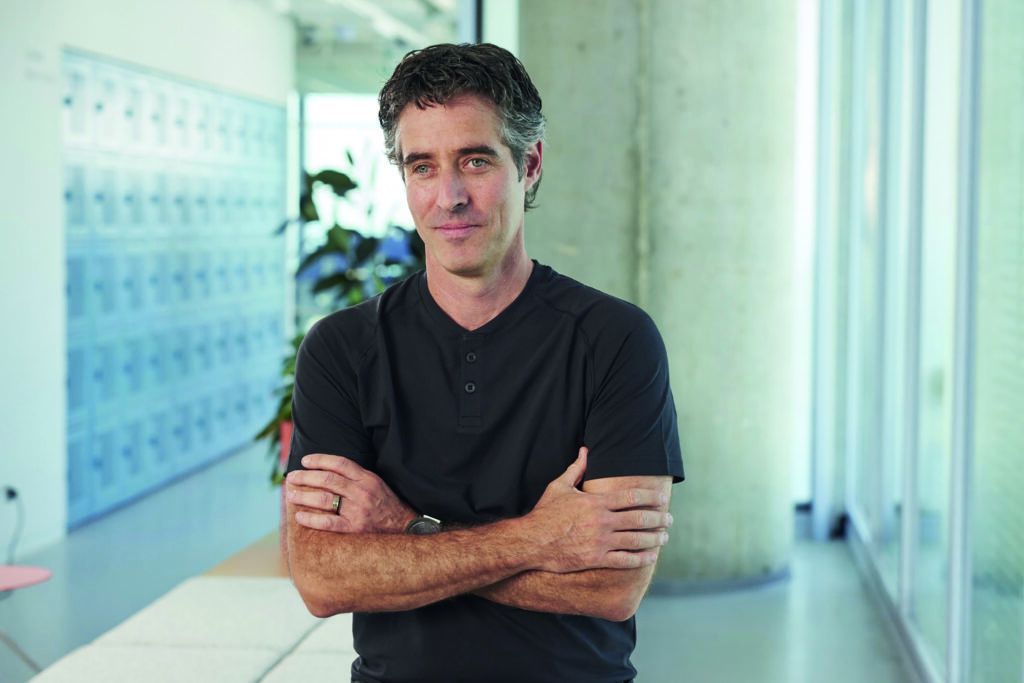
“They have shown remarkable, and, from experience, uncommon dedication, not only to funding and supporting us financially but also in understanding the different and changing needs of a founding team, which is under a huge amount of stress and constant pressure. Throughout the years, they always knew how to help us or nudge us when needed,” adds Zohar. “It’s also quite extraordinary that their whole team worked in tandem doing so, not just one specific partner, which I believe has to do with the smart and healthy culture and DNA of the fund.”
Be patient
Beyond doubling down on networks, such as those made up of Skype and Wix founders, the other twist in the fund’s strategy is a focus on longer time horizons, says Oswald. Mangrove, for example, stayed invested in the easy-to-use website builder Wix when it went public, refusing to sell when the share price stood at $30. Instead, they held onto their stake and ended up selling for an average of $190 per share.
The plan is to continue in that vein, explains Oswald. “Outlier companies stay private much longer, and the outcomes become much larger. That also means funds become a bit longer, and there’s a bit less liquidity for investors,” he says. “Patience is a virtue, and that’s really ingrained in our thinking.”
Today, there are bigger opportunities than back when Mangrove started, says Tluszcz. “I think this is the best time to be alive so far. This is really the equivalent of the Industrial Revolution at scale.”
And Mangrove is well-placed for the future. “We have one goal at Mangrove,” concluded Oswald. “We exist to drive outsized returns for our founders, the employees of those companies, and our shareholders. And with Mangrove VII, we have a very exciting setup to take advantage of the opportunities of the next decade.”
/// SOME KEY FIGURES ///
- 26 years: founded in 2000
- +$1 billion in assets under management
- 7 funds
- $300 million: target fund size for Mangrove VII
- 25 to 30 investments per fund
- 2.000 opportunities per year
- Around 5 investments per year
- 50%: Mangrove targets a failure rate of 50% in its investments
- 8 unicorns backed
- $2.6 billion: Ebay acquired the Mangrove-backed Skype in 2005 for $2.6 billion
- $8.5 billion: Microsoft bought Skype in 2011 for $8.5 billion
- $8 million: Mangrove made an initial investment of $8 million in the easy-to-use website builder Wix.com
- $3 billion: Wix.com is now valued at $3 billion
- 50%: Mangrove says that 50% of its large outcomes were born from, or the result of, previous large outcomes
This Cover Story is available in Forbes Luxembourg n°11 magazines, nationwide.
Read more articles:
What Do US Investors Want From Luxembourg?
New Players Set Sights On Luxembourg As Launchpad For European Expansion
