

German fintech bunch and global accountancy and legal consulting firm Water & Shark are just two of the latest companies betting on Luxembourg as the ideal location for tapping into Europe’s growing financial opportunities.
Leaders from both companies describe the logic behind the decision-making and share the challenges and opportunities of being a new player in the country.
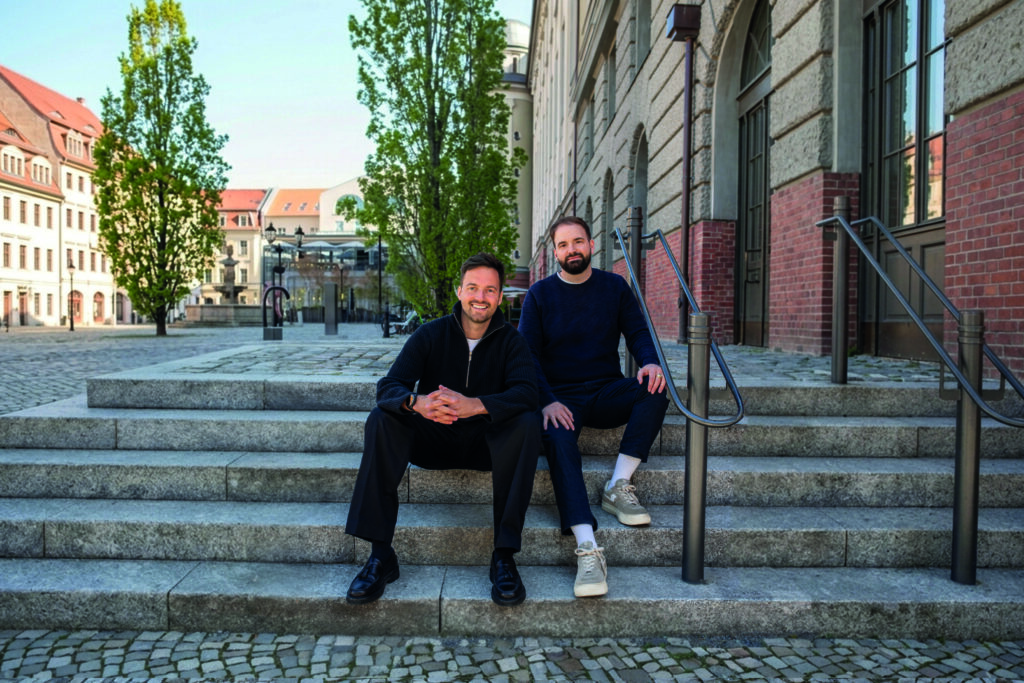
For bunch, Luxembourg represents more than the latest addition to its European footprint. The Berlin fintech, which offers an AI-native private markets infrastructure, was founded in 2021 by Enrico Ohnemüller and Levent Altunel. In July, the company announced its intent to take on a majority stake of Luxembourg Fund Services (LFS); at the time of writing, the transaction was still pending closure but expected to happen in H2 2026.
“The industry’s operating infrastructure has not kept pace with the complexity now facing fund managers.”
“Luxembourg is a cornerstone of European private markets, but the industry’s operating infrastructure has not kept pace with the complexity now facing fund managers,” bunch CEO and co-founder Ohnemüller said at the time of the announcement. What makes the case compelling, he added, was combining LFS’foundation with its “highly respected Luxembourg business with deep client relationships and specialist local knowledge” and bunch’s AI-native platform for private markets.
In a recent interview with Forbes Luxembourg, Altunel explains that the logic for coming to Luxembourg was straightforward. As Europe’s largest fund domicile, “Luxembourg is about to be one of our biggest growth markets.” The co-founder anticipates this will be the case by 2028. The bunch team, now 140 strong and counting around 50 nationalities, is roughly split evenly between engineers and other roles.
In May, bunch raised €35 million in Series B funding, which will help it further automate private fund operations in Europe. So far, one of the main challenges for bunch in Luxembourg has been countering what Altunel calls “institutional inertia”. Potential clients may be working with traditional fund administrators, but bunch approaches this by showing clients opportunities they’d otherwise miss out on. “The way we’re looking at building the company is looking at the tech stack of a fund manager,” he explains. “There are different activities they have to do … we are mapping this out quite [in quite a] detailed [way].” The company’s model also combines automation with human verification, creating an audit trail, showing where decisions have been made and checked along the way.
As financial data becomes increasingly strategic, Altunel also argues that European fund infrastructure should be built by companies that understand European privacy, regulatory and operational requirements from day one. “You want to ensure that the data stays in Europe,” he adds.
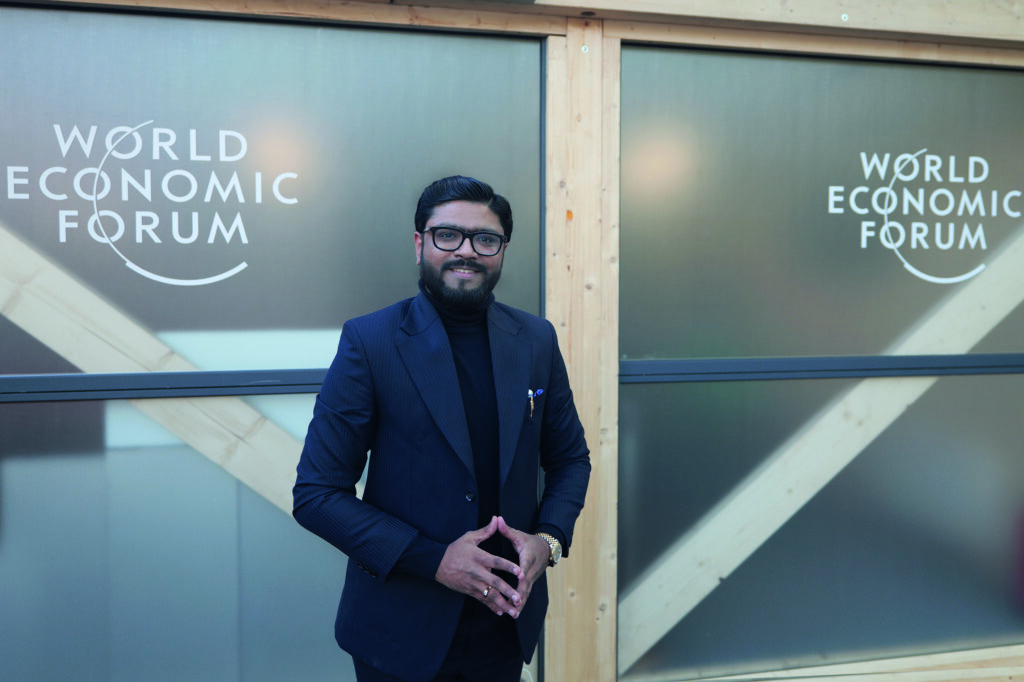
Another company betting on Luxembourg for its European expansion is Water & Shark, founded by Harsh Patel when he was just 19 years old, and which today has offices in India, the United Arab Emirates, Singapore, Hong Kong, Cyprus, Kenya, Australia, Canada and the United States. According to the firm, it “operates at the intersection of law, taxation and strategic advisory”, particularly for Ultra High Net Worth Individuals (UHNWIs), family offices, and global enterprises. Since its creation in 2012, it has grown to a team of around 40 professionals, served more than 500 global clients and advised on over 100 cross-border structures.
© Courtesy of Water & Shark
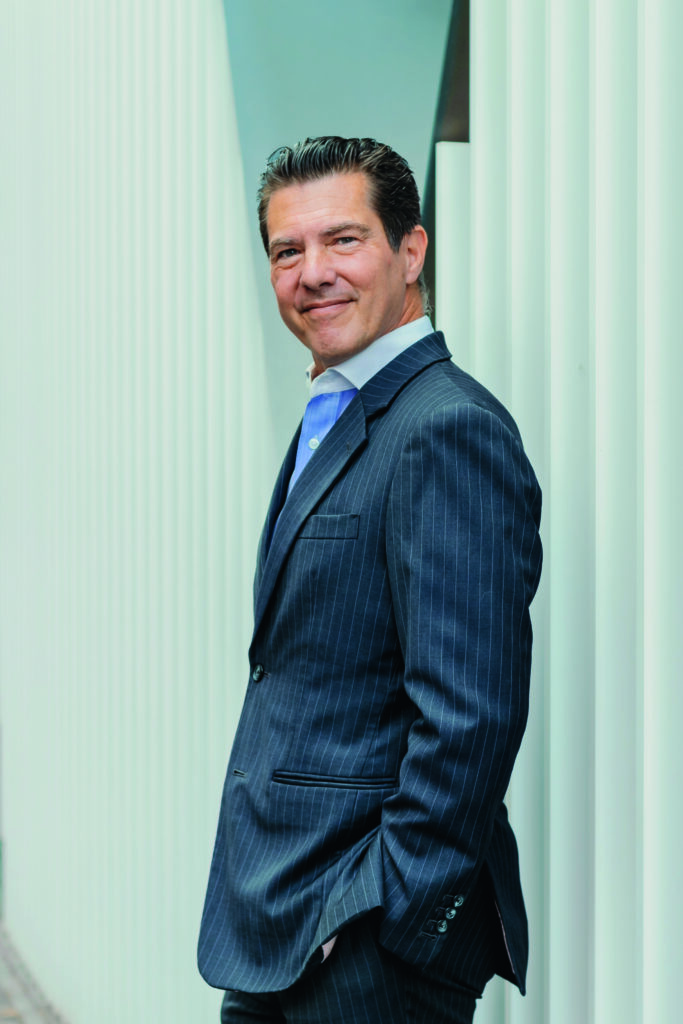
It has selected Luxembourg as its European headquarters, an expansion effort being led by David Micallef, who has spent more than three decades in financial services, including as former CEO of Bank of New York (Mellon) Luxembourg. Initially, he says, Water & Shark had been considering Switzerland or Luxembourg to base its European operations, but Micallef helped convince them that “Luxembourg was a better jurisdiction for the EU passport, and there’s the sheer volume of funds in Luxembourg that you don’t get in Switzerland. Luxembourg is seen much more globally as a neutral player, particularly in Asia, and they agreed with my assessment.”
“Luxembourg is seen much more globally as a neutral player, particularly in Asia.”
At the time of writing, Micallef was busy setting up the local offices in Belval, speaking to prospective clients and partners, and aiming for an official launch event in Q4 2026. As the firm notes, the Luxembourg expansion is timed with the Great Wealth Transfer of assets in Europe, from older generations to their younger heirs, with some projections estimating this transfer could be as high as €3.5 trillion.
Micallef also points out the concentration of millionaires in Luxembourg: in its Global Wealth Report 2026, UBS revealed that there were 85.000 millionaires, measured in US dollars, in Luxembourg, approximately one in six (nearly 17%) of adults. The country’s share of its adult population with net assets higher than $100.000 was over 70%; only six of the 56 countries in the report’s sample ranked over 60% on the same metric.
“For these millionaires—and billionaires—there are often some common themes,” Micallef adds. “They need to trust their advisor, and communication is obviously key… what we specialise in is trying to be a one-stop shop for wealth preservation, wealth protection, wealth growth, but also transferability.”
© Stephanie Jabardo / Forbes Luxembourg
The CEO & Managing Partner of Water & Shark Europe also notes that families are becoming more fragmented, with wealth travelling across borders, which can bring additional complexities not just from various tax and legal regimes but also from an inheritance perspective. These younger heirs—potentially first-time millionaires, for instance—coupled with a possible lack of wealth planning can be what Micallef calls “a perfect cocktail for unnecessary tax and unforeseen legal complications when that wealth transfer takes place.”
Another strong case for Water & Shark to set up in Luxembourg has been the general geopolitical climate. Tensions around China and Taiwan, the situation in the Middle East, the Russia-Ukraine conflict, etc., have created “uncertainty around wealth planning and the safety of wealth in those regions,” Micallef explains. “A lot of our bigger clients with significant assets in Asia and the Middle East are looking for safer havens, which means they want to create European structures which can connect properly from a tax and legal perspective to these other jurisdictions [to] potentially still invest globally but with the assurance that their money is probably better protected in what’s perceived to be a safer region.”
This article was published in the 11th edition of Forbes Luxembourg.
Read more articles:
Mobilising Private And Public Capital For The Real Economy