

For two decades, some of the greatest names in motor racing honed their skills in championships run from a maison de maître in the heart of Luxembourg City. Ayrton Senna, Michael Schumacher, Mika Häkkinen, Rubens Barrichello and David Coulthard all passed through a racing organisation that would become one of Europe’s most remarkable talent factories.
Behind it was Daniel S. Partel, an American marketing executive with a passion for racing and an instinct for promotion, organisation and opportunity.
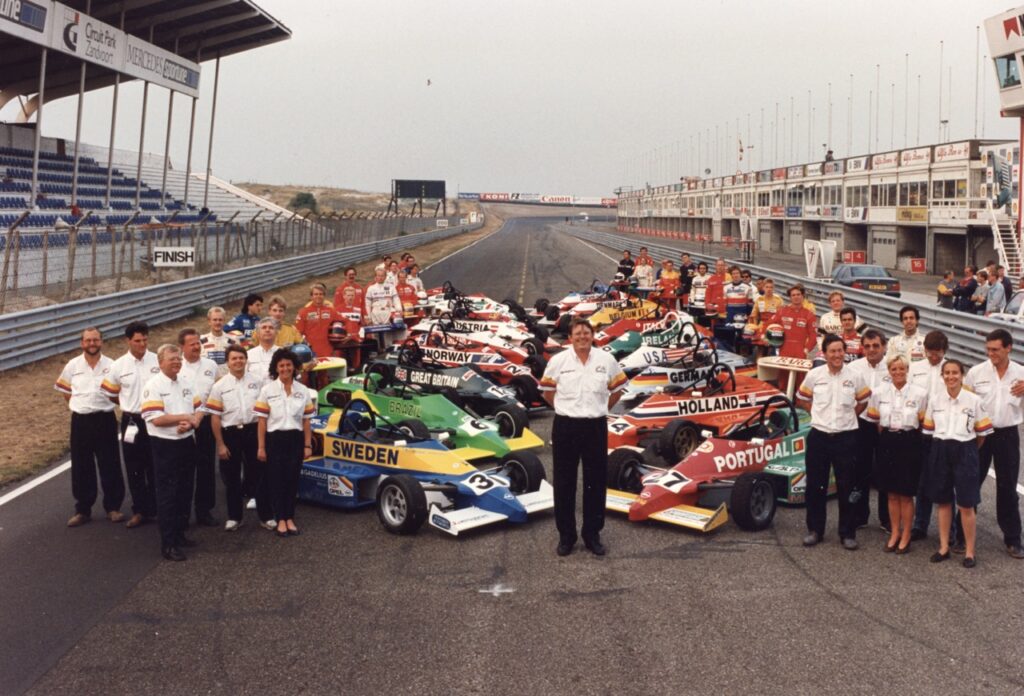
From 1979 to 1999, his European Formula Drivers Association (EFDA S.A.) produced champion after champion while transforming how junior single-seater racing was organised and promoted. Its Euroseries, backed first by Ford and later by General Motors, raced across Europe, from Finland to Portugal and Ireland to Hungary, though its geographical heart stayed in the classic circuits of Benelux and Germany: Zolder, Zandvoort, Spa-Francorchamps, Hockenheim and the Nürburgring. The story of those 21 seasons is being documented, with unpublished photographs, in a forthcoming book by journalist Roger Gascoigne, Racing Revolution – The Story of EFDA’s Talent Factory, 1979–1999. It is the story not only of the future stars EFDA developed, but of how a Luxembourg-based entrepreneur built an organisation that became an influential force in international motorsport.
After graduating from the Thunderbird School of Global Management in Arizona, Partel climbed the corporate ladder at Firestone and later Philip Morris, where he was tasked with growing Marlboro sales to U.S. military personnel stationed in Europe.
Business success was one thing; building something of his own was another.
But Partel was restless. Business success was one thing; building something of his own was another. He had already raced Formula Ford in Germany with some success, but realised his greatest talent was not necessarily behind the wheel: it was in promotion, organisation and creating opportunities. Formula Ford had rapidly become the leading entry category for aspiring champions, spreading across the Benelux countries, Germany, Austria and Scandinavia. Earlier attempts at a truly continental championship had failed.
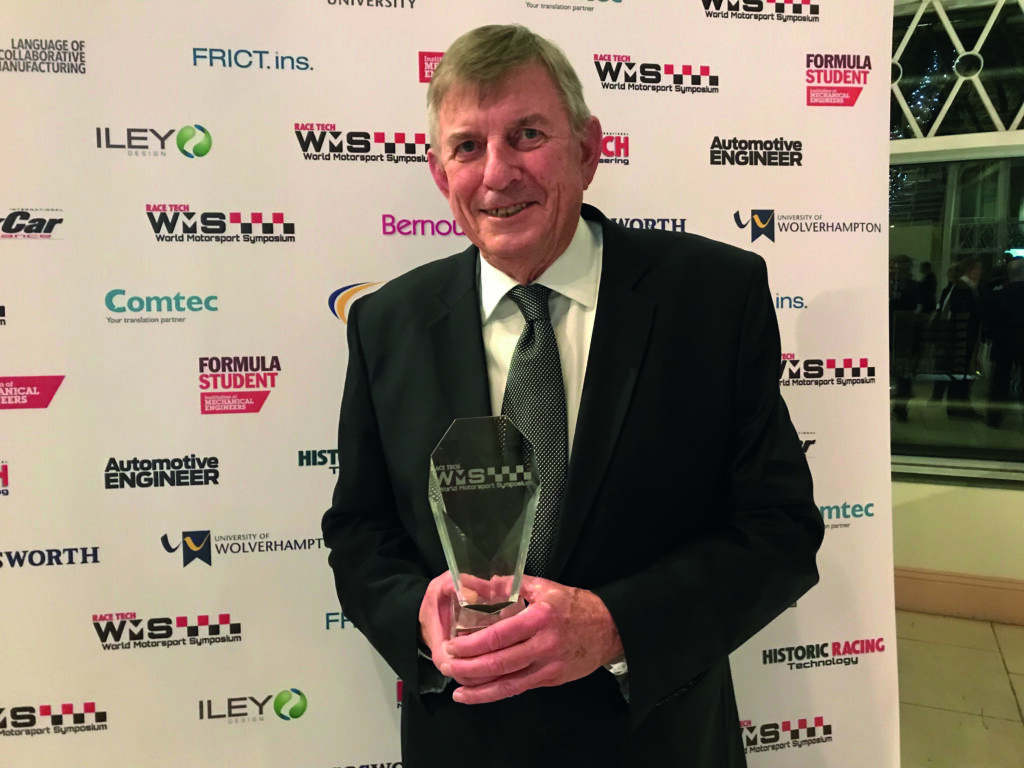
Partel saw an opportunity. At a meeting of Europe’s various Formula Ford associations, EFDA was born, with Partel at the helm. He left Philip Morris, packed his belongings, and headed for Luxembourg. “When I arrived, they asked me what I wanted to do. I told them I wanted to set up a company to organise motor racing. I swear they looked at me, then at each other, and whispered, ‘Motor racing? This guy is crazy. But he is an American, so let him in.”
Why Luxembourg, a country hardly synonymous with motor racing? For Partel, the answer was practical: it sat close to Europe’s major racing venues and offered a business-friendly base for building an international organisation.
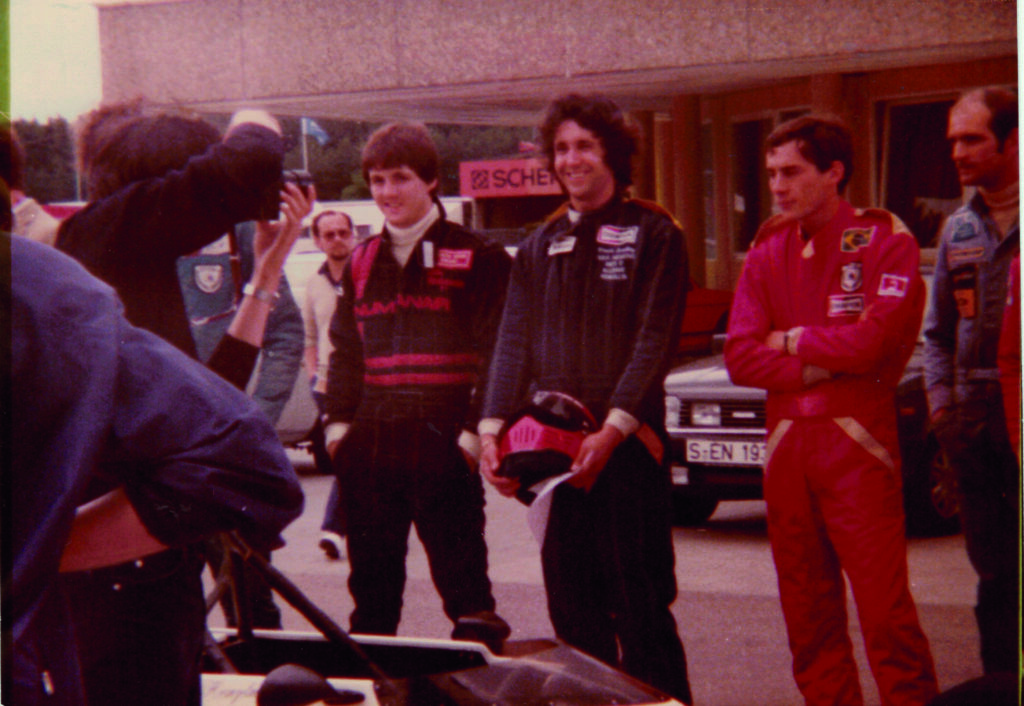
There was little time to waste. EFDA’s first season opened in 1979 with two championships: the established 1600cc Formula Ford category and its newer, more powerful two-litre counterpart, complete with wings and slick tyres. British drivers won both inaugural titles; continental competitors would dominate much of the early period as EFDA’s reputation spread. Then came the driver who changed EFDA’s trajectory for good. In 1982, a young Brazilian named Ayrton Senna entered the championship and won the European title, including four races held on Formula One Grand Prix weekends. His success established EFDA as a genuine proving ground for international racing talent. Within little more than a year, Senna himself was in Formula One.
When Ford’s backing eventually ended, Partel did what had become characteristic of his career: he went looking for the next opportunity, renewing contacts with General Motors, then the world’s largest automaker. Partel had long believed in a championship built around identical chassis and a strong, reliable engine. Together, GM and EFDA turned that idea into reality using Opel’s new 2-litre, 16-valve, twin-cam engine. Formula Opel Lotus launched in 1988. Demand for the cars, built by former racing champion Reynard, nearly overwhelmed the constructor’s production capacity — part of an export run that, according to the book, later earned Reynard national recognition for its overseas sales.
Mika Häkkinen beat rivals including Allan McNish and Heinz-Harald Frentzen to the inaugural title. Häkkinen would follow Senna into Formula One and become a two-time World Champion; McNish went on to win Le Mans 24 Hours three times; Frentzen twice finished Formula One runner-up. Formula Opel quickly became one of Europe’s benchmark junior single-seater categories. For the next 11 seasons, EFDA was a fixture of the Formula One support programme, its drivers and teams combining intense competition with camaraderie and showmanship. Partel understood that motor racing was not simply about putting cars on a circuit. It also had to attract sponsors, spectators, television and media attention.
In 1990, Partel pursued another idea: the Nations Cup, pitting two-driver national teams against each other rather than individuals — an Olympic Games of motorsport, years before national-team formats became common in racing, and another example of packaging a familiar sport in an unfamiliar, more marketable format.
It captured Partel’s broader instinct: that motor racing wasn’t just about cars on a circuit, but about sponsors, spectators, television and media attention, and that turning those pieces into a working formula was the real business.
By then EFDA was more than a championship organiser, it was a pipeline built on promotion, TV exposure and access to Formula One weekends. EFDA stayed loyal to its Luxembourg base throughout: when F1 finally staged a Luxembourg Grand Prix at the Nürburgring in 1997 and 1998, Formula Opel was there too.
EFDA ended in 1999 after GM discontinued the 2-litre engine, but Partel’s appetite for building things did not end with it. He went on to serve as President of Lola Cars North America, then CEO of the DeltaWing project at Le Mans 24 Hours, before co-founding Sentrónics Ltd, whose ultrasonic fuel-flow sensors became standard equipment in Formula One, IndyCar and Le Mans.
Partel’s real achievement wasn’t discovering the talent. It was building the stage that let the world see it.
Across 21 seasons, the Luxembourg-based organisation Partel built gave the world’s finest young drivers a stage to prove themselves. Per the book’s research, roughly 44 EFDA alumni went on to become Formula One drivers, several became World Champions, and EFDA graduates won 11 of the last 25 Indy 500s.
Partel’s real achievement wasn’t discovering the talent. It was building the stage that let the world see it.
This article was published in the 11th edition of Forbes Luxembourg.
Read more articles:
Zidane’s First Watch Sells For Four Times Its Top Estimate
