

Ten years ago, AKD opened its Luxembourg office at a time when the country was already firmly established as one of Europe’s leading fund centres. A decade later, Luxembourg’s financial ecosystem looks very different. Private markets have expanded, international capital has become increasingly diverse, and technology is beginning to reshape the way investment products are structured and managed.
AKD is a leading independent international law firm, advising clients on Dutch, Belgian and Luxembourg legal and tax matters. From its offices across the Netherlands, Belgium and Luxembourg, the firm helps clients navigate complex transactions, disputes and regulatory challenges across all areas of law.
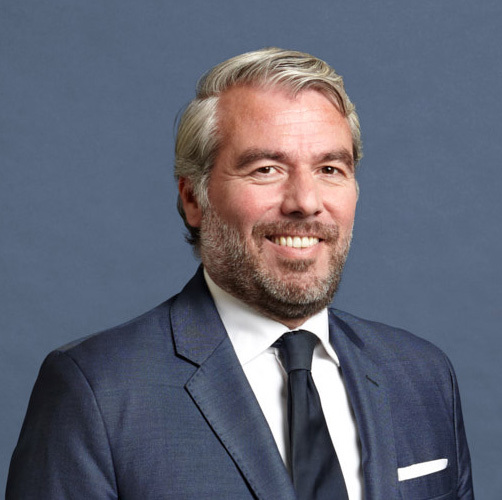
Over the past decade, AKD has witnessed Luxembourg’s remarkable transformation first-hand. To mark this 10-year milestone, we spoke with Nicolas Marchand (Office Head Luxembourg and co-Head of the Luxembourg Corporate/M&A practice) and Jevgeniy Nesch (Head of the Investment Management practice) about the evolution of the market, the drivers of future growth and Luxembourg’s emergence as a leading European capital hub. We also sat down with AKD’s Managing Partner, Carlos Pita Cao, to discuss the firm’s broader strategic direction and ambitions for the years ahead.
Looking back: A different Luxembourg
How has Luxembourg’s market changed over the last decade?
Nicolas Marchand: Ten years ago, Luxembourg was already firmly established as a leading European financial centre, but it may have been that the market was more segmented.
What has changed is the depth and interconnectedness of the market. Today, a transaction increasingly cuts across several areas: investment structures, financing, M&A, tax, regulation and governance. Luxembourg has developed into a much broader platform for international investors and businesses.
Jevgeniy Nesch: From the investment management perspective, the transformation has been particularly visible in alternatives. Luxembourg is no longer simply a jurisdiction in which international managers establish a fund. It has become an integral part of their European operating model.
The investor base has diversified, strategies have become more sophisticated, and private equity, private debt, infrastructure, real estate and venture capital have all become important components of the ecosystem.
The scale tells part of the story: this year, combined Luxembourg fund industry assets, including UCITS and alternative investment funds, reached approximately €8.6 trillion.
Luxembourg as a fund centre
Has the traditional Luxembourg fund-centre model already moved on?
JN: Absolutely. While funds remain at Luxembourg’s core, the country has evolved beyond being simply a fund centre. International managers need a platform that supports the entire investment lifecycle, from structuring and fundraising to acquisitions, financing, governance and eventual exit. This is particularly relevant for private markets, where the boundaries between fund structuring, corporate transactions and financing are becoming increasingly blurred. We increasingly see managers choosing Luxembourg as the base for their European operations altogether, not only for individual funds.
The modernised carried interest tax regime introduced in January 2026 further strengthens Luxembourg’s appeal as a destination for investment managers and talent.
NM: And that is where Luxembourg’s broader ecosystem becomes a competitive advantage. The ability to connect investment management with corporate, M&A, financing and real estate expertise is increasingly important.
We also see greater interaction between the fund world and the wider economy. Private capital is financing businesses, infrastructure and real estate, while international groups are using Luxembourg structures as part of broader European strategies.
Tomorrow’s opportunities
Where do you see the biggest opportunities for Luxembourg over the next ten years?
NM: I would point to the continued internationalisation of capital. Luxembourg has an opportunity to remain the place where international investors connect with European opportunities. But that requires continuously adapting to what investors and businesses actually need.
We expect continued activity in private equity, infra- structure, real estate and private debt, alongside more complex transactions involving financing, restructurings and cross-border M&A.
JN: Innovation will be key to the next phase of growth, driven by evergreen structures, democratisation of private markets, digitalisation, AI and tokenisation.
Luxembourg has already shown its ability to adapt its legal and regulatory framework to new technologies, including its Blockchain Laws and alignment with the EU’s MiCAR regime for crypto-assets. The challenge now is to turn that adaptability into commercially useful solutions while preserving the legal certainty and investor protection that underpin its success.
The role of legal and tax advisers
What has the past decade taught AKD about being a legal adviser in Luxembourg?
NM: That clients increasingly expect more than technical legal advice. They want someone works alongside them and understands their business, their market and the commercial objective behind a transaction.
JN: The same goes for the investment management side. The most valuable advice is rarely just about establishing an investment structure, it’s about understanding a manager’s long-term ambitions. Our international client base also highlights the importance of understanding different markets and ways of doing business, showing Luxembourg’s strength as a truly global financial centre.
From legal advisor to strategic partner
The evolution of Luxembourg shows a broader change in what clients expect from their advisers. For AKD, this is closely aligned with the firm’s strategic direction: becoming an even more connected and strategic partner to clients by bringing together expertise across practice areas, offices and jurisdictions.
Carlos Pita Cao: Our strategy is built around a simple idea: legal expertise creates the greatest value when it is combined with a deep understanding of our clients’ industries, businesses and strategic objectives. Clients increasingly seek advisers who can help them navigate not only legal complexity, but also the commercial, technological and regulatory forces reshaping their markets and influencing their strategic decisions.
Luxembourg is a good example of why that matters. The issues facing clients increasingly cut across investment management, corporate transactions, financing, regulation and technology. Our ambition is to make those connections easier for clients for clients to navigate and to bring the right expertise together through a stronger sector focused approach and even more integrated teams.
Technology and digitalisation will also play an increasingly important role. We see AI not simply as a way to increase the efficiency of our legal work, but as an opportunity to create additional value for clients. AKD is developing AI-powered solutions that can be integrated directly into clients’ decision-making processes.
What remains unchanged, however, is the importance of understanding our clients’ businesses. Technology is most powerful when combined with deep sector knowledge, legal expertise and a genuine understanding of the strategic challenges our clients face. That combination will continue to define how we create value in the years ahead.
Looking ahead
Ten years of growth have strengthened Luxembourg’s position, but the next decade will test its ability to evolve.
The opportunity is to build on the foundations that made the country successful while responding to a market that is becoming more international, more private-markets driven and more technology-enabled.
For AKD, the next ten years will be about helping clients navigate those changes with confidence. By combining deep legal expertise, sector knowledge, technology and seamless collaboration across the Netherlands, Belgium, Luxembourg and beyond, we aim to be more than legal and tax advisers: we aspire to be the trusted strategic partners in the decisions that shape our clients’ futures.
As Luxembourg enters its next chapter, AKD looks forward to contributing to that journey, supporting clients as they seize new opportunities in an increasingly connected European and global market.
This sponsored article was published in the 11th edition of Forbes Luxembourg.
Read more articles:
Why Europe’s Wealthy Families Bank In Luxembourg