

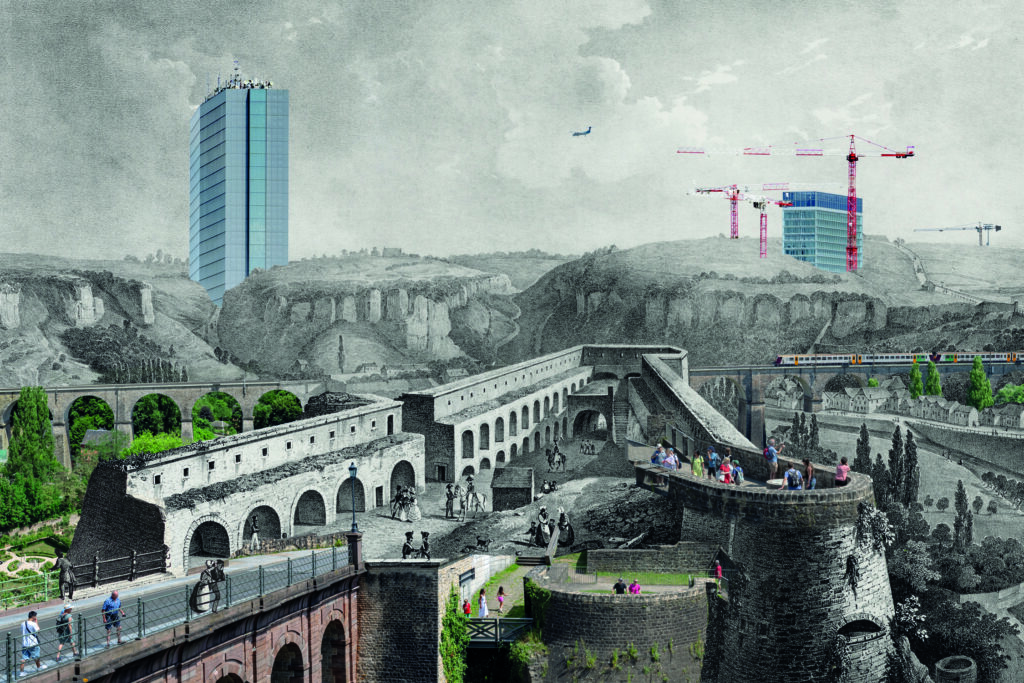
According to the Minister of Housing and Spatial Planning, Claude Meisch, the Grand Duchy is facing contemporary housing challenges. The annual requirement for new homes is approximately 6.500, but the construction of new properties is only at around 1.000.
There is no shortage of available land; rather, there is a lack of interest. Landowners are citing rising values and various municipal restrictions as reasons why firms will not be able to build faster. Prices have also made properties unaffordable, driving people to seek housing in neighbouring countries, as illustrated by a ‘cross-border gentrification’ research study conducted by LISER and the University of Luxembourg in April 2026.
There is no shortage of available land; rather, there is a lack of interest.
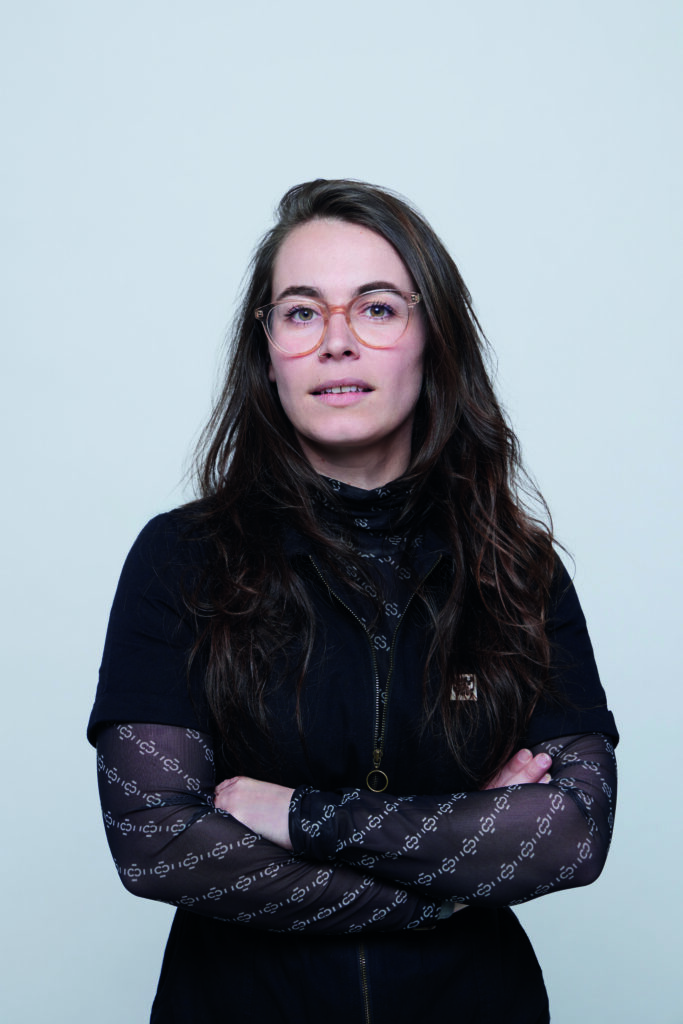
Luxembourgish architect and researcher Céline Zimmer co-founded Less Yellow, an architecture and urbanism practice working with existing resources. She will be representing Luxembourg alongside Paul-Antoine Lucas and Bùi Quý Sơn at the Biennale di Venezia in 2027 with their project Grössenwahn / Thừa đủ, meaning “Overconsumption / Enough”.
This project is based on data received every 10 years from the population census, known as the ‘Recensement‘, which indicates that the average size of a dwelling in Luxembourg is currently 66 square metres. Many architectural projects demonstrate that it is possible to live very comfortably in an average of 32 to 34 square metres. For fonds de logement, Luxembourg’s social housing funds, the average size is 27 square metres. While an additional 50.000 housing units are needed today, she emphasises that “housing shortage and housing crisis are two different entities.”
She mentions a local precedent, Le Progrès: “It was a housing cooperative that existed in Luxembourg in 1920. Unfortunately, after a number of events, it subsequently went bankrupt and ceased to be a topic of conversation. However, in recent times, major cities such as Amsterdam, Munich and Barcelona have been discussing housing cooperatives, and I thought it could be worthwhile to explore this option here once more.“
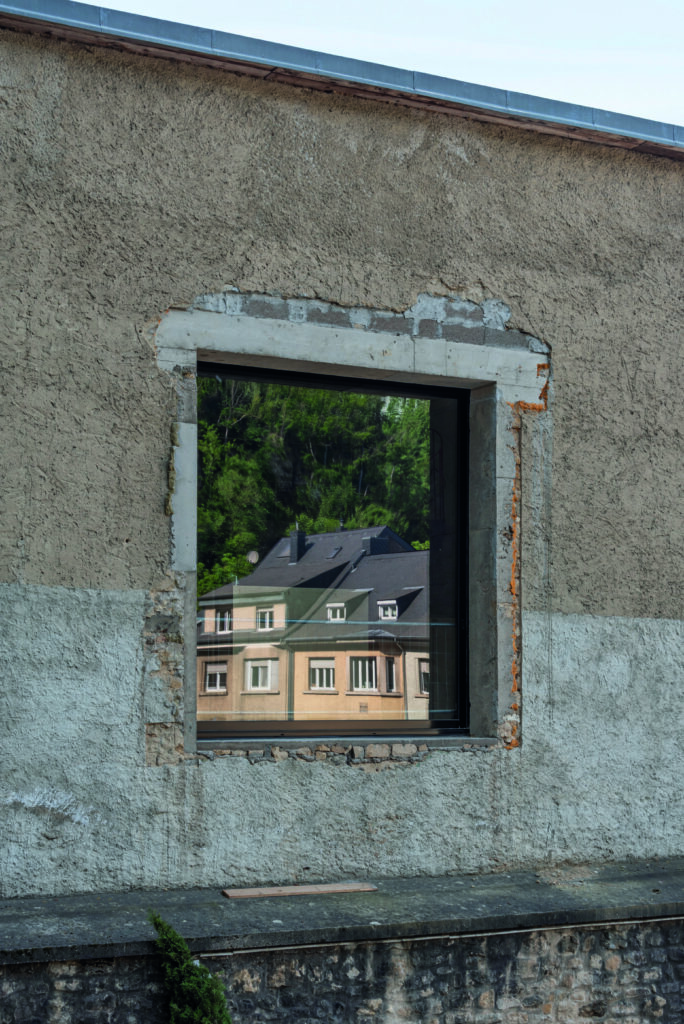
The market is not functioning efficiently and requires reform, whether the objective is to ‘build more, build faster’ or ‘use what exists, need less’. Céline emphasises that these approaches will not resolve the housing crisis without substantial regulatory frameworks. Her proposed solution is to implement a tax on above-market rents and on landlords who hoard property. In addition, she proposes to keep questioning the problems that arise, to solve them more effectively. One common issue she came across, for example, was asbestos, which is usually solved by demolishing the building. “I am not a structural engineer, so initially I agreed because I did not understand the work they described. But after a while, I questioned it — not the expertise, but the meaning of the statement — because they wanted to demolish the entire structure, even though only the annexed walls were cracked. So, I approached the engineer with a further query regarding the cracks. He conducted a further review and confirmed that we could proceed by only demolishing the annexes. It is the responsibility of the planners to question everything and ask if there is any confusion.“
“We need more continuity between urban planning and the different phases of an architectural project.”
The Luxembourg Centre for Architecture (LUCA) has a mission to promote architectural quality as a cultural phenomenon. Director Maribel Casas explains, “A project cannot be successful without a good client. By that, I mean someone who has a certain architectural culture and understands how an architect works.” When asked to comment on the question of whether ‘quality’ becomes more difficult to maintain when the country’s urgent problem is quantity, Marie Lucas, architect and president of LUCA, questioned how architects are expected to solve this problem, because requesting the maximum square metres is not a quality-based approach. “We need more continuity between urban planning and the different phases of an architectural project,” she says. Maribel adds, “It is also important not to just build anywhere; in finding new ways of doing it, one should think about the ecological impact, because future generations will inherit it.”
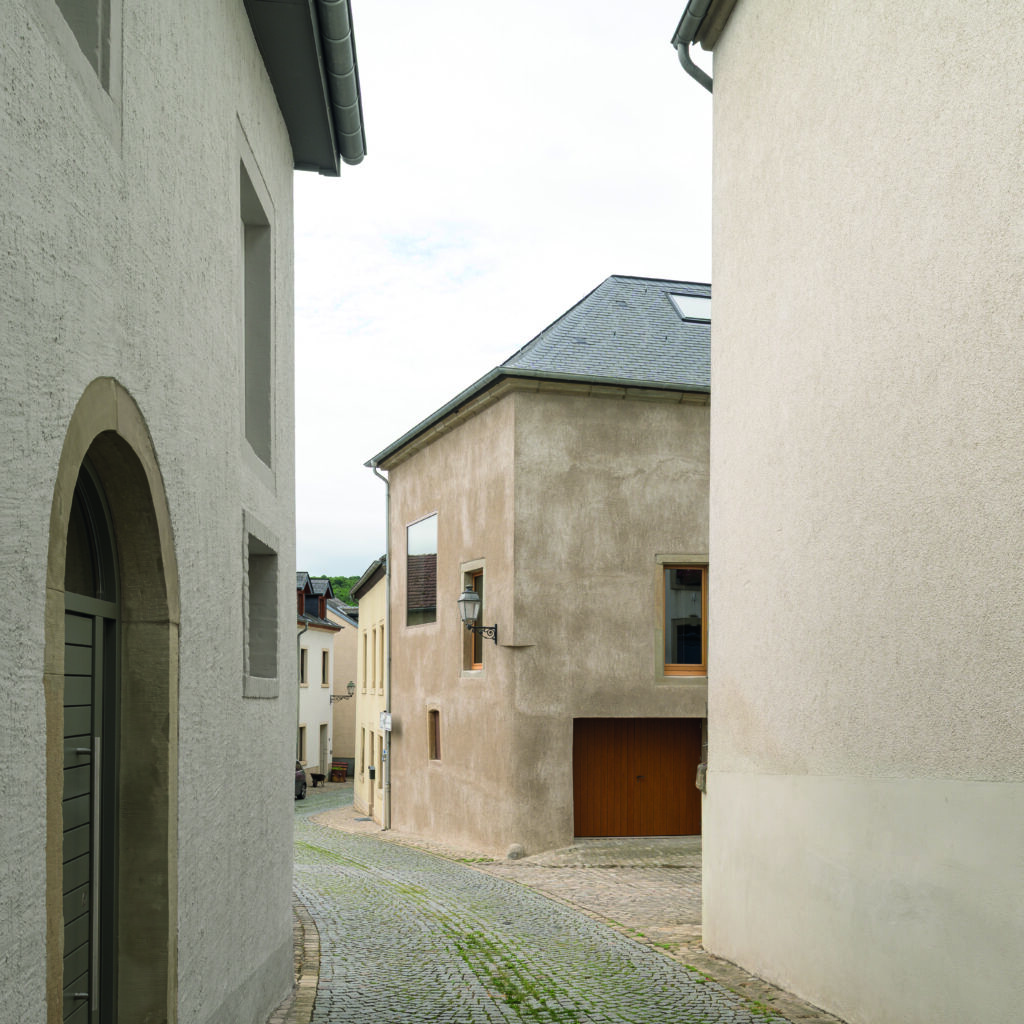
Following the relaunch of the Luxembourg Architecture Awards after a six-year hiatus, the categories were updated to reflect such criteria. In October 2022, Maribel assumed the role of Director at LUCA, overseeing a team of four while transitioning to new premises and maintaining a part-time schedule. “The categories had remained the same since 1995, so I wanted to update them, align them with today’s challenges and make the selection process more ambitious.” In addition, she demonstrates a professional respect for architects’ work, personally inspecting every building with the jury over three days.
LUCA’s objective is to facilitate a shift in perspective and to guide the public debate towards the fundamental issues. For instance, the ‘Eisem Bueden/Common Ground‘ exhibition in Venice in 2018, which coincided with an increase in publicly-owned land, raised questions about the privatisation of land in Luxembourg and the issues it creates. Maribel says, “I believe that raising awareness of certain issues can have a positive impact on other areas.” Recently, Our New Housing’s workshops with Céline Zimmer have resulted in the establishment of a new housing cooperative.
“Our objective is to stimulate thought and encourage consideration of new ideas.”
Maribel acknowledges that by supporting the sufficiency/degrowth argument through Zimmer’s Biennale project this year, LUCA may appear provocative: “But our objective is to stimulate thought and encourage consideration of new ideas. We are not suggesting that this is the only solution, but we believe that it is one of many possible approaches.”
The construction sector has faced ongoing challenges since 2019, which have had a significant impact on architects, particularly due to the numerous regulations and stakeholders limiting the scope of work. Recently, guest lecturer Finn Williams from Malmö calculated that 80% of an architect’s time is currently spent on bureaucracy alone.
Claude Meisch has recently established a joint initiative with the Minister of Finance, Gilles Roth, entitled ‘Booster fir de Wunnengsbau‘. The measures are currently in the form of draft bills; only the exemption of the VEFA registration form applies retroactively, and this came into effect on 16 July 2026.
If the bill is passed, it will have a direct impact on developers and construction firms, accelerating depreciation and reducing VAT. This will have a knock-on effect on their margins and incentives. For real estate investors, the 4% return cap tied to the 8% VAT rate represents a significant constraint.
When asked how they envisaged the coming years, Maribel and Marie Lucas both agreed that they wanted to continue exploring all avenues with optimism and an open mind about what they could learn from their contacts and the network they are building.
This article was published in the 11th edition of Forbes Luxembourg.
Read more articles:
Reversible Construction Permits: Rethinking The Way Forward?
