

One year into her diplomatic mission, US Ambassador Stacey Feinberg is bringing her entrepreneurial approach to Luxembourg’s transatlantic relationships. At a reception welcoming American innovators and business leaders, years of engagement with the United States opened new opportunities in space, defence, technology and research.
A satellite developed through international collaboration, computing technologies designed to protect sensitive information, and scientific research connecting universities across continents. The modern space economy thrives on partnerships that extend far beyond national borders.
For Luxembourg and the United States, those connections have been developing through years of diplomatic engagement, business delegations and shared ambitions in aerospace, defence and advanced technologies. Arizona and New Mexico form an important part of that relationship, alongside companies and institutions from elsewhere in the United States.
On 12 November, the United States Embassy in Luxembourg became a meeting point for those relationships. US Ambassador Stacey Feinberg hosted a Space and Defence Networking event, welcoming entrepreneurs, researchers, government representatives and business leaders to explore opportunities with Luxembourg counterparts.
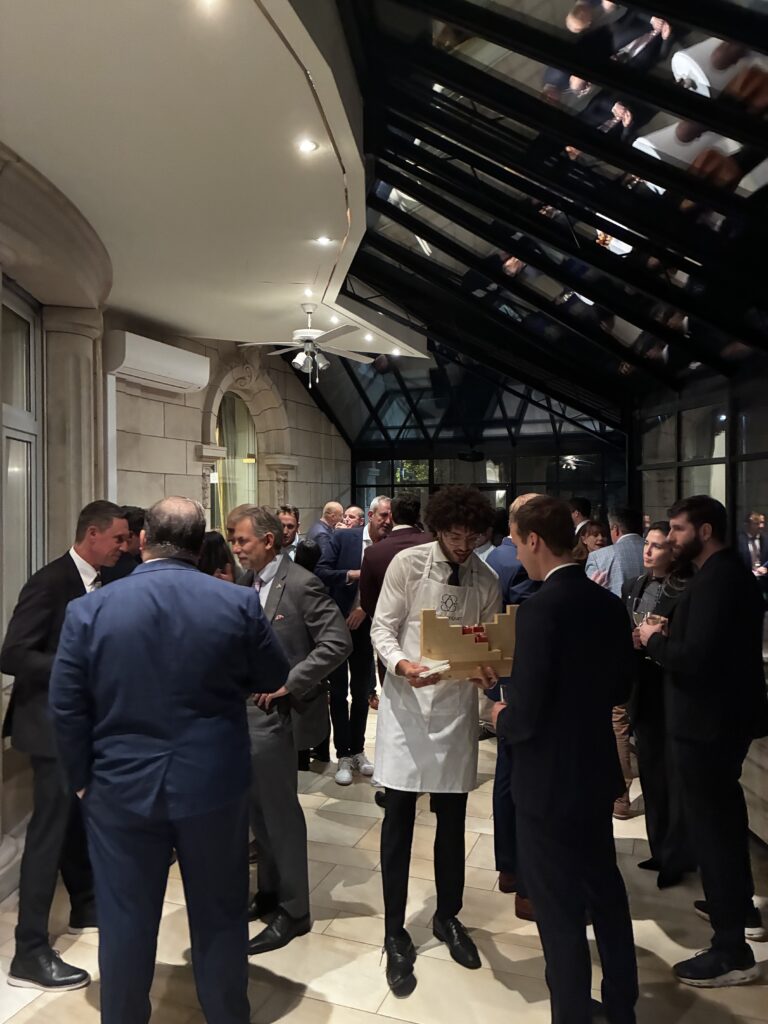
“To me, everything has to be win-win, or I don’t do it. And if it’s good for the United States and it’s good for Luxembourg, then I want to be a part of it,” said Stacey Feinberg, United States Ambassador to Luxembourg.
The gathering connected established innovation ecosystems with complementary capabilities. Luxembourg’s internationally connected space industry and financial centre offer opportunities for cooperation with American businesses and institutions working across aerospace, defence, artificial intelligence and advanced research.
A businesswoman’s approach to diplomacy
One year after arriving in Luxembourg, Ambassador Feinberg has brought an entrepreneurial dimension to American diplomacy in the Grand Duchy. Before becoming the 25th US Ambassador to Luxembourg, Feinberg built a career spanning business negotiations, finance, investment and entrepreneurship. Her professional experience began at Bob Woolf Associates, her father’s sports and entertainment law firm, where she developed the literary division and worked on contracts involving prominent public figures.
Her subsequent career included hedge funds, private investment and angel investing, with particular attention to supporting women-led businesses. As founder of 33 Capital, she has worked with entrepreneurs and supported initiatives helping women develop their businesses. That business background has become part of her diplomatic approach, connecting commercial engagement with the wider relationship between Luxembourg and the United States.
By May 2026, barely seven months after her arrival, Ambassador Feinberg had already reported conducting more than 400 meetings with entrepreneurs, investors, institutions and business leaders. Her first year has included continued engagement with Luxembourg’s business and innovation communities, government representatives and organisations working across technology, finance and research.
The pace reflects a business-oriented approach to diplomacy in which relationships provide the foundation for commercial opportunities. Identifying the right people, understanding their capabilities and connecting complementary interests can help transform introductions into productive partnerships.
The bilateral relationship extends across finance, technology, aerospace, defence and scientific research. Luxembourg offers American companies an internationally connected environment within the European market, while the United States provides opportunities for Luxembourg businesses seeking customers, investment and specialised expertise.
Commercial connectivity has also featured in her first-year agenda, including efforts to strengthen direct air links between Luxembourg and the United States. A direct connection would provide additional opportunities for business travel, investment and exchanges between the two economies.
The Embassy’s commercial engagement has included the second Transatlantic Defense Industry Access Forum, organised with LuxDefence in October 2026. The event connected American defence businesses with Luxembourg companies and formed part of a broader effort to strengthen cooperation in strategic industries.
The November reception continued that work, bringing together American companies and institutions with expertise in space, defence and advanced technologies.
Luxembourg and the American Southwest share an interest in specialised industries where innovation, technical expertise and entrepreneurship contribute to international competitiveness. Their respective capabilities offer opportunities for cooperation extending beyond domestic markets. “So why not do that together?” said Ambassador Feinberg.
The reception provided opportunities for American businesses seeking European partners, Luxembourg companies exploring the US market and research institutions interested in scientific collaboration. “That’s what I’m trying to match make tonight,” said Feinberg.
Beyond traditional diplomatic settings
Diplomacy is often associated with formal receptions, government meetings and carefully arranged introductions. The relationship between Luxembourg and the United States also develops through conversations with entrepreneurs, students, business owners and the wider community.
A year into her appointment, Ambassador Feinberg has established a visible presence in Luxembourg’s business and public life. Her approach combines the instincts of an entrepreneur with the responsibilities of a diplomat, placing personal engagement at the centre of both.
Her programme of meetings has extended beyond traditional diplomatic settings to business forums, universities, company visits and gatherings bringing people from different professional backgrounds together.
Her engagement with women entrepreneurs provides another connection between her professional background and diplomatic activities. Having worked in investment and supported women-led businesses, Ambassador Feinberg has continued creating opportunities for founders to meet, exchange experiences and develop professional relationships.
Gatherings at the Ambassador’s residence have provided a setting for these exchanges, bringing entrepreneurs into contact with individuals and networks that can support their ambitions.
The description of a “people’s ambassador” captures the accessible style of her public engagement. Her visibility through business events, educational discussions and community encounters has broadened the settings in which people can participate in the transatlantic relationship.
That accessibility also serves a practical purpose. A conversation with an entrepreneur can introduce a promising technology. A university visit can open possibilities for scientific cooperation. A meeting between business leaders can begin a relationship that develops into investment or international expansion.
For an Ambassador whose professional career has centred on building businesses and connecting people, these encounters bring a familiar dimension to diplomatic work. The November Space and Defence Networking event offered another example, connecting American innovators with Luxembourg representatives through shared commercial and technological interests.
Years behind a handshake
The arrival of a business delegation may be measured in days. The work behind it is often measured in years.
For Paul Binsfeld, Honorary Consul of Luxembourg to Arizona and New Mexico, the November visit represents another stage in a sustained effort to connect Luxembourg with the American Southwest and the wider American business community.
Successive journeys, institutional introductions and business exchanges have helped establish relationships between the Grand Duchy and organisations across the United States. In July 2025, an Arizona delegation visited Luxembourg to explore cooperation in space and advanced technologies.
The November 2026 programme builds on those exchanges, bringing together participants with interests spanning aerospace, defence, advanced computing and scientific research.
Each visit creates opportunities for the next. A business introduced to a potential partner may return for further discussions. A research institution may discover complementary expertise. An initial conversation can develop into a lasting relationship through continued engagement.
“Building lasting relationships between Luxembourg and the United States requires trust, commitment and a shared belief in what we can achieve together. This delegation represents the culmination of several years of dedicated work, multiple visits and sustained efforts to bring American businesses, institutions and government representatives closer to Luxembourg. These relationships are not built overnight; they require persistence, mutual understanding and a genuine commitment to creating opportunities for both nations,” said Paul Binsfeld, Honorary Consul of Luxembourg to Arizona and New Mexico.
Binsfeld is also founder and CEO of Company Nurse, a business providing workplace injury management services. His involvement in entrepreneurship and international business forms part of the professional experience accompanying his honorary consular work. Diana Rivera also supported the visiting delegation.
Q Station and the New Mexico International Trade Alliance organised the New Mexico trade mission in partnership with the Honorary Consulate. The programme included meetings in Luxembourg and participation in Space Tech Expo Europe in Bremen, Germany.
The mission formed part of a broader relationship involving Arizona, New Mexico and other American organisations interested in developing commercial and institutional connections with Luxembourg.
“I am deeply grateful to Ambassador Feinberg and her team, to both governments for their continued support, and to my fellow delegates and partners who have invested their time and confidence in this shared vision. Our work is about bringing people together, opening doors for businesses and researchers, and transforming years of dialogue into meaningful partnerships that deliver lasting economic and technological benefits. What we have achieved together is an important foundation, but I believe the greatest opportunities for cooperation between Luxembourg and the United States are still ahead of us,” said Binsfeld.
Building more than business
International cooperation often begins with a shared commercial interest, but its value can extend through education, research, cultural exchange and relationships between communities.
“I truly believe that there’s always more that binds us together than divides us,” said Max Gruner, Director of Economic Development for the City of Albuquerque.
The aerospace and defence industries bring different sectors together. Universities develop scientific knowledge, engineering businesses transform research into products, and commercial organisations connect technologies with customers and markets.
The exchange of expertise can support economic development while creating opportunities for institutions and companies to collaborate internationally.
“It is my belief that the only way to do that is by partnering in sustainable, smart ways, in sharing resources, in sharing expertise,” said Gruner.
Albuquerque forms part of New Mexico’s wider innovation ecosystem, where research institutions, government organisations and private businesses contribute to advanced technology development.
The gathering brought together expertise from SpaceWERX, Proof Labs, AV, Lusense and the New Mexico International Trade Alliance. Their activities span different areas of technological development and international business, creating opportunities for engagement with Luxembourg companies and institutions possessing complementary expertise.
For Luxembourg, these connections create possibilities for commercial partnerships, research collaboration and access to specialised technologies. For American organisations, the Grand Duchy provides an internationally connected environment from which to engage with European companies and institutions.
The business of breakthroughs
A new technology can begin with a scientific discovery, an engineering challenge or an idea developed in a laboratory. Its journey into commercial use often involves researchers, entrepreneurs, investors and customers working together to transform technical potential into practical applications.
“The reality is space is a global market, and some of the most incredible innovations, obviously, are coming from all over the world, especially our ally countries,” said Randy Trask, CEO of Q Station.
Q Station supports technology scouting and innovation connections, including work as a partner intermediary to the US Space Force. Its activities include identifying dual-use technologies with potential applications in both commercial markets and national security.
The international development of aerospace and defence technologies creates opportunities to identify specialised capabilities among companies operating in allied countries. Luxembourg’s space ecosystem provides expertise across satellite technologies, communications and advanced engineering. Connections with American innovation networks can help emerging companies identify customers, understand market requirements and explore commercial opportunities.
For early-stage businesses, these relationships can be particularly valuable. A successful prototype demonstrates a technology’s potential, while access to commercial partners and industry networks can help establish a route towards practical use.
The opportunities extend in both directions, connecting Luxembourg innovators with American markets while introducing US organisations to European technological expertise.
Building trust in the technologies of tomorrow
Artificial intelligence and high-performance computing are becoming increasingly important across aerospace, defence and energy. Their development creates opportunities for organisations requiring specialised computing capabilities and greater control over critical technological infrastructure.
Sovereign technology plays an important role in this environment. The ability to maintain control over sensitive information, computing systems and operational infrastructure can support organisations working within complex security and regulatory frameworks.
“We’re here this week in Luxembourg to build bridges to bring that deep tech and the experience from New Mexico that Hoonify built over decades of national security,” said Andrew Clark, CEO and Founder of Hoonify.
Sovereign computing can help businesses and institutions maintain control over the environments in which sensitive information is processed. These capabilities are particularly relevant to sectors where commercial technology intersects with government and national security requirements.
American companies seeking opportunities in Luxembourg can benefit from knowledge of European market conditions, while Luxembourg businesses entering the United States may require expertise in American procurement and security frameworks.
Cooperation between technology companies can help connect specialised computing capabilities with the institutional knowledge needed to operate internationally.
For Luxembourg, whose economy combines international financial services with growing interests in space and advanced technologies, trusted computing infrastructure provides opportunities for further technological development.
Blake Kinnan, co-founder of Hoonify, also joined the delegation, bringing further representation from the company’s technology and entrepreneurship activities.
The business behind the space economy
Every satellite, aerospace technology and commercial space venture depends on more than engineering. Financial planning, insurance and risk management help create the conditions in which businesses can attract investment, compete for contracts and develop new technologies.
The international growth of the space industry is creating new opportunities for specialised financial and risk management services. Global insurance brokerage and risk management firm Gallagher plays an important role in this evolving landscape, helping aerospace and space companies manage complex risks, secure investment and pursue commercial expansion. “At Gallagher, we’re empowering the investment and growth of the space industry,” said Craig Birch, Vice President at Gallagher Affinity and Global Space Partner.
Commercial space activities can require insurance arrangements tailored to specialised equipment, operational conditions and contractual obligations. As new technologies emerge, businesses and insurers have opportunities to develop coverage reflecting changing commercial requirements. “We have an opportunity over the next 10 years to influence how coverage is manuscripted,” said Birch.
Manuscripted insurance involves individually negotiated policy wording designed around particular risks and business activities. Such arrangements can help companies obtain coverage suited to technologies and operations that may not fit conventional insurance products.
The relationship between insurance, regulation and business planning is particularly important for companies seeking investment or entering international contracts. Understanding insurance requirements early can support financial planning, strengthen commercial proposals and help businesses communicate their risk exposure to investors. Specialised insurance expertise therefore contributes to the wider ecosystem supporting space-sector growth.
Luxembourg’s established financial and insurance industries offer relevant capabilities alongside its developing space economy. The combination provides opportunities for professional services supporting companies operating in advanced technology and international aerospace markets.
Gallagher’s contribution to the event connecting businesses and institutions across these sectors. Dave Binsfeld, area VP at Gallagher, also participated in the visiting delegation.
Research without borders
Some of the most valuable international partnerships begin in universities, where scientific research and education create opportunities for future technological development.
At New Mexico Tech, academic research connects specialised scientific disciplines with industry. The university’s work spans science, technology, engineering and mathematics, providing opportunities for collaboration with businesses and research institutions internationally.
“This event is important for my role because I’m connecting with industry to give students opportunities to work with industry partners,” said Lique Coolen, Vice President of Research and Provost at New Mexico Tech.
Industry partnerships can provide students with practical experience while allowing companies to engage with emerging talent and specialised academic expertise.
International cooperation extends those opportunities through shared research interests, complementary scientific capabilities and the development of joint projects. “It’s been wonderful, really welcoming, very open to collaboration,” said Coolen.
Luxembourg’s research institutions provide potential partners across disciplines extending beyond aerospace and defence, including biomedical sciences, engineering and advanced technologies. “Research is very international, as you know, and very collaborative,” said Coolen.
The mission also included Johnny Chandler, Director of Workforce Partnerships at Southeast New Mexico College, connecting the development of advanced industries with education and workforce skills.
For both Luxembourg and New Mexico, research partnerships and access to specialised talent can contribute to long-term technological development. Academic exchanges can also create relationships that continue across successive generations of scientists and engineers.
The next chapter across the Atlantic
The November visit brought together different parts of an innovation economy increasingly shaped by international cooperation.
Universities develop knowledge and talent. Technology companies transform research into commercial applications. Trade and industry organisations help businesses identify markets and partners. Financial and insurance services provide expertise supporting investment and expansion. Diplomatic engagement connects these activities through relationships between governments, institutions and businesses.
For Luxembourg and the United States, those foundations have developed through successive visits and years of cooperation. The Arizona delegation of 2025 and the November 2026 gathering form part of that continuing process, connecting companies and institutions with shared interests in space, defence and advanced technologies.
Ambassador Feinberg’s first year has added momentum to Luxembourg’s relationship with the United States through an active programme of commercial engagement, business meetings and public outreach. Her entrepreneurial background has contributed a practical dimension to the work of connecting investors, companies and institutions.
Alongside Paul Binsfeld’s sustained efforts to develop relationships with Arizona and New Mexico, those connections provide opportunities for businesses and researchers on both sides of the Atlantic. The next stage belongs to the companies, institutions and individuals developing the relationships established through these exchanges.
Some conversations may lead to commercial partnerships or investment. Others may create opportunities for scientific collaboration, technology development or educational programmes. What connects them is a shared ambition to build relationships capable of producing lasting value. The Embassy reception was one moment in a much longer story. Its significance lies in the years of work that made the gathering possible and the opportunities that can continue to develop from it.
Across the Atlantic, the connections are already in place. The ambition now is to turn them into the next generation of partnerships.
Read more articles:
The Benelux Is One Market, Not One Rulebook
Luxembourg And The New Architecture Of Wealth
The First Luxembourgish Business School Earns AACSB Accreditation