

Not every beautiful object becomes an icon. Five qualities that set lasting design apart, from the Pratone to the LC4, and where to see them in person at Smets in Strassen during this Design Month.
Walk through any design fair and almost everything looks beautiful. Very little of it will still matter in thirty years. The pieces that do tend to share a handful of qualities, and once you know what to look for, you start to see furniture differently. Here are five, each illustrated by a piece you can see at Smets.
At Smets, this is more than a matter of taste. The Smets family has always collected iconic pieces, and its passion for art has shaped the way the design collection is built: not as a list of brands, but as a selection guided by the eye of collectors.
The first quality is an idea that outlasts its era. When Gufram introduced the Pratone in 1971, the question behind it was simple and radical: what if a piece of furniture were a landscape? Giant blades of polyurethane foam, a seat you move through rather than simply sit on. More than fifty years later, the question still feels fresh, and the object still surprises.
The second is a maker who insists on doing things properly. Philippe Starck’s Marie Coquine was created for Baccarat in 2011 and carries the mastery of a crystal house founded in 1764. The LC4 Chaise Longue, drawn by Le Corbusier with Pierre Jeanneret and Charlotte Perriand in 1928, is still produced today by Cassina. In both cases, craft is the reason the object survives.
The third is a real problem, elegantly solved. Achille Castiglioni’s Arco lamp for Flos, from 1962, was designed to bring light over a dining table without drilling into the ceiling. Its long steel arc and marble base are iconic today, but they began as an answer to a practical question. The Eames Lounge Chair and Ottoman, first presented in 1956, answered another: how to make a chair as welcoming as a well-worn club armchair, with the precision of modern design. Beauty that serves a purpose tends to stay.
Then there is the ability to be reinterpreted without losing its identity. Cassina’s LC4, in an edition created with Louis Vuitton, shows how a design from 1928 can still feel contemporary, even luxurious. Edra works in a different register: the Campana brothers’ Vermelha armchair, in gold, takes a humble material, rope, and turns it into a sculptural object.
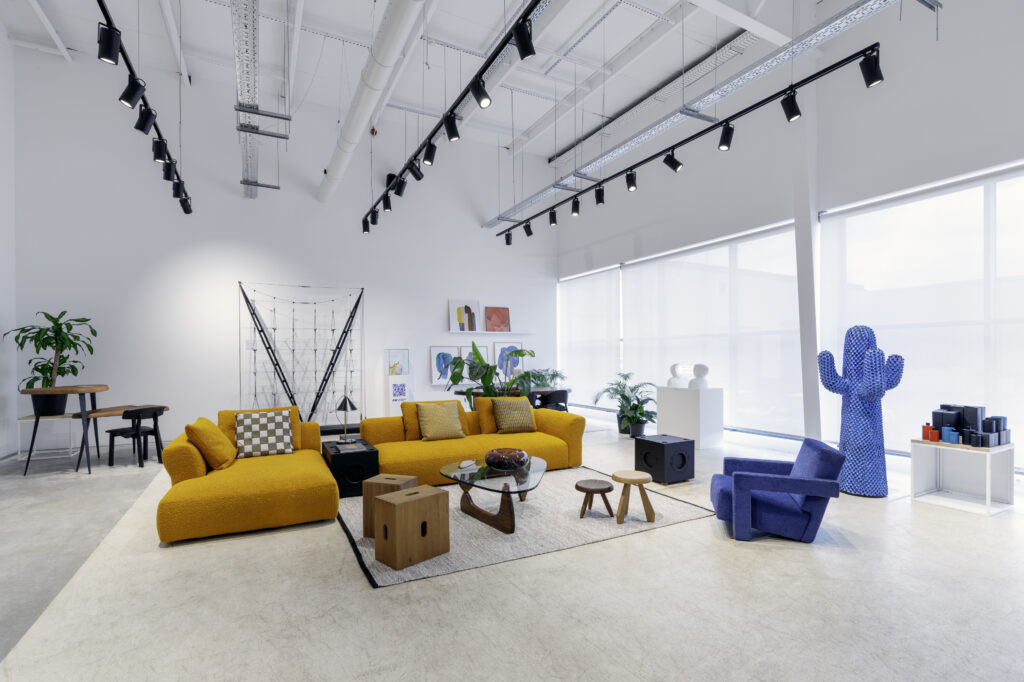
The last quality is the one no photograph can capture. The glass top of the Noguchi coffee table rests on its sculpted wooden base. The depth of an Eames chair when you sit in it. The way the Snoopy lamp, designed by the Castiglioni brothers in 1967, shapes the light around it. Proportion, texture and scale are details you only notice in person.
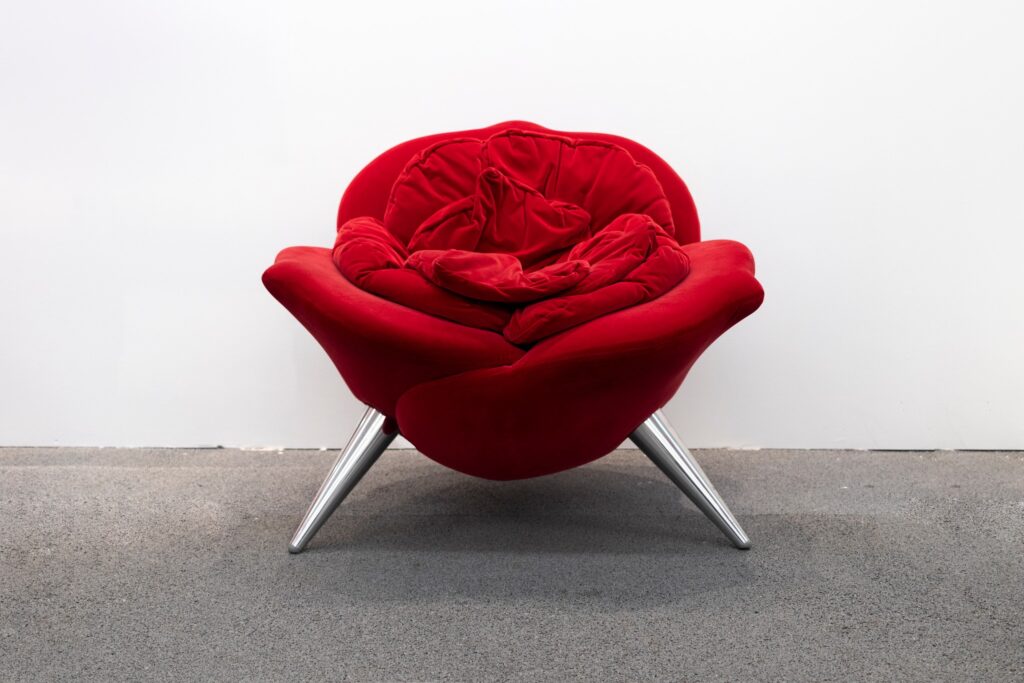
That is why the collection is meant to be seen up close rather than browsed online. Alongside the pieces above, the showroom includes Edra’s Rose Chair and Cabana, and Cassina’s Tracia table and Tokyo daybed, each one a different answer to the question a collector always asks: is this piece worth keeping?
Design Month is a good moment to look for your own answer. For the occasion, Smets is offering special conditions on a selection of pieces, which makes it an easier time to turn a long-held wish into a decision.
The collection can be discovered at Smets Flagship, 262 route d’Arlon in Strassen.
Come with a project, or simply with curiosity: the best way to understand a piece is to stand in front of it.
Read more articles:
Becoming the Other: Elina Brotherus and Her Photographic Doubles
Luxembourg Makes World-Class Wine. The World Doesn’t Know It Yet.