
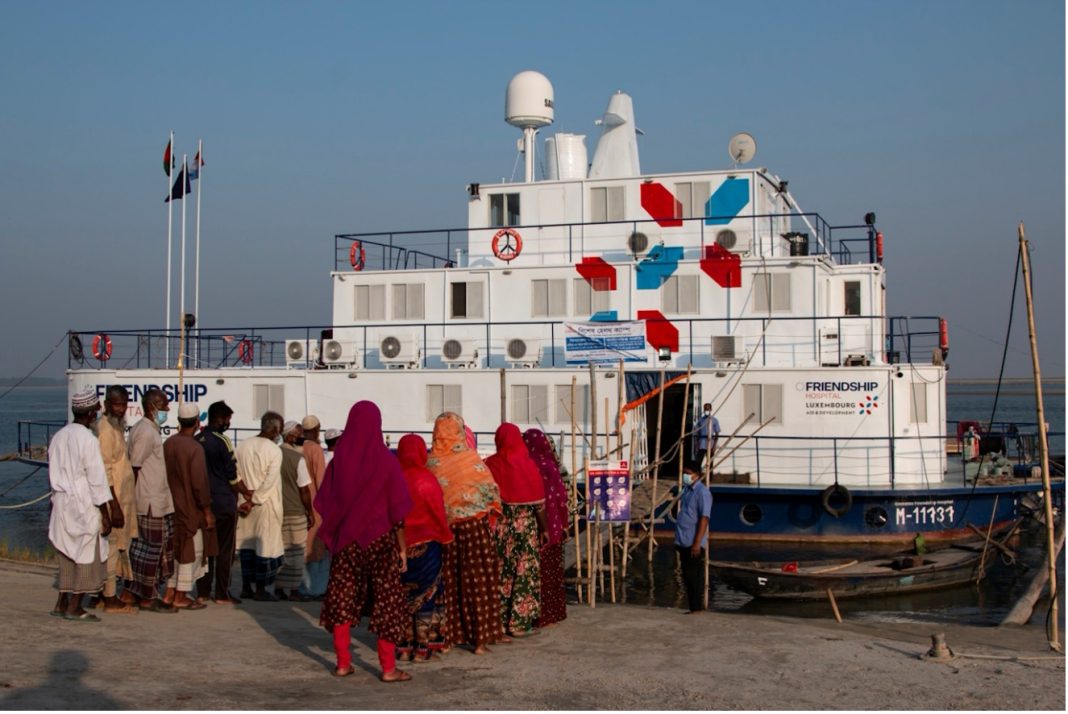
Founder of Friendship in Bangladesh and Friendship Luxembourg, Runa Khan has been named a recipient of the 68th Ramon Magsaysay Award, also dubbed the “Nobel Prize of Asia”.
What started as a single floating hospital to serve isolated communities on hard-to-reach river islands across northern Bangladesh now serves over 7.5 million people annually. Friendship’s work focuses not only on healthcare but also education, sustainable economic development, climate action, and more, achieving significant successes such as high immunisation rates in the areas in which it works. The NGO emphasises sustainable solutions, community trust, and systemic changes.
Runa Khan founded Friendship in 2002 after witnessing the hardships facing these river communities. In a recent interview with Forbes Luxembourg, she explained how she found it difficult to believe that there were such disparities in her own country and decided she had to do something about it. “It was very difficult at the beginning,” she recalls, both in terms of the actual work and in establishing credibility. Nevertheless, “I wanted to do it in the way I felt was correct and would work. If I was going to use my time, my ability, my brain and my heart, I was going to do it in a particular way which created impact, which I could visibly see.”
It was one thing to gather others around a table, quite another to convince them of her commitment and dedication to see the project through. Instead of going through intermediaries, “I really wanted to work with people who could come to the organisation, build that harmony of relationships, so they can see the needs… then there is belief, and that’s one of the most important things that can happen.” And one of the first places she found these long-term relationships was in Luxembourg.
Trust in Luxembourg
Though Friendship today is also established in the Netherlands, UK, Belgium and France, Friendship Luxembourg was the first to be established outside of Bangladesh, in 2006. For its 20th anniversary, the NGO noted that the “longevity and the success of [Friendship’s] field programs are rooted in an exemplary level of engagement within the Grand Duchy: a relationship of trust with government institutions, strong partnerships with the private sector, and the unwavering support of committed individual donors.”
President of Friendship Luxembourg, Marc Elvinger first met Khan in 2004; they now both serve as Co-Chairs of Friendship International. Since his first trip to Bangladesh in 2009, he has returned nearly 60 times, sometimes with a Luxembourg group alongside him. “I think donors are mainly concerned about whether their funds are used effectively,” he explains, “and I think in that respect they have a lot of trust in Friendship.”
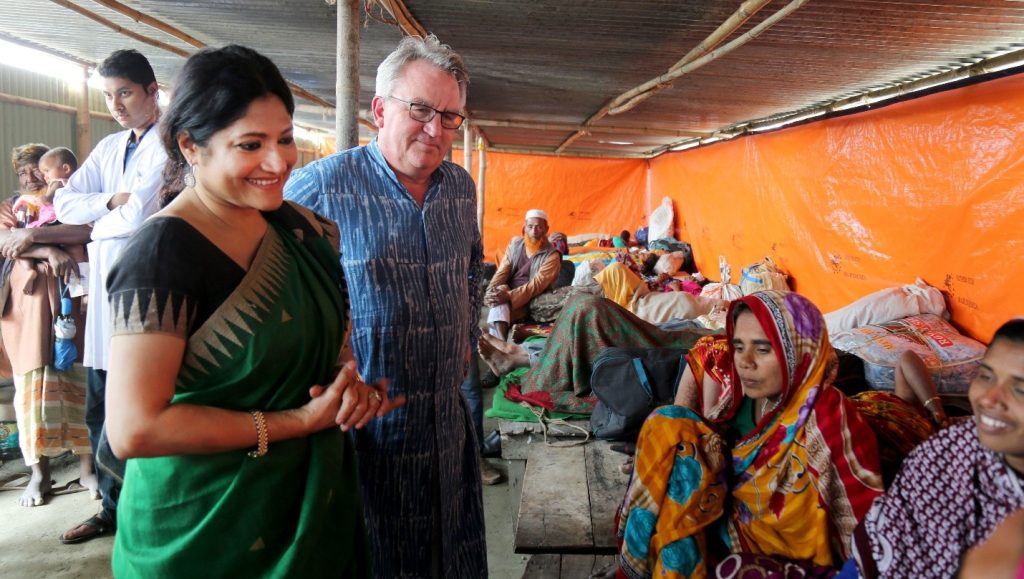
© Courtesy Friendship
Last year, Friendship Luxembourg raised approximately €1.4 million in funding. Today Friendship Luxembourg provides almost 40% of the funding for the long-term projects running in Bangladesh.
There’s also a Friendship Colours of the Chars shop in Luxembourg City, which showcases the work of nearly 400 weavers with which the NGO works. The purpose of the shop is to maintain these jobs in Bangladesh.
Protecting nature to protect people
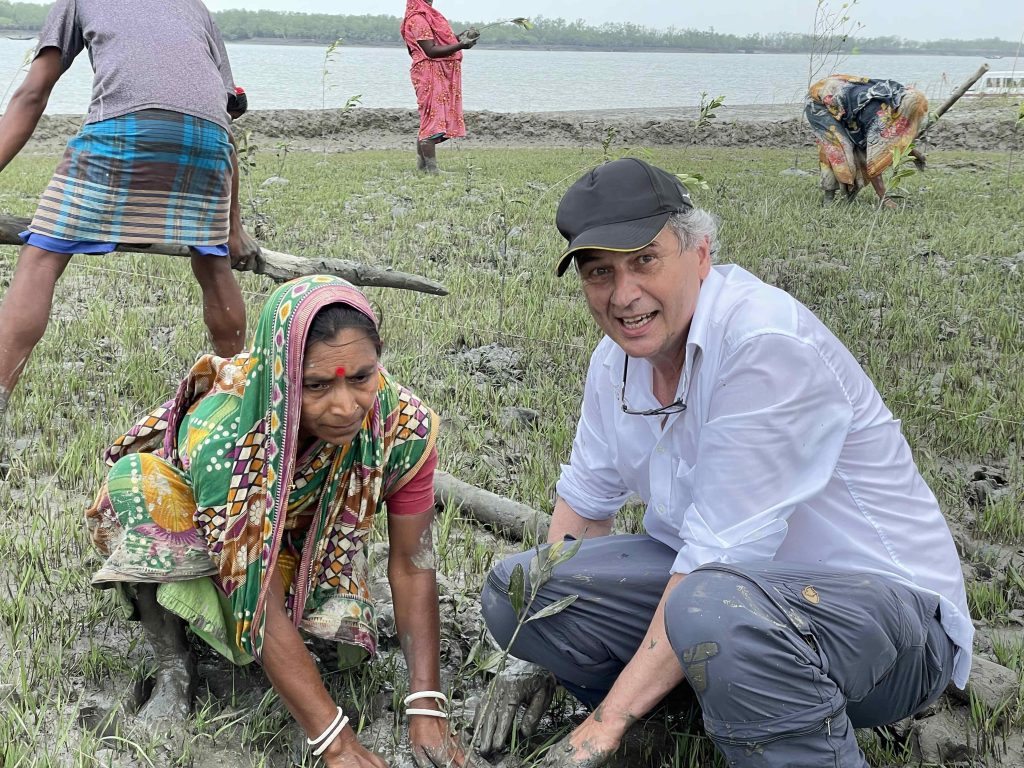
Another example of Luxembourg friendship with the NGO centres on Friendship’s mangrove reforestation project, designed with the help of Fondation Hëllef fir d’Natur, of which Patrick Losch is President. Losch says that Elvinger reached out to him to help build up Friendship, and Losch got involved to help build its microfinance division and equipment financing in agriculture and fishery. In parallel, the independent advisor and forester spoke with the NGO about the challenges related to living in a tidal zone, susceptible to impacts related to flooding, cyclones, etc.
© Courtesy Friendship
Mangroves, Losch explains, “have the ability to live in the tidal zone and can cope with saltwater coming in. They fix the soil; they break the waves and the wind.” Additionally, they are “the nursery” of animals, such as crabs and fish. Prior to the project launch in 2016, Losch says that members of the communities had been letting their goats eat the mangroves to the limit and so “we were very much thinking about how to find alternative incomes for these people.”
Since its start in 2016, Friendship has planted more than 650,000 trees over 200 ha in the Satkhira District and in 2025 received the Earthshot Prize—a prestigious international environmental prize established by HRH Prince William in 2020—for this work. Losch says that even after two to three years, there was a visible, positive evolution. The improvement in biodiversity has provided alternative and increased sources of income for communities in the region.
“People can now catch crabs because the crabs can hide between the roots of the trees, and then they can catch the small fish, and so on,” Losch explains. “The small fish they are protected against big fish, and so it becomes a virtuous circle. People are very happy, so far as they tell us.”
Prize ceremony
Khan will be honoured for her work at the formal award ceremony held in Manila, Philippines, on 15 November, thereby joining around 350 other individuals and organisations that have received the award since it was established approximately 60 years ago. She is the 14th recipient of the award from Bangladesh, following Muhammad Yunus, a microfinance pioneer who in 2006 won Nobel Peace Prize with his Grameen Bank.
“Friendship Luxembourg has stood on the side of Friendship Bangladesh at every stage of its development over the past 20 years,” Friendship wrote in a 31 August press release. “Whereas the Ramon Magsaysay Award honours first and above all the laureate herself, Luxembourg can take its share of pride in the achievement for having put faith in the exemplary leadership of the Founder of Friendship.”