
At the European Investment Bank in Luxembourg, art is not an afterthought. It is a language. Works turn cohesion, sustainability, democracy and identity into something citizens can see, feel and question.
For Barbara Balke, Secretary General of the European Investment Bank, that distinction is central to the bank’s identity. The EIB is a financial institution, but not a conventional one. “We’re a policy-driven institution. You’re not talking to a standard financial institution where the only thing that counts is profit and loss. That’s not what we’re about. We’re about Europe. We’re about building Europe,” said Balke.
That purpose changes how the bank thinks about culture. It is not treated merely as a sector to finance, or as decoration for public buildings. It is part of European identity, with unity as the central anchor to this ideology. “What makes Europe, at the end of the day, is culture and cultural identity. This feeds into everything we do,” said Balke.
Art With Purpose, Not Decoration
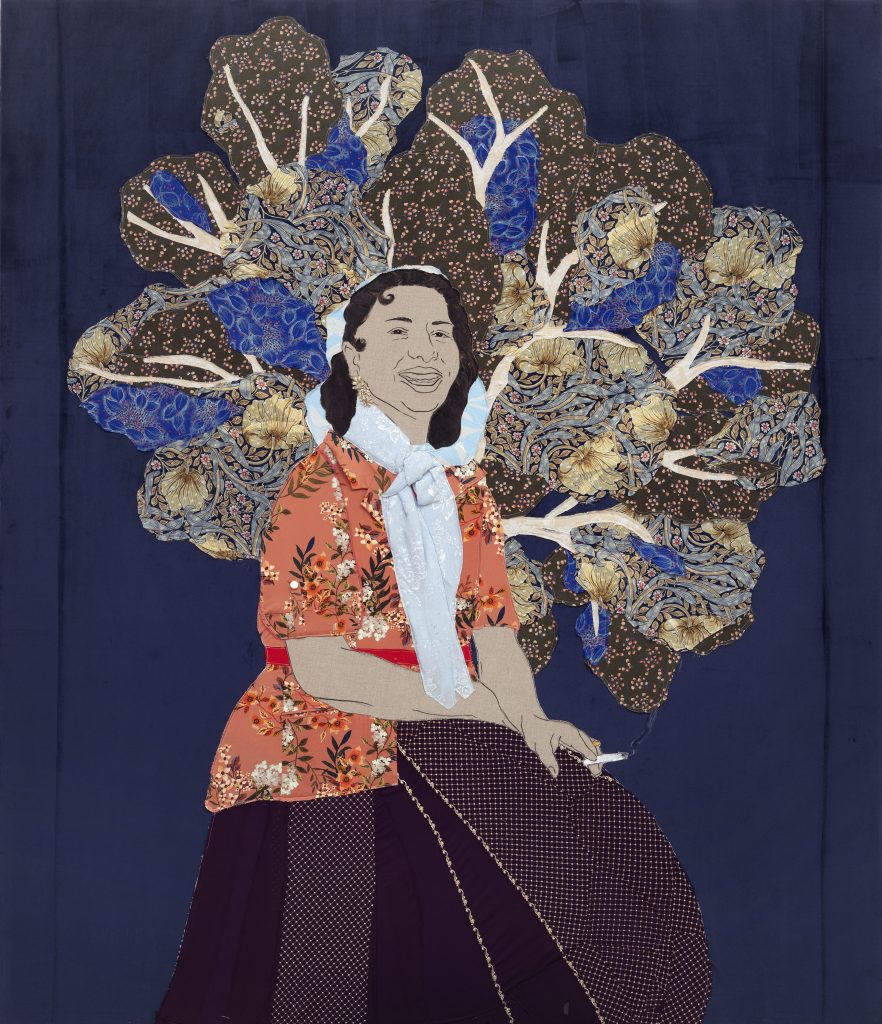
The EIB is best known for financing infrastructure, climate action, energy and innovation. Less visible is its cultural role: supporting museums, concert halls and creative industries, while also building a contemporary art collection with a clear institutional purpose.
“We don’t just put pictures on the walls because they look pretty. There is always a curator effort behind how we build our art collection,” said Balke.
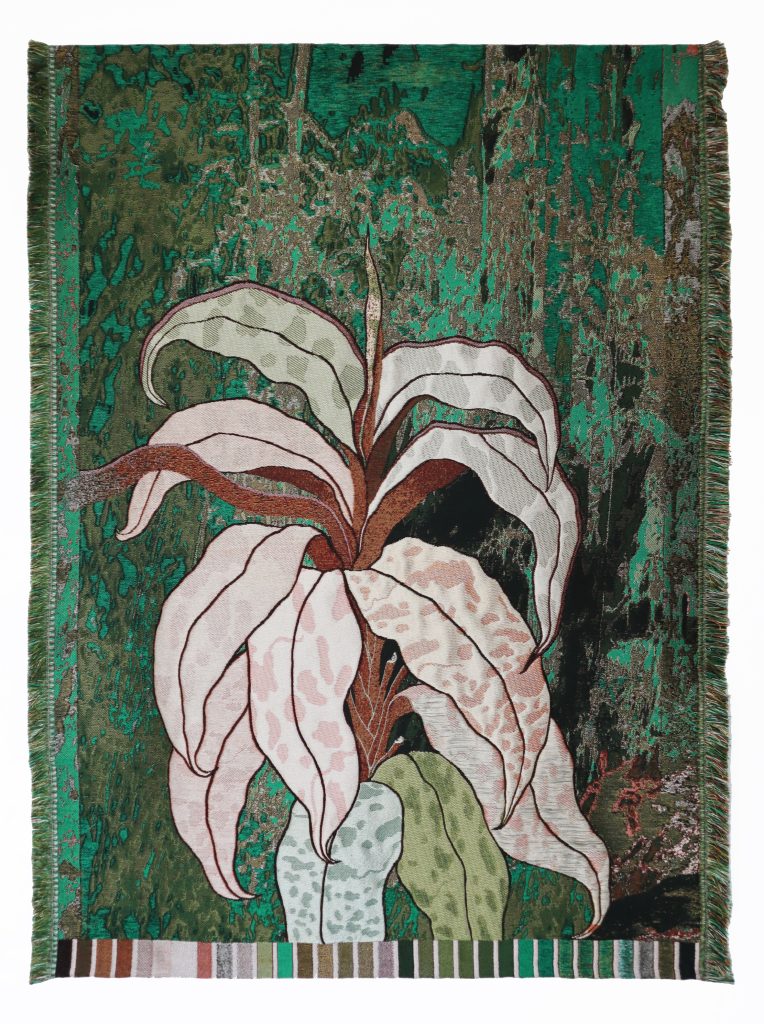
That effort is about more than collecting. It is about storytelling. The works are expected to speak to Europe’s diversity, its shared histories, its tensions and its future. They help make the European project less abstract.
“There is always something bigger than just a beautiful piece of art,” said Balke.
This is why the EIB’s approach is carefully distinguished from the corporate habit of buying art as prestige, investment or atmosphere. For a public institution using public money, the reasoning must be different. “Our approach to art is founded with purpose,” said Balke.
The collection is also not kept entirely behind institutional doors. The EIB has opened its premises during Private Art Kirchberg in Luxembourg, and selected works have travelled through exhibitions in other European countries. Individual pieces may also be loaned to museums when they form part of an artist’s wider story.
“We’re trying not to just show a collection. We’re trying to tell stories about what this collection means for Europe and how it links to our continent and its people,” said Balke.
By activating the art collection through acquisitions and exhibitions, the EIB supports living European artists, promotes social inclusion and encourages innovation—while offering staff and stakeholders a window onto Europe’s evolving artistic landscape.
Culture as Social Infrastructure
That same logic runs through the cultural projects the EIB finances. Examples include the renovation of Cologne Opera, the new Cyprus Archaeological Museum in Nicosia and the Ostrava concert hall in the Czech Republic.
Every project is cultural, but also infrastructural. A museum protects memory, while an opera house gathers a city. A concert hall can help a region imagine a future beyond its industrial past. These are not luxuries at the edge of economic development; they are part of how communities hold together.
“Cohesion is one of our big horizontal policy priorities. A lot of these projects are about bringing something to people in regions, contributing to the life of people in regions,” said Balke.
The bank still applies financial discipline, and projects must be viable. As a public institution, the EIB is accountable for how it uses its resources, but the evaluation extends beyond repayment schedules alone. “We always look at it through that lens of what this project contributes to building Europe. It’s more than just a banking analysis,” said Balke.
The return on investment, in other words, is not only financial. It may be civic, regional, educational or symbolic. It may appear in a restored public space, a stronger local identity or access to culture for people who might otherwise be far from it.
This is particularly important for creative industries. Through the European Investment Fund, the EIB Group supports small and medium-sized companies whose value often lies in intangible assets: scripts, designs, ideas, intellectual property. Traditional banks can struggle to assess such businesses. By blending EIB Group capacity with EU budget instruments such as InvestEU, more risk can be absorbed, helping creative firms gain access to finance.
“What we can contribute is not something every commercial bank could,” said Balke.
Patient Capital, European Memory
Time is one of the EIB’s most important tools. Cultural infrastructure, like climate or transport infrastructure, does not produce instant results. Its value accumulates over decades.
“We are the long-term financer, we are not looking at short-term return on investment,” said Balke.
That patience also shapes the bank’s relationship with artists. The EIB supports emerging talent through its “Artists’ Development Programme” that gives young artists time, mentoring and the possibility of producing new work. Upon the completion of their residency, the Bank also acquires some of the produced artworks.
The important point is that the support is real. “We support relatively unknown young artists to really give them the opportunity to create something that is new,” said Balke.
The collection, then, has a purpose beyond mere expansion. “The purpose cannot be to grow it for the purpose of growing it, the purpose has to be that we want to link this to what we stand for as the European Investment Bank,” said Balke.
Looking ahead, she believes culture will become more, not less, important as Europe faces social transformation and geopolitical uncertainty.
“Europe itself is a cultural project. It may have started as an economic project, but it is way more than that,” said Balke.
For the EIB, that may be the clearest expression of value. A bank can finance buildings, museums and concert halls, but through culture, it can also finance memory, access, imagination and trust, the quiet infrastructure of Europe itself. “Culture shapes today and creativity shapes tomorrow,” said Balke. In that, the EIB is a custodian of Europe’s cultural heritage.
This article was published in the 10th edition of Forbes Luxembourg.
Read more articles:
A Forest That Sings: Meet The Luxembourgish Artist Behind These Impressionist Paintings