

Young people already know screens are a problem. A Luxembourg initiative argues the real challenge is building an offline world worth returning to.
For years, the debate around young people and screens has sounded largely the same: less TikTok, less Instagram, less time online. Policymakers, educators, parents and health professionals continue exploring ways to support healthier digital habits through regulation, media literacy, prevention initiatives and awareness campaigns.
But in Luxembourg, a new initiative created by Andra Matresu supports these efforts while also asking a broader and more uncomfortable question: not only what should be restricted, but also how can we better support young people offline? What if excessive screen use is not only the problem itself, but also a symptom of something missing offline?
Beyond screen addiction
That idea sits at the center of brb, short for “be right back,” a new video podcast and behavioral initiative developed by Andra Matresu with and for young people under ZEV – Zenter fir exzessiivt Verhalen a Verhalenssucht (Centre for Excessive Behaviour and Behavioral Addictions), with the generous support of the Bindels-Kauthen Foundation (Fondation de Luxembourg). Public broadcaster 100,7 describes the project as giving young people aged 12 to 26 a voice on screen use, social media and digital wellbeing.
The initiative is led and managed by Matresu from start to finish, while athlete and adventurer Matthias Stelzmüller joins the first edition as guest host. The distinction matters. The project was intentionally designed to be replicable beyond one personality or one campaign.
“The gap is simple. We talk a lot about young people, but not with them,” said Andra Matresu, Digital Media Literacy Advisor at ZEV and creator of brb.
That observation shaped the entire structure of the initiative. Before filming, Matresu conducted surveys with young people to understand how they themselves perceived digital life and screen use. One of the first discoveries was linguistic.
“They don’t really like the word addiction. They are tired of being told to use their phones less. They want to be shown how to use them better,” said Matresu.
That nuance reflects a broader generational shift. Young people increasingly reject alarmist narratives around technology while simultaneously recognising the negative effects excessive screen use can have on attention, sleep, concentration and mental wellbeing.
Stats behind the screen
According to Luxembourg’s BEE SECURE Radar 2024 report, 96% of young people aged 12 to 16 in Luxembourg own a smartphone, while average daily screen time among teenagers reached 4 hours and 8 minutes. For young adults aged 17 to 30, that figure surpassed five hours daily.
The same report found that 18% of teenagers spend more than six hours per day on social media alone.
At the European level, the problem is becoming increasingly visible. In 2024, the World Health Organization reported that problematic social media use among adolescents across Europe rose from 7% in 2018 to 11% in 2022. The study, which surveyed nearly 280,000 young people across 44 countries, also found that 12% of adolescents were at risk of problematic gaming behavior.
Yet Matresu believes awareness campaigns alone are no longer enough.
“Everyone already knows screen time can be a problem. The hard part is the moment after. There is a gap between knowing and doing,” said Matresu.
Rebuilding offline life
Unlike traditional awareness campaigns, brb avoids fear-based messaging and rigid digital detox rhetoric. Instead, it focuses on what Matresu calls “digital minimalism”, using technology intentionally rather than compulsively.
The project combines interviews, street conversations, school visits and real-world challenges aimed at replacing passive scrolling with physical experiences and community interaction.
“We don’t give lectures. It’s about immersive learning and lived experience, because that’s how we actually change behavior,” said Matresu.
That is where Stelzmüller enters the story.
Known through his Skate the World project, Stelzmüller has spent years skating across countries and documenting human encounters around the globe. His official website describes him as an entrepreneur, adventurer and former professional athlete who has explored more than 80 countries through skating and storytelling.
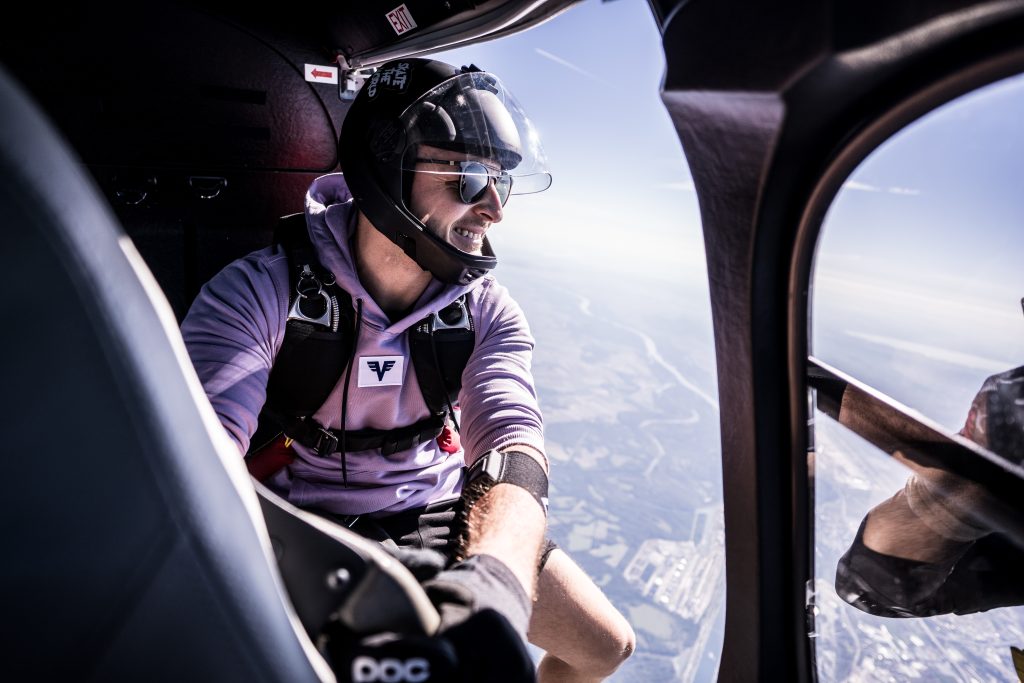
For Matresu, he represented more than simply a recognisable face for the initiative.
“The whole thing with social media is called social for a reason, but we somehow made social media the end product,” said Matresu.
Stelzmüller’s role in brb is to help bridge online attention and offline action, embodying the idea that meaningful real-world experiences can compete with algorithm-driven engagement.
Ironically, he admits struggling with the same behaviors the initiative discusses.
“I had a huge amount of time, and I fell into the trap of doomscrolling. You think you go online for three minutes, and suddenly one hour is over,” said Stelzmüller.
He described how the pause of several international projects left him isolated, constantly consuming bad news online and slipping into repetitive scrolling habits.
“You get all this bad news, and you’re actually getting depressed,” said Stelzmüller.
During one week of offline-focused activities connected to the project, Stelzmüller said his own average screen time dropped by 42%.
“The biggest difference is when you have meaningful things to do. If you are bored, you use your screen to get rid of that boredom,” said Stelzmüller.
Screen addiction, however, is complex and multifactorial. Persuasive platform design and algorithm-driven engagement play a role, but so do a lack of self-awareness and emotional literacy, fragile mental wellbeing, and the absence of fulfilling offline alternatives, among many other factors. Rather than reducing the issue to a single cause, brb explores how these influences interact and how healthier habits can be developed both online and offline.
That perspective increasingly aligns with wider international research. The OECD has warned that loneliness and weakened social connections are becoming growing public policy concerns across developed countries, particularly among younger generations interacting increasingly through digital environments.
For Matresu, the issue ultimately comes down to environment.
“If offline feels hard or boring, of course people go online. The question is not only how we reduce screen time, but also how we create healthier environments where young people feel seen, valued and connected in real life, without needing to seek to fulfill those needs instantly online. And how do we help young people build healthier ways of coping in real life in an increasingly digital world?” said Matresu.
The search for real connection
Throughout the project, Matresu and Stelzmüller interviewed teenagers and young adults in schools, skate parks, clubs and public spaces across Luxembourg. What surprised them most was not denial, but self-awareness.
“Everybody told us it’s a problem they have. A lot of them already had strategies like screen blockers or trying to find other hobbies,” said Stelzmüller.
For Stelzmüller, the issue extends far beyond teenagers.
“It doesn’t matter if you are in one of the poorest neighborhoods in the Philippines or in Luxembourg. You see kids, teenagers and adults hanging on their phones and not realising what’s happening around them,” said Stelzmüller.
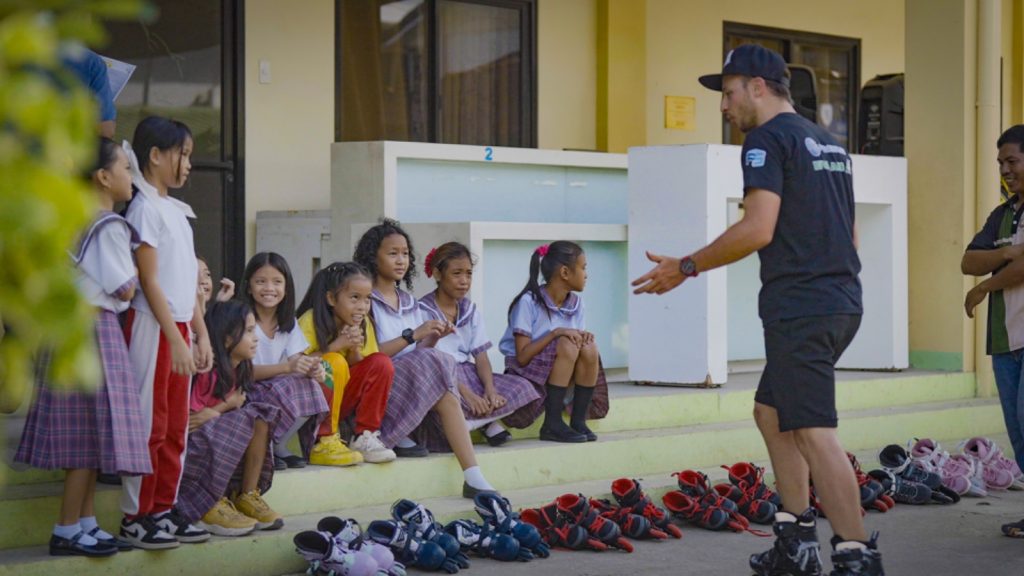
Still, the initiative also uncovered something hopeful: a strong desire among many young people to reconnect with physical experiences.
The team visited offline events and skate parks where participants described leaving phones behind entirely because they were too immersed in real-world interaction to think about them.
“We spoke to people who said they don’t even bring their phones because they are busy experiencing something real,” said Stelzmüller.
That idea lies at the center of brb. The initiative does not argue that technology should disappear. Instead, it asks a different question: what kinds of environments make people voluntarily want to spend less time online?
“I do not believe in digital detox. I believe in digital minimalism,” said Matresu.
Matresu is also careful to emphasise that the project is not anti-technology.
“I am not anti-technology. I am pro using technology to build real and authentic human connection,” she said.
The phrase be right back itself became symbolic of that philosophy. Once used in early internet chatrooms to signal a temporary return to real life, it now reflects something many people feel they have lost: the ability to step away.
“Back then, ‘be right back’ meant you were leaving the internet for a real moment. Now we live online all the time,” said Matresu.
The initiative was supported by a number of schools, organisations and community actors across Luxembourg who actively contribute to creating healthier offline environments for young people. These included the Skatepark of the Municipality of Strassen, which has evolved into a vibrant community space with the support of young leaders Bijan Kesseler and Luca Davelli, as well as Lycée technique de Lallange, Lycée Michel-Rodange and the Bindels-Kauthen Foundation.
As debates around social media regulation, youth mental health and digital dependency continue intensifying globally, brb offers a more nuanced proposition. The project does not position technology as the enemy. Instead, it asks how societies can help young people develop healthier digital habits while simultaneously creating richer opportunities for connection, purpose and belonging offline.
For Stelzmüller, the solution begins with rediscovering physical life itself.
“We need to show alternatives: sports, music, hobbies, experiences, something meaningful enough that people forget to check their phones,” said Stelzmüller.
Read more articles:
What They Don’t Tell You About Capitalism
Voices International: The Soundtrack Of Luxembourg’s Melting Pot