
Luxembourg’s population could surpass one million people by 2070, according to projections from STATEC, underscoring how immigration and international talent continue to fuel one of Europe’s most dynamic economies.
Over the past decades, the Grand Duchy has transformed itself through openness, cross-border labour and a uniquely international workforce. Today, Luxembourg stands as one of Europe’s clearest examples of how economic growth and multiculturalism can work hand in hand.
For the government, immigration is not simply an economic necessity but one of the country’s greatest strengths. Max Hahn, Minister for Family Affairs, Solidarity, Living Together and Reception of Refugees, described migration as a key contributor to Luxembourg’s competitiveness, innovation and social development. “Luxembourg’s economic success is closely linked to its openness and its ability to attract international talent,” said Minister Hahn.

The Minister emphasised that Luxembourg has spent years building policies designed to transform diversity into long-term stability and prosperity. Through initiatives such as the Biergerpakt and Gemengepakt, newcomers are encouraged to integrate into local communities through language learning, civic engagement and intercultural dialogue. According to Minister Hahn, this approach has helped Luxembourg maintain both strong economic performance and social cohesion.
“Luxembourg has developed a model based on mutual respect, tolerance and solidarity, where diversity is explicitly regarded as an asset for societal and economic development,” said Minister Hahn. In Luxembourg’s approach to immigration, integration is viewed as a two-way process involving both newcomers and the host society. This focus on “intercultural living together” has become a defining feature of Luxembourg’s modern identity.
Maintaining a high quality of life remains central to the government’s long-term vision. Investments in inclusion, community engagement and equal opportunities are intended to ensure that growth continues to benefit all residents. “Luxembourg’s future resilience will depend on its ability to continue leveraging diversity as a strength,” said Minister Hahn.
That confidence is also reflected in Luxembourg’s economic structure. The country has built one of Europe’s most internationally connected labour markets, supported by both foreign residents and cross-border workers. According to STATEC, this openness is expected to remain a major driver of growth for decades to come.
Immigration as the Engine of Economic Growth
Luxembourg’s long-term demographic outlook remains remarkably strong compared with much of Europe. According to STATEC’s latest projections, the country’s population could reach between 944.000 and 1.067 million inhabitants by 2070, depending on productivity and migration scenarios. These projections underline Luxembourg’s continued attractiveness as a place to live and work.
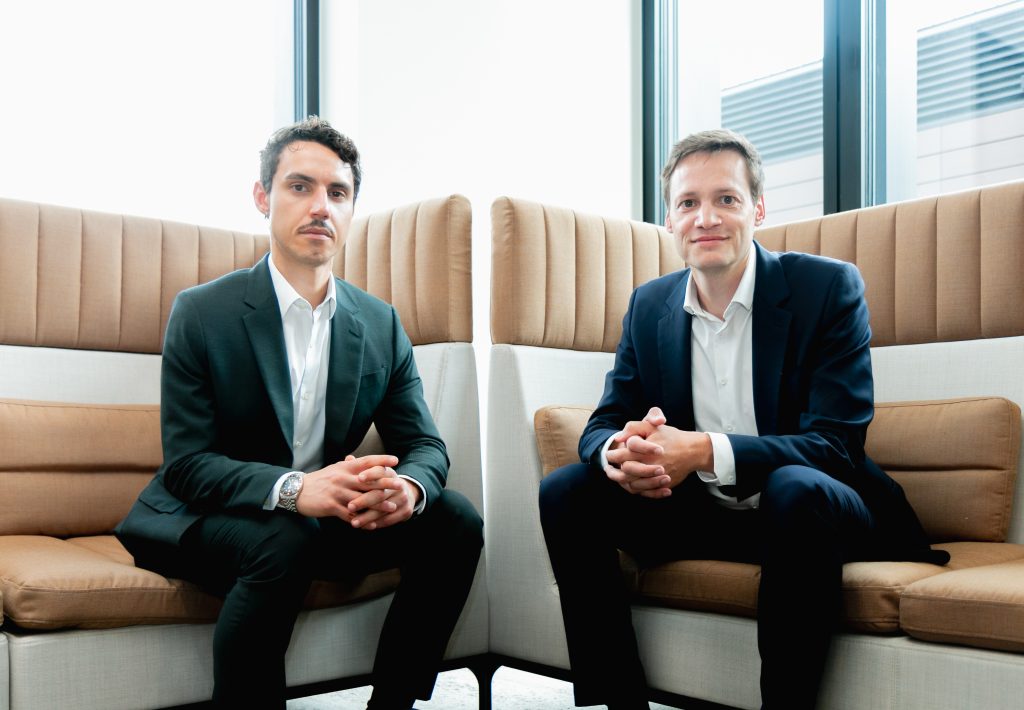
“Migration has really been the main driver of the country’s population growth,” said Gabriel Gomes, Head of Modeling and Forecasting at STATEC. Luxembourg’s economic model benefits from a close relationship between economic expansion and international labour. “Economic growth attracts foreign workers, and these foreign workers contribute to the country’s productive potential,” said Gomes.
Like many European countries, Luxembourg’s fertility rate remains below the replacement threshold. However, STATEC’s projections show that continued migration, combined with economic dynamism, positions Luxembourg for sustained long-term growth. Rather than slowing down, the country is expected to continue evolving through a balanced combination of demographic expansion and economic adaptation.
According to STATEC’s projections, Luxembourg is expected to maintain positive demographic and economic growth over the coming decades, supported largely by continued migration and labour market demand. Annual population growth is projected to moderate gradually after the early 2040s while remaining positive throughout the forecast horizon. The projections reflect Luxembourg’s continued attractiveness within Europe and the strength of its economic fundamentals.
For Tom Haas, Director at STATEC, Luxembourg’s future success will depend largely on productivity and continued attractiveness. The country’s high wages, strong purchasing power and quality of life remain major advantages in attracting skilled international workers. “Productivity is really the key,” said Haas.
Luxembourg’s model remains highly unique in Europe. Nearly half of Luxembourg’s workforce consists of cross-border workers, creating an exceptionally international economy. This structure provides Luxembourg with considerable flexibility and allows the country to continue adapting successfully to demographic and economic changes.
Housing, Infrastructure and a Sustainable Future
As Luxembourg continues to grow, housing and infrastructure naturally remain important areas of focus. STATEC’s economists emphasised that population growth increases demand for housing, transport and public infrastructure. At the same time, Luxembourg possesses several unique advantages that help the country adapt successfully to these pressures.
“There is pressure in housing supply, but the relationship between immigration and real estate prices is more complex,” said Gomes. Housing availability depends on multiple factors, including interest rates, land use policies, construction activity and infrastructure planning. Luxembourg’s institutions therefore continue working toward long-term solutions designed to support sustainable growth.
The country’s international labour market also provides important flexibility. Many workers choose to live in neighboring regions of France, Belgium and Germany while continuing to work in Luxembourg. This cross-border model allows economic growth to continue while supporting regional integration throughout the Greater Region.
“Because of the composition of its labour market, the Greater Region should be considered when talking about pressure in housing supply,” said Haas. Infrastructure investment remains central to maintaining Luxembourg’s long-term attractiveness. Continued improvements in transportation, housing development, mobility, healthcare and education all contribute to the country’s competitiveness. These investments are designed to ensure that economic growth continues alongside a high quality of life.
Luxembourg’s growth model is expected to continue evolving through innovation, productivity gains, infrastructure investment, and international openness. While STATEC projects a structural slowdown in long-term GDP growth, ranging between 0% and 2% depending on productivity assumptions, the outlook remains broadly positive. Rather than reaching a limit, Luxembourg appears focused on carefully managing and guiding the next phase of its development.
Luxembourg’s future will likely depend not only on maintaining growth but also on continuing to transform diversity into opportunity through integration, inclusion and community participation. “Migration is therefore seen as an opportunity to enrich the country through diversity, while strengthening economic dynamism. By combining economic needs with integration and social policies, migration becomes both a pillar of competitiveness and a factor of social stability,” said Minister Hahn.
This article was published in the 10th edition of Forbes Luxembourg.
Read more articles:
Luxembourg Households Favour Financial Security
Luxembourg Office Real Estate – Why Is Demand Slowing Down?
Why The Benelux May Be Europe’s Most Underestimated Laboratory For Private Capital