
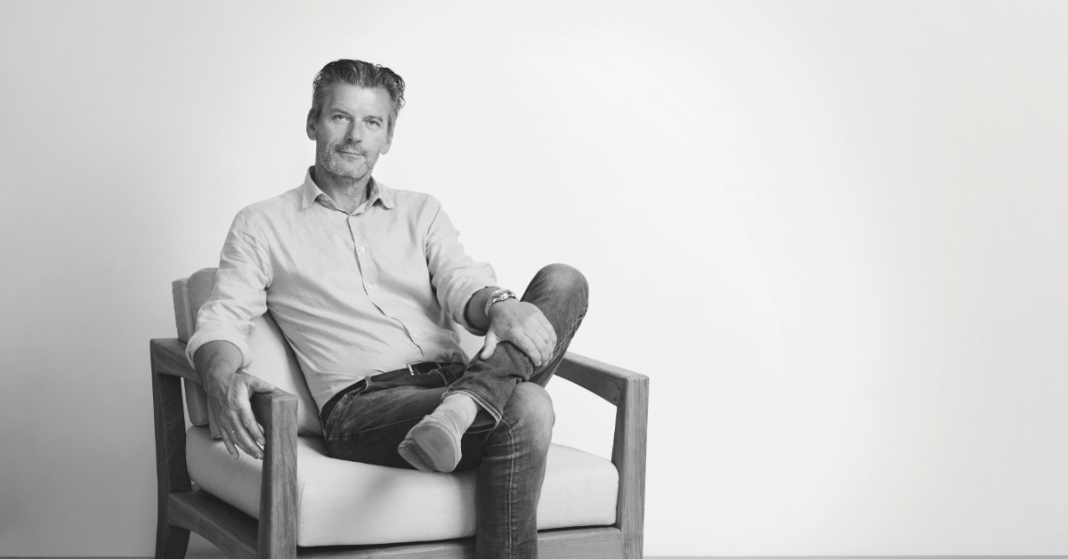
Can a piece of garden furniture usher in an innovation? Kris Van Puyvelde, founder and head designer of Royal Botania, believes it can. The company he co-founded in 1992 has already won several design awards and counts admirers such as Bruce Springsteen and the Dutch royal couple. “Building a global brand from Belgium is something I am deeply proud of.”
When you drive from Antwerp along the E313 towards Liège, you come across something special near Wommelgem. On your right you see an imposing greenhouse with a seemingly shattered roof through which trees grow. This evocative building is The Glasshouse, Royal Botania’s showroom. It is here that Van Puyvelde and his team have welcomed wealthy clients from all over the world since 2024.
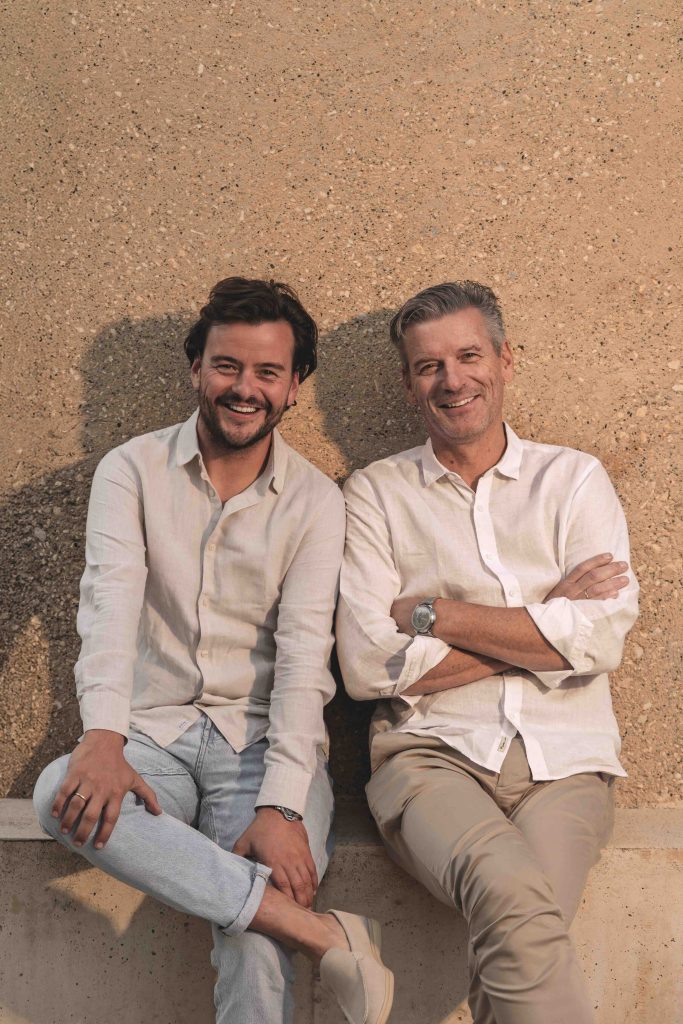
The Glasshouse is the crown jewel of a company that, over the past 34 years, has grown into a leader in the luxury outdoor-living sector. Royal Botania’s story, however, began by chance, says Van Puyvelde, who previously traded in parquet flooring. “In the spring of 1992, a friend (co-founder Frank Boschman, ed.) and I came up with the idea of importing a container of teak furniture. We felt there was potential.” The friends had got the idea during a trade mission to Indonesia, when, at a fair, they saw a stand run by people who made such furniture.
The experiment went much better than expected. “We organised a weekend to sell the contents of that container directly to friends and acquaintances. It went surprisingly well, and before long everything was sold. It inspired us to go further, to develop our own models and to look for better manufacturers.” Royal Botania was born.
Wood, however, was not an obvious choice at a time when plastic garden furniture was the standard everywhere. “When we started out with wooden furniture, it was all rather bulky and heavy,” Van Puyvelde recalls. Teak was at that time mainly associated with British trade and overseas territories. The name Royal Botania was chosen to evoke those exotic echoes. At the same time, the founders wanted to refine the existing designs of teak furniture. “We began introducing a fresh design language. We wanted to create lighter furniture that was easier to handle, more user-friendly and more ergonomic.”
That continual quest for improvement became the basis of Royal Botania’s philosophy. “We have always been pioneers in innovation, bringing something different to the market,” says Van Puyvelde. “Early on, for example, we began combining stainless steel and aluminium with wood. After that, we evolved further towards furniture made entirely of steel or aluminium, at a time when the market was dominated by wood. Today we use a whole range of materials. That is how we have always stayed ahead of the trends.”
“We have always been pioneers in innovation, bringing something different to the market.”
In that creativity lies, according to the managing director, the key to Royal Botania’s enduring success: “We don’t look too much at what others do; we do our own thing. It is ingrained in our DNA, and that is where we draw our originality from. As a result, we are highly valued in the market, because we always come up with something creative.”
At the root of Royal Botania’s inventiveness there is always a technical angle, says Van Puyvelde, who is an engineer by training. “Our strength is out-of-the-box thinking and devising things that do not yet exist. That ranges from new folding systems and more comfortable loungers to inventive parasol models.”
The company can respond quickly to change because, since 2002, it has had its own production site in Thailand. “That is a great advantage: most of our competitors outsource everything to external manufacturers, often in China. We have full control over the production process and therefore over quality control too. That allows us to keep testing new things and building new models. Sometimes it is trial and error, but if you can do that in your own factory, you can move much faster.”
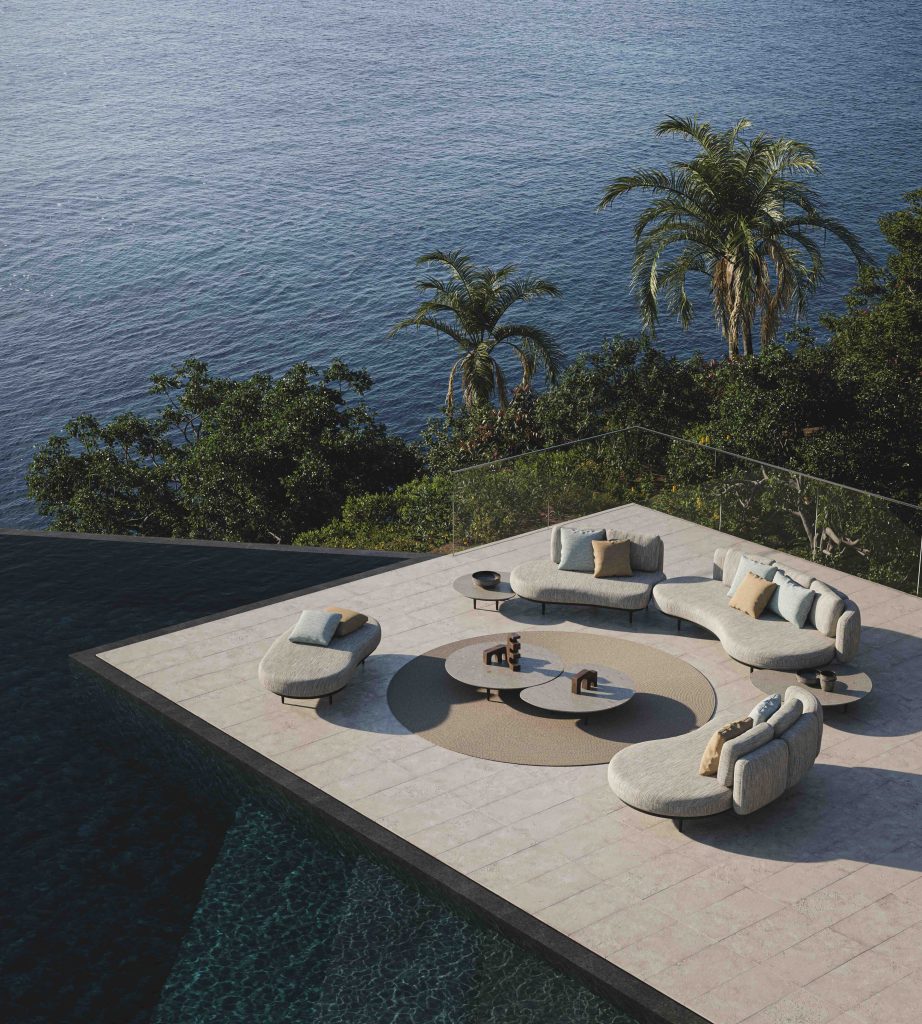
It also helps that Royal Botania keeps all its design and R&D work in-house. “We are really an A-to-Z company,” Van Puyvelde explains. “That means everything, from the first sketches to after-sales service, happens in-house. We handle design, prototyping, production and sales ourselves. Everything happens here under one roof.” The creative component of those processes still gives Van Puyvelde, who is head designer as well as CEO, the most pleasure. “It is always a joy to be able to start with a few lines on paper and then watch an idea grow. And the best part, of course, is showing those things to the wider public and receiving applause and appreciation for them.”
That recognition comes partly in the form of design awards. Last year, for instance, Royal Botania received two Red Dot Design Awards, for Product Design and Innovative Design, for the Anamon, a parasol that opens out of a tube like a sea anemone. When you close the parasol again, it transforms into a lamp. When Van Puyvelde and his team presented the prototype last year at the Salone del Mobile furniture fair in Milan, it caused quite a stir. “The Anamon went viral at the time, with more than 500 million views and 8 million likes,” Van Puyvelde says proudly. The parasol is now sold under a separate brand of the same name. Van Puyvelde calls the Anamon brand a ‘playground’ for experimentation.
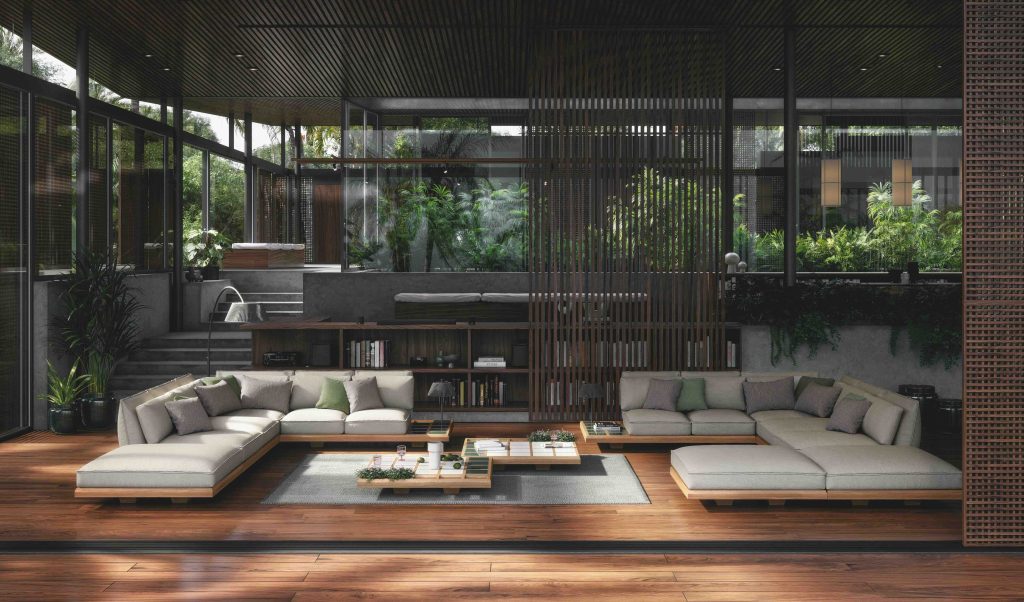
Alongside inventiveness, Royal Botania owes its success to the diverse markets the company addresses. “We went international very quickly,” Van Puyvelde recalls. “We had only been going for a good year and we were already exhibiting at international fairs. That allowed us to start exporting fairly soon, from our third year.” Since 2011, Royal Botania has been present on every continent. High-end clients such as the King of Morocco, Bruce Springsteen and the Dutch royal couple rely on the Belgian company for their outdoor furniture. Royal Botania pieces also feature in luxury hotels and on yachts. “We generate about 75% of our sales in Europe and 20% in the United States,” says Van Puyvelde. For the latter market, there has been a showroom in the Design Center in New York since 2009. The American market is served through the separate company Royal Botania Corp., with its own sales team.
“If you want to excel at something, you need passion.”
The Belgian company also has clients in the Middle East, Australia and New Zealand. The Asian market is smaller; there, Royal Botania mainly supplies the hospitality sector. The conflicts of recent years have nevertheless had an impact. “Russia, Ukraine and the Middle East were all promising markets for us,” Van Puyvelde explains. “At the moment they are all under pressure. In the United States, the import tariffs are not doing us any favours either.”
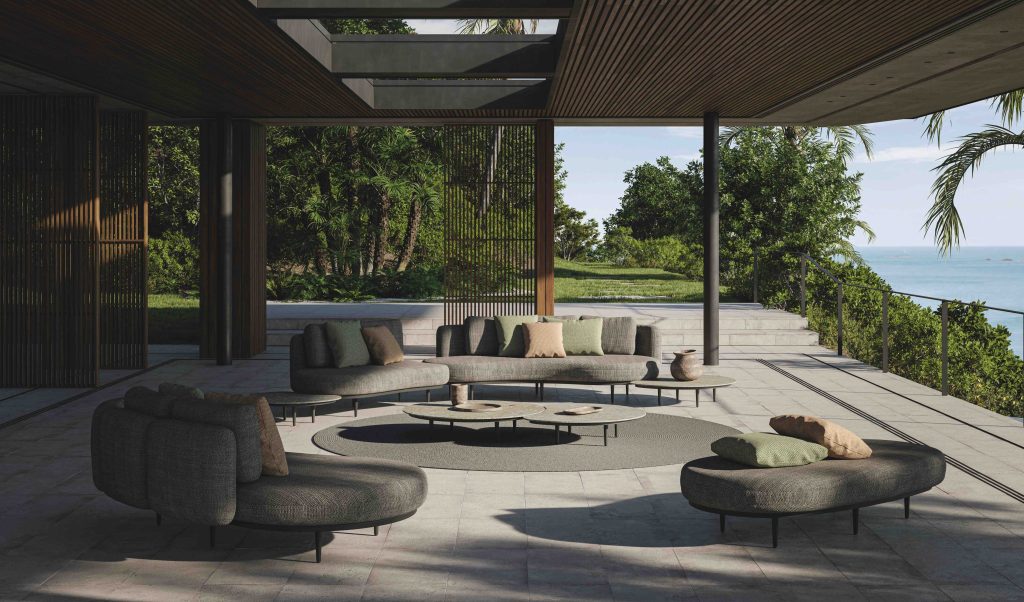
Another challenge is that more and more new players are entering the market. Here Van Puyvelde points above all to high-end companies, such as design brands, that now also offer outdoor collections. “These are often brands that have existed for a very long time and have their own strong distribution networks. At the same time, they are often interior brands that lack the know-how to make outdoor products. Our great asset is that we are specialists and they are not.”
That expertise and passion are what make the difference, according to Van Puyvelde. “If you want to excel at something, you need passion.” That is also the tip he gives to young entrepreneurs: “Find your passion and go after it. It is the best driving force there is for achieving results. And above all, do your own thing, without looking too much at others.” Van Puyvelde and Royal Botania will keep doing exactly that.
This article was published in the 10th edition of Forbes Luxembourg.
Read more articles: