

Artist Rol Reding’s Impressionist paintings transport viewers to the forests and fields of Luxembourg, where the wind makes the trees sing and the leaves vibrate with colourful intensity.
After a 25-year hiatus from painting, the Luxembourgish artist Rol Reding has returned with a collection of paintings that highlights the evolution of the forest throughout the seasons. Inspired by Ian Anderson’s “Songs from the Wood” and on display at the Fondation Valentiny in Remerschen, his works portray the woods and fields around Canach.
“Every day, I walk with my dog in the forest, and I listen to a lot of music. One day, I had Anderson’s music – ‘Let me bring you songs from the wood… Let me bring you love from the field’ – in my head,” Reding tells me the day of our interview. “I was looking at the changing of the colours of the leaves, the metamorphosis of the forest.” And thus was born the idea behind his new series of works.
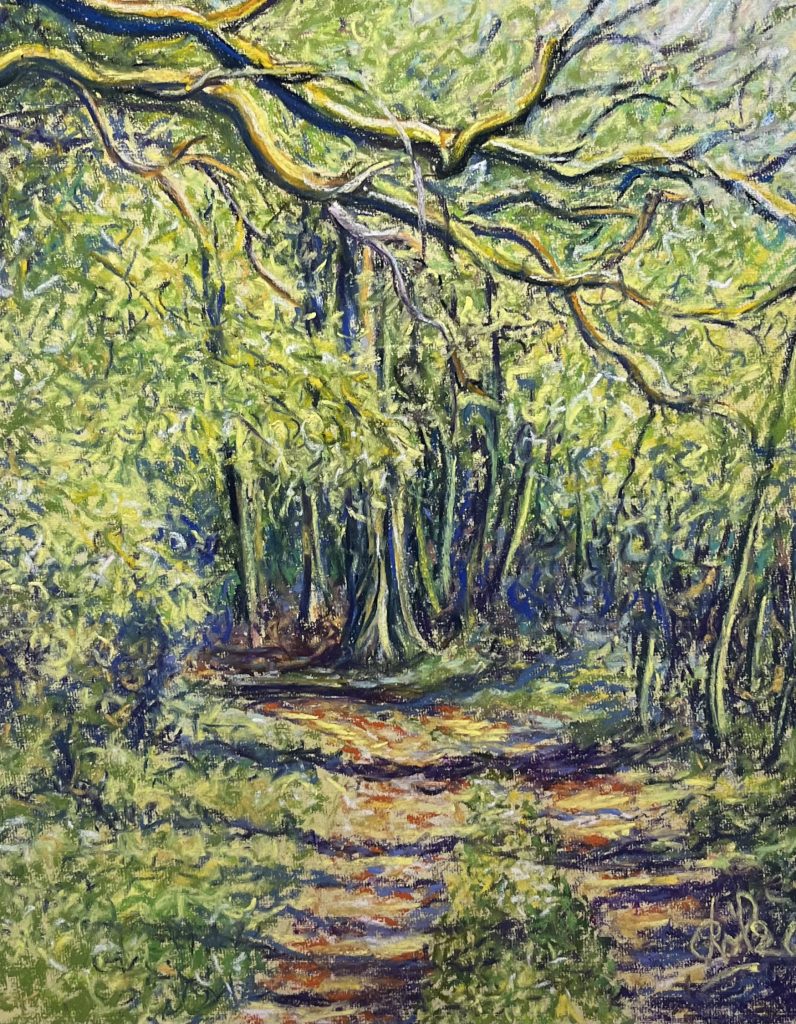
Reding’s paintings bring to mind the œuvre of the French Impressionist Camille Pissarro: they feature paths that wind through peaceful forests, cropped gatherings of trees, fields of golden wheat, patches of cheerful sunflowers and brightly-coloured rapeseed and pumpkins surrounded by vines. Above all, the impression of movement is conveyed through short, sharp brushstrokes.
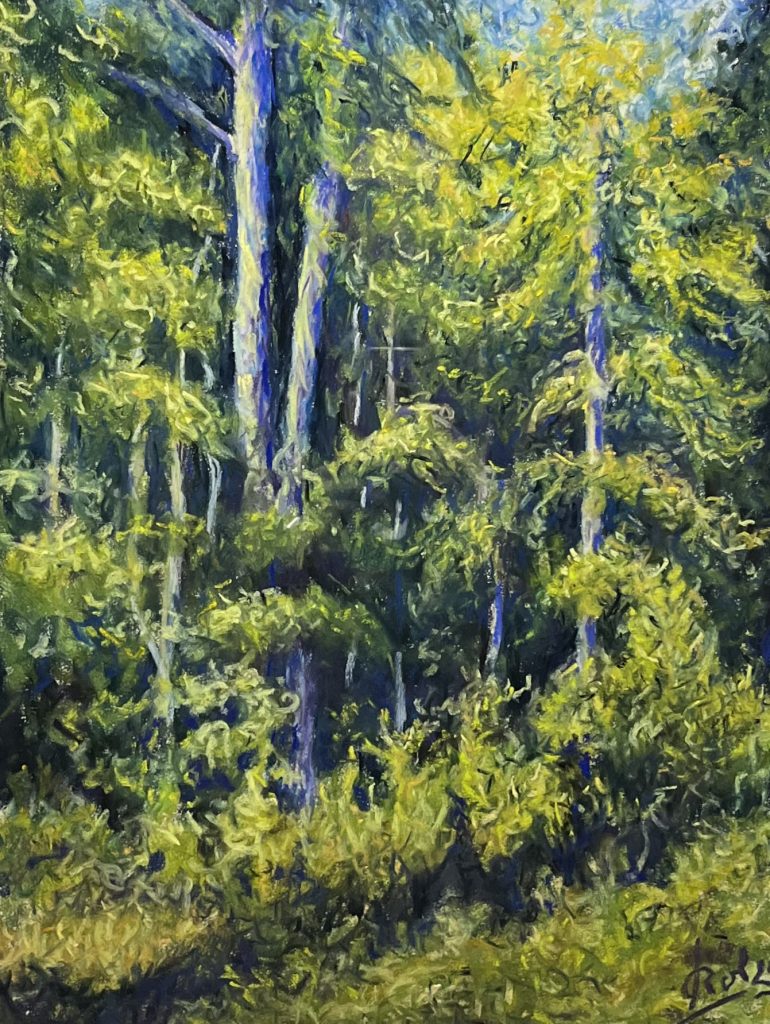
“The colours need to vibrate. That’s what I’m trying to accomplish,” Reding says passionately, pointing to the scenes of forests and fields, to the hundreds of painted leaves on the canvas. “We have to see the sun, feel the sun, hear the forest. If we’re successful, one can hear the trees in the painting. When people come to the exhibition, I want them to listen, to hear the songs from the woods.”
From Expressionism to Impressionism
Born in 1959, Reding trained with the Luxembourgish artists Mars Schmit and Jean-Marie Biwer, though he spent most of his professional career working in the grand duchy’s prison system. A co-founder of the Lëtzebuerger Artisten Center, which was established in 1984, much of Reding’s early work can be described as Expressionist, and was heavily influenced by German artists like Max Ernst or Max Beckmann and the Austrian Egon Schiele. These paintings are characterised by distorted figures and vivid, nearly unnatural colours.
The paintings that are part of the “From the Woods to the Fields” exhibition have all been created in the last two years, and represent a significant shift from Reding’s earlier style. The first group of paintings on display features 13 scenes from the Canach forests; two paintings were created in January, and one every month after, all the way to December.
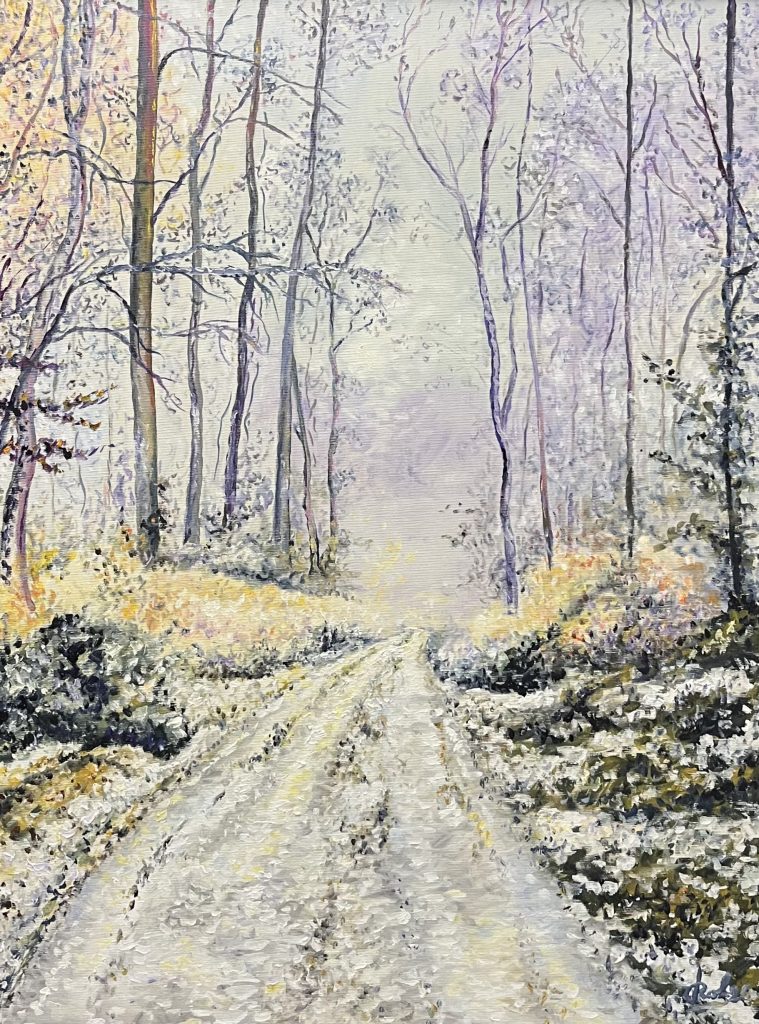
The passage of the seasons, from winter to spring to summer to autumn, is portrayed: bare branches against a lavender sky give way to bright, lush greenery, which lead to carpets of warm yellow leaves as the months tick by. “The colour black does not exist in my palette,” says Reding. It’s “strictly forbidden,” as is the colour brown. And yet, the artist manages to create shadows and darkness by using shades of blue, violet, and orange. “The darkness,” he says, “makes the light colours shine.”
A second grouping of paintings focuses on the theme “Love from the fields,” and, like the series of scenes from the forest, also transport the viewer to the idyllic landscapes of Luxembourg, depicting nature throughout the seasons.
An emphasis on authenticity: “I have to be Rol”
Contrary to Impressionist artists like Claude Monet or Alfred Sisley, who also created several series of paintings of a single subject, Reding’s works do not portray the exact same scene. Monet, for instance, is known for a series of some two dozen paintings that show haystacks in a field throughout the seasons, and another series that features the façade of Rouen’s cathedral at different times of the day.
“I didn’t want to simply copy what Monet or another artist had done,” emphasises Reding. “It’s like the new singer for the band Queen: he can’t be Freddie Mercury. It’s impossible. If I try to copy someone, it won’t work anyway. It never works because it’s a copy. There’s no soul.” Honesty and authenticity, therefore, are key. “You can learn from the Impressionists of the past, but you must remain yourself. I cannot try to be Monet or Pissarro. I have to be Rol; I can’t be anyone else.”
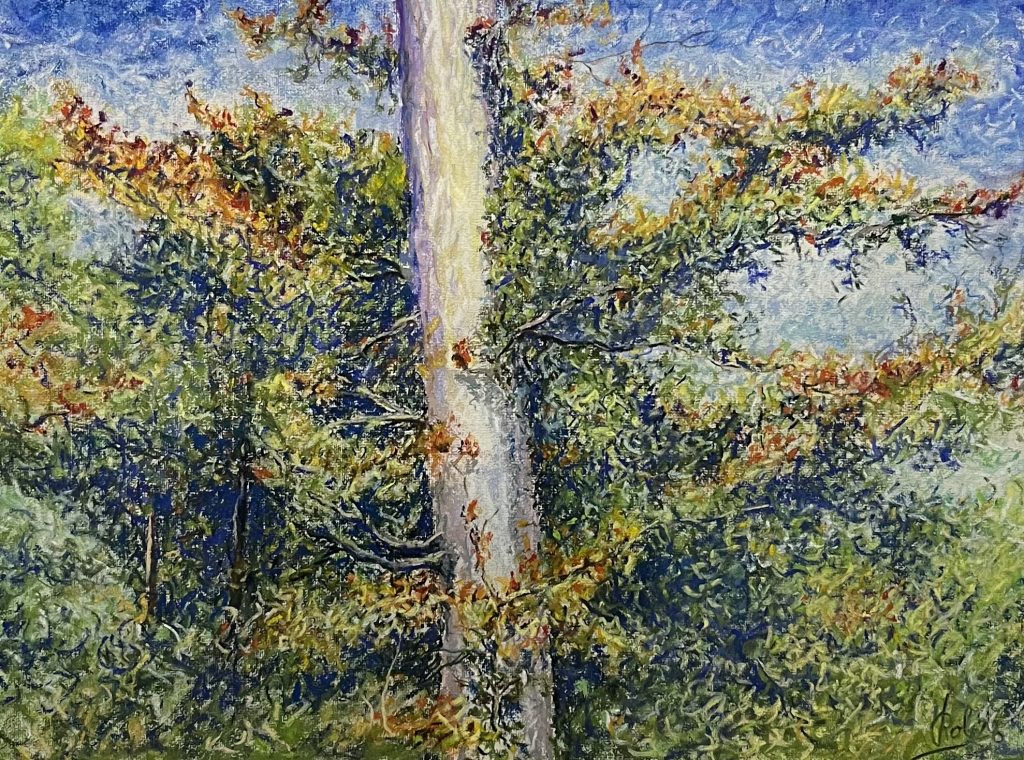
“Besides,” he exclaims, “the forest is too beautiful to always paint the same trees!”
The exhibition “Roland Reding: From the woods to the fields” is on display at the Fondation Valentiny in Remerschen until 12 July 2026. Free admission.
Read more articles:
Beyond Banking: The Art Of Meaning
Voices International: The Soundtrack Of Luxembourg’s Melting Pot
