
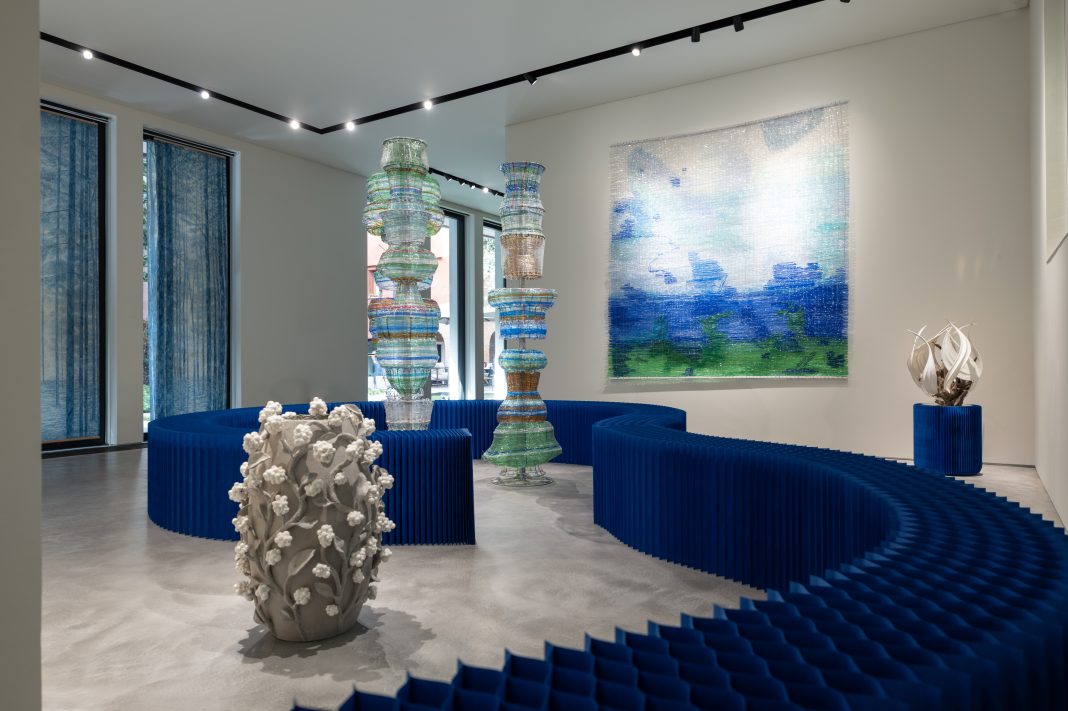
With Fiat Lux, De Mains De Maîtres Luxembourg is bringing the work of 27 Luxembourg-based artists to Venice. The exhibition also opens a wider conversation about the cultural and economic value of craft in an age of automation.
Craftsmanship is more than a tradition to be protected. It is a living culture, an economy and an international language. Since 2018, Homo Faber has brought together makers from around the world in Venice, a city whose history is inseparable from glass, textiles, metalwork and other forms of artisanal excellence.
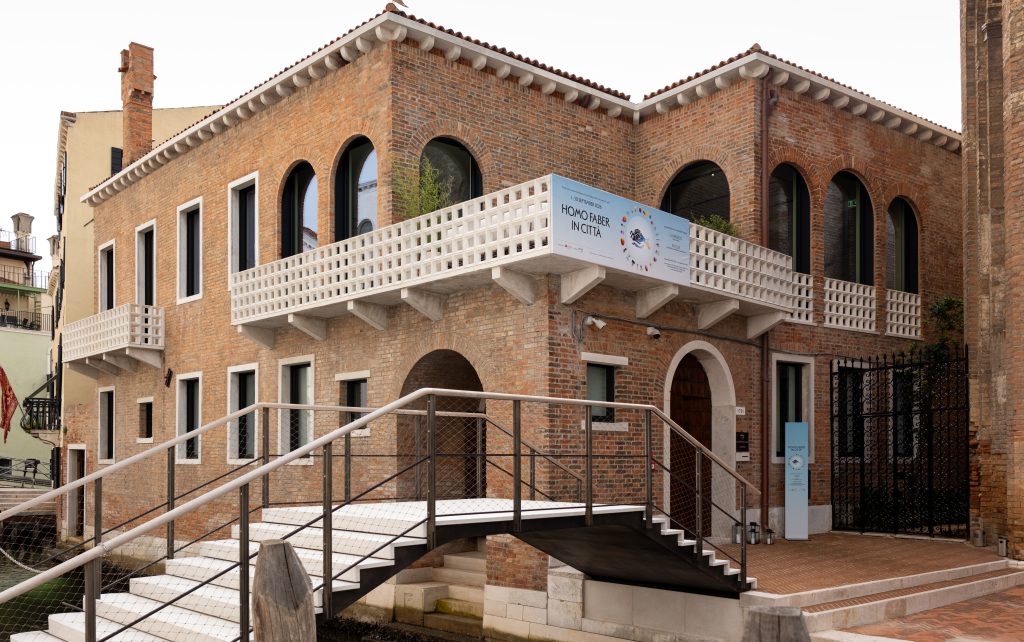
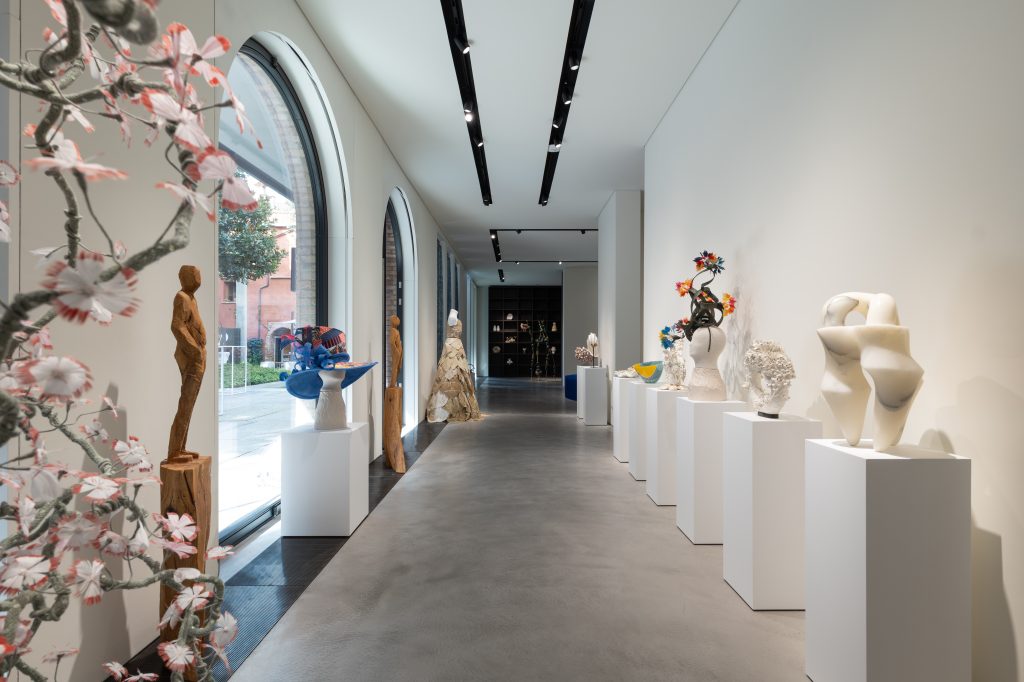
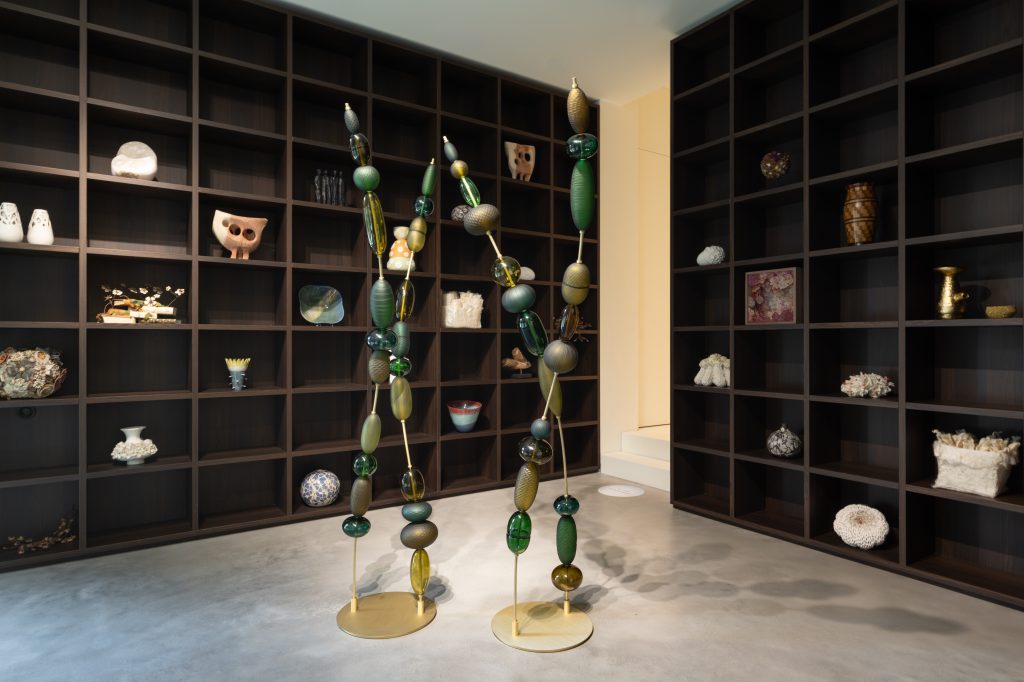
This September, Luxembourg joins that conversation on a new scale. For the first time, De Mains De Maîtres Luxembourg, the association and platform dedicated to the country’s fine crafts, is presenting a month-long exhibition at Casa Sanlorenzo as part of Homo Faber in Città. Titled Fiat Lux, it brings together 27 Luxembourg-based artists and more than 60 objects exploring light through glass, ceramics, textiles, wood, metal and innovative materials.
Light is the subject of the exhibition, but also its instrument. It is reflected, filtered, absorbed and transformed, revealing the textures of the materials and the traces left by the hand that worked them.
The timing is significant. De Mains De Maîtres celebrates its tenth anniversary in 2026, and Venice is the first stop in a European anniversary programme that will continue in Switzerland and France. The cycle will culminate in November 2027 with the sixth De Mains De Maîtres Biennale in Luxembourg.
Founded in 2016 at the initiative of the then Hereditary Grand Duke Guillaume and Hereditary Grand Duchess Stéphanie, De Mains De Maîtres was created to give greater visibility to Luxembourg’s artistic crafts and to the people whose knowledge, precision and creativity sustain them. The initiative remains particularly close to the heart of Grand Duchess Stéphanie. The official vernissage is being held on 10 September in her presence, alongside Minister for Culture Eric Thill and other guests.
Over the course of a decade, De Mains De Maîtres has grown from a national showcase into an increasingly European platform for fine craftsmanship.
A specialised field within a major economic sector
Since its inaugural edition in 2018, Homo Faber has itself developed from a European showcase into a global celebration of contemporary craftsmanship. This year, more than 500 makers from over 70 countries are represented in Venice. For De Mains De Maîtres, taking part in this international ecosystem is both recognition of what has been achieved over the past decade and an opportunity to connect Luxembourg’s artists with a wider network of institutions, collectors, designers and fellow craftspeople.
Fine craftsmanship is a highly specialised part of a much broader craft economy. Yet it faces many of the same questions as the sector as a whole. How can skills be passed on? How can younger generations be attracted to these professions? How can small workshops remain viable, invest and reach markets beyond their borders?
In Luxembourg, these questions concern one of the pillars of the economy. In 2025, the craft sector comprised almost 10,000 companies and accounted for more than 105,000 jobs, making it the country’s largest employment sector. Roughly one person in five works in crafts, while around 81 per cent of craft businesses employ fewer than ten people. Far from being a niche, the sector is an economic force built largely on small and medium-sized companies.
The figures also challenge the idea that craft belongs mainly to the past. These businesses create skilled jobs, train apprentices, invest in equipment and carry knowledge that cannot simply be standardised or reproduced on an industrial scale.
“The métiers d’art sector is far more than cultural heritage; here, heritage becomes economic value,” says Tom Wirion, Director General of Luxembourg’s Chamber of Crafts. “Behind every exceptional object stands a business, a workshop, highly skilled jobs and generations of expertise. Fine craft is not only a cultural asset, but also an economic force that creates value, drives innovation and strengthens Luxembourg’s international reputation.”
Preserving craft means making it viable
Economic weight does not guarantee economic security. Luxembourg’s Chamber of Crafts has repeatedly drawn attention to pressure on profitability, productivity and investment. Demographic change presents a second challenge. If too few young people enter the professions or take over established businesses, skills developed over generations can disappear remarkably quickly.
More than 30 per cent of Luxembourg’s craft businesses are expected to face succession questions within the next decade, while more than one in four craftspeople will reach retirement age during that period. Preserving know-how, therefore, is not simply a cultural ambition. It depends on creating attractive careers and viable businesses.
Part of the challenge is one of perception. What does craftsmanship mean to a generation growing up with artificial intelligence, automation and instant digital production?
The Chamber of Crafts’ 2026 #MakersofLuxembourg campaign addresses that question directly. With humour and deliberate exaggeration, it uses artificial intelligence to explore what technology can do and, more importantly, what it cannot replace. The campaign features real bakers, carpenters, hairdressers, dental prosthetists and other professionals, under the message: “Real Craft. Can’t Be Replaced.”
This is not an argument against technology. Many makers now work with digital tools, new materials and advanced processes in fields ranging from fashion and ceramics to glass, design and technology. Innovation has always been part of craft. What remains difficult to replicate is the judgement that comes from experience: an understanding of materials, a trained eye, the precision of a gesture and the ability to adapt when an object does not behave as expected.
This is where the longstanding partnership between the Chamber of Crafts and De Mains De Maîtres becomes particularly relevant. The Chamber works on the economic conditions that allow craft businesses to thrive, including entrepreneurship, innovation, internationalisation, training and succession. De Mains De Maîtres complements that mission by giving exceptional fine craftsmanship visibility, cultural recognition and access to international networks.
The handmade as an act of resistance
Against this backdrop, Fiat Lux acquires another layer of meaning.
“The works selected for this exhibition affirm the handmade gesture as an act of resistance,” says curator Jean-Marc Dimanche. “In an age of automation and limitless reproduction, their uniqueness, imperfections and the time invested in their creation become part of their value. Light reveals tensions, textures and irregularities, bringing the materiality of craftsmanship to the fore while preserving the areas of shadow that sustain each piece’s mystery.”
The exhibition in Venice builds on a substantial platform at home. Each edition of the De Mains De Maîtres Biennale at 19 Liberté, the historic building that once housed ARBED’s headquarters, brings together more than 100 artisans across 2,500 square metres. Hundreds of works are presented to around 15,000 visitors.
Joiners, cabinetmakers, glassmakers, ceramicists, textile designers, milliners, jewellers and goldsmiths meet there in a setting where technical mastery is treated not as a relic, but as the starting point for contemporary creation.
“The trajectory is significant,” says Roland Kuhn, President of De Mains De Maîtres. “It transforms a national showcase into an increasingly European network of makers, workshops, institutions, collectors and partners. More importantly, it reinforces the idea that fine craftsmanship belongs simultaneously to culture, heritage, innovation and the economy.”
In Venice, Luxembourg is not simply presenting a collection of beautiful objects. Fiat Lux places the country’s makers within a wider discussion about the future of craftsmanship: how knowledge is transmitted, how technology can be integrated without losing expertise, and how creative professions can remain economically viable.
These questions may sound abstract. At Casa Sanlorenzo, they become tangible. Every object carries the time spent learning a material and the judgement needed to work it well. That is what Luxembourg is placing in the light: not nostalgia for a disappearing world, but a form of knowledge with an economic and creative future.
