

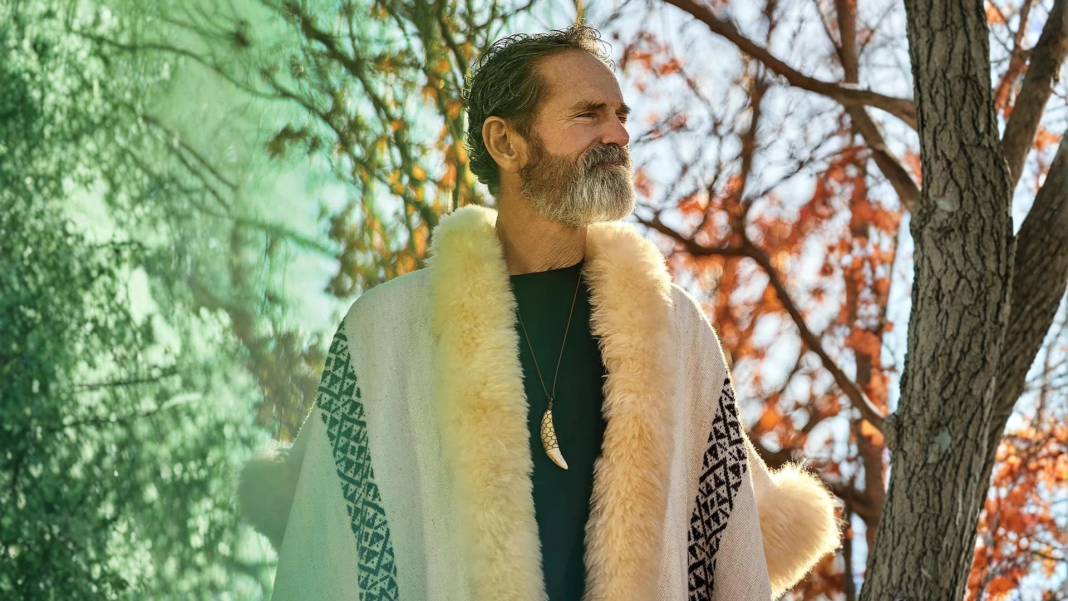
Billionaire Ron Carson pulled himself out of poverty by building a $55 billion financial advisory giant and teaching other advisors to scale like him. Now, thanks to his own personal coaches, he’s changed his name to Omani and found joy.
An afternoon birthday party for Omani Carson’s 3-year-old granddaughter is raging in his house, nestled along a golf course on a dead-end street in Omaha, Nebraska. Toys and party decorations litter the living room, where the kids are bouncing among games, television and cake. Carson steps away into his quiet downstairs office, walls lined with signed guitars and hunting rifles.
“We’re never moving from here,” he says, sitting at a polished wooden table. “My CEO and best friend lives one house over; my kids are moving across the street. They renamed it the cult-de-sac.”

A few miles down the road, some of the 672 staffers at the headquarters of his $55 billion (assets under management) Carson Group are advising clients which stocks to buy and which to avoid, and dispensing wisdom about setting up a durable power of attorney or writing a living will. Others are helping other financial advisors around the country do the same. “They’re part of our extended family,” Carson says, “and we treat them that way.”
For four decades, while his first name was still Ron, Carson, 61, built one of the largest registered financial advisor firms in the nation by leaning into personal relationships with his clients. He embraced scores of independent advisors looking for guidance, developing a coaching business to teach them his ways and a support operation to help with things like marketing, tech and infrastructure.
Today, his business has 150 partner offices serving 54,000 affluent families across the nation, up from 33,000 in 2020. Assets have surged more than threefold since 2021, when Carson sold a minority stake to Bain Capital at a $1 billion valuation. Now, thanks to a roughly 51% share of the company and some 16,000 acres of Nebraska farmland, Carson, a former Forbes contributor, is only the second billionaire financial advisor, after Texas-based Ken Fisher (who also used to write for Forbes).
“Carson struck us as one of the very best players in this space,” says Rafael Mason, a partner at Bain Capital. “It had and continues to have a maniacal focus on the customer, and a genuine desire and ability to make customer’s lives better.”
But amid this huge success, with his business at an all-time high, Carson took an unexpected turn. In 2022, after he hosted indigenous leaders from around the world at his remote hunting lodge–turned–healing ranch, a Lakota chief bestowed on him the name Ta Te Omani, meaning “walking into a stiff wind.” He legally changed his name. Ron would now go by Omani. He gave away all his neckties. He started taking psychedelics and fasting as part of what he describes as a broader effort to heal himself.
“The first chapter of my life was just craving financial stability,” he says. “Once I had it and it didn’t give me the feeling I wanted, I searched for emotional stability.” Now he says he’s happier than ever, living a life of “love and abundance,” and has a plan—and a new business—to help other lost executives “switch their operating systems.”
It’s been a long journey from the cold fields of Nebraska, where Carson helped his alcoholic, sometimes abusive father run the family farm. At 17, he watched his overleveraged parents go bankrupt. “It was the one and only time I saw my dad cry,” Carson says. “I had this relentless desire to not be poor because my parents went broke and it severed my soul.”
As a 265-pound defensive lineman on scholarship at the University of Nebraska–Lincoln, he hustled to get rich. He lost his life savings of $10,000 betting on cattle futures with an “unscrupulous” broker, but found success selling insurance, cold-calling farmers at 6:30 a.m. straight out of the phone book. He sat at their kitchen tables, connecting with them over foul weather, unruly crops and busted equipment. “People trusted me,” he recalls, “even though I was truly an unconscious incompetent.”
In 1983 he went into business for himself, launching what would become the Carson Group out of his dorm. He spent the next six years without an office, barely breaking even. Then, on a particularly rough day, he began phoning clients simply to check in, without an agenda. At a time when most wealth managers were extremely transactional, focused solely on selling investment products to clients, Carson made it personal. “I learned people’s kids’ names, their pets’ names—everything.”
Good strategy, and good timing, as everyday investors began moving money away from traditional brokers into the hands of registered investment advisors, which are legally required to act in clients’ best interests rather than juice their commissions pumping affiliated products. Carson’s annual revenue jumped from less than $30,000 to $1 million within two years. Despite operating far from Wall Street or Silicon Valley, he was soon the highest-earning advisor in his broker-dealer network.
As early as the mid-1990s, Carson began documenting his processes for even the smallest details, from how to greet a client to how to leave a voicemail. “Everything is repeatable,” he says. Other advisors began traveling to Omaha to study his methods. In 1993 he launched Carson Coaching, offering subscription-based guidance and operational blueprints. In 2012 he started Carson Partners, which gives independent advisory firms access to shared technology, compliance, marketing and other infrastructure. But his bread and butter remains helping affluent households with investing, taxes, retirement and estate planning in exchange for a flat percentage fee (up to 2.5% of assets managed).
“If you’re following wealth advice, you probably know the Carson Group,” says Philip Palaveev, who runs a Seattle-based consultancy for financial advisors. “It’s a bit like, if you’re watching football, you probably know about the Pittsburgh Steelers.”
Read more articles:
Building Value In Luxembourg: How Value Partners Defied The Odds In A Crowded Market