

In 2015, six professionals started an MBA at a school with no campus and no rankings. Eleven years later, Luxembourg School of Business (LSB) counts nearly 400 students and has become the first Luxembourg-founded business school to earn AACSB accreditation, one of the most recognised seals of quality in global business education.
A rare distinction
Founded in 1916, AACSB is held by fewer than 6% of business schools worldwide. Earning it requires a peer review of governance, academic standards, faculty qualifications, research and student learning outcomes. It is not permanent: schools must demonstrate continuous improvement and are reviewed on a six-year cycle.
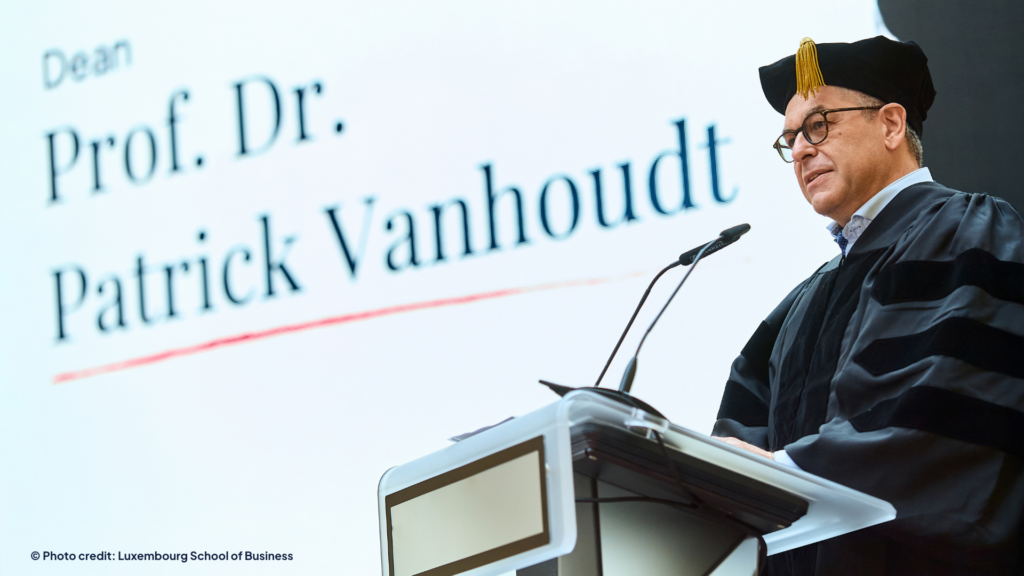
LSB began as a not-for-profit association in 2014 and joined AACSB International in 2018, the same year it received its first national accreditation. “Today, for the first time, a Luxembourgish business school has earned AACSB accreditation,” says founder and managing director Marin Njavro. Prof. Dr. Patrick Vanhoudt, Dean of LSB, credits a team whose dedication made it possible “in just five years.”
Local roots, international ambitions
Unlike foreign institutions operating campuses in the Grand Duchy, LSB was founded in Luxembourg, is governed by Luxembourg law and awards nationally accredited degrees. It now reports 94 faculty members, more than 150 corporate clients across the Greater Region and five accredited programmes: a Bachelor in International Business, Weekend and Full-time MBAs, a Master in Management and a Master in International Finance. A joint PhD with KU Leuven completes the offer.
The timing is notable. On 28 October, France’s ESSCA, already accredited by AACSB, EQUIS and AMBA, inaugurated its Luxembourg campus in Kirchberg. A day later, entrepreneur Patrick Kersten launched student.lu, a platform linking young people with internships and first jobs. Three different initiatives, one common thread: strengthening the bridge between education, talent and the economy.
What changes
For students, accreditation is an internationally recognised quality indicator; for employers, an external assessment of teaching and governance. For LSB, it opens doors to partnerships with other accredited schools and, eventually, to international rankings, subject to eligibility requirements.
“Accreditation is a milestone, not a goal in itself,” says Njavro, who aims to build “a tier-one global business school” with partners over the next decade.
The broader question is whether a more diverse education landscape can help Luxembourg develop, attract and retain the skills its employers need. For students and young professionals, the immediate answer is more choice, closer ties to employers and potentially greater recognition abroad for degrees earned at home.
Read more articles:
Why Europe’s Wealthy Families Bank In Luxembourg
The Talent Blind Spot. Do You Really Know Where Your Talent Lies?
The CFO’s New Reality: Every Finance Team Is About To Multiply