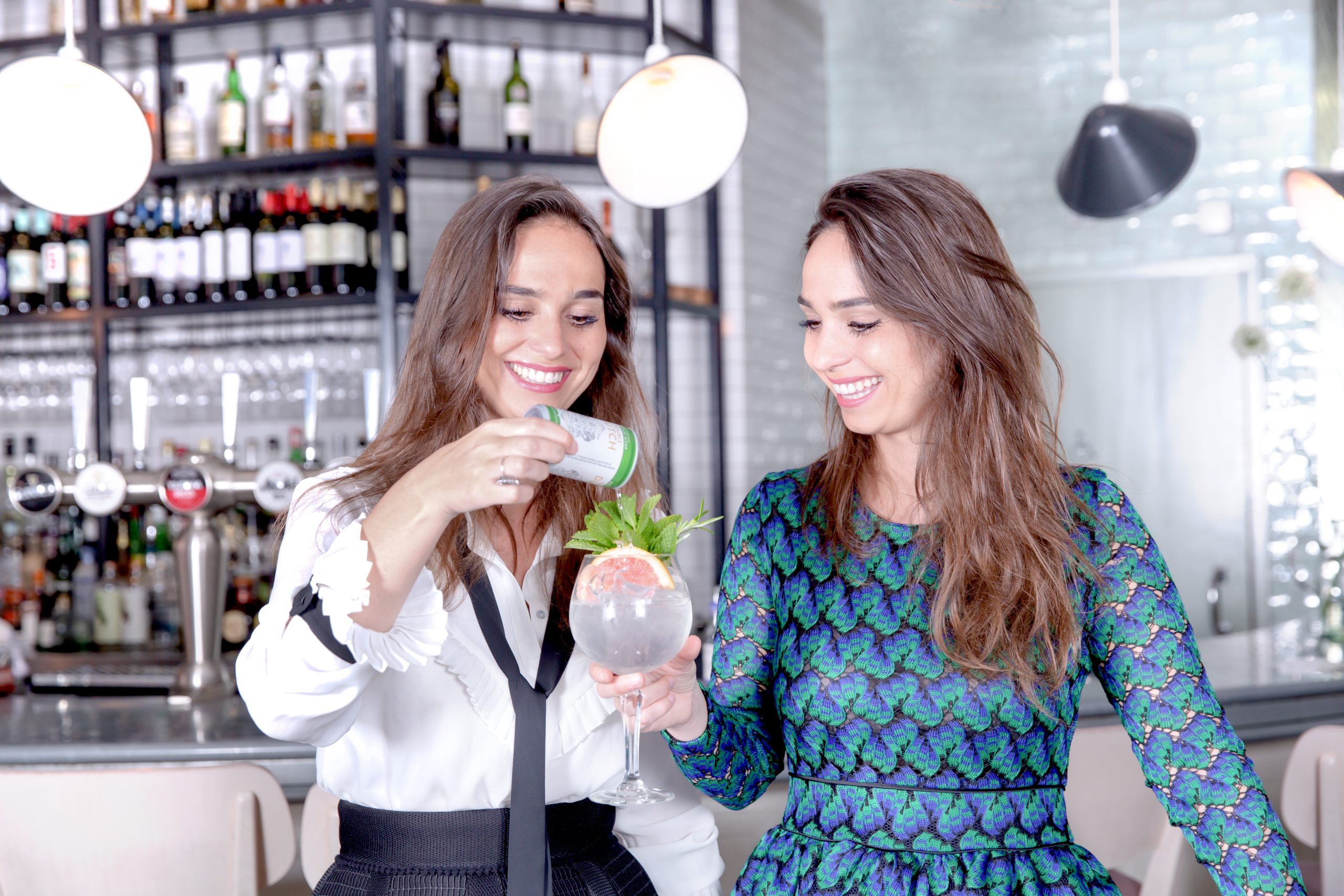
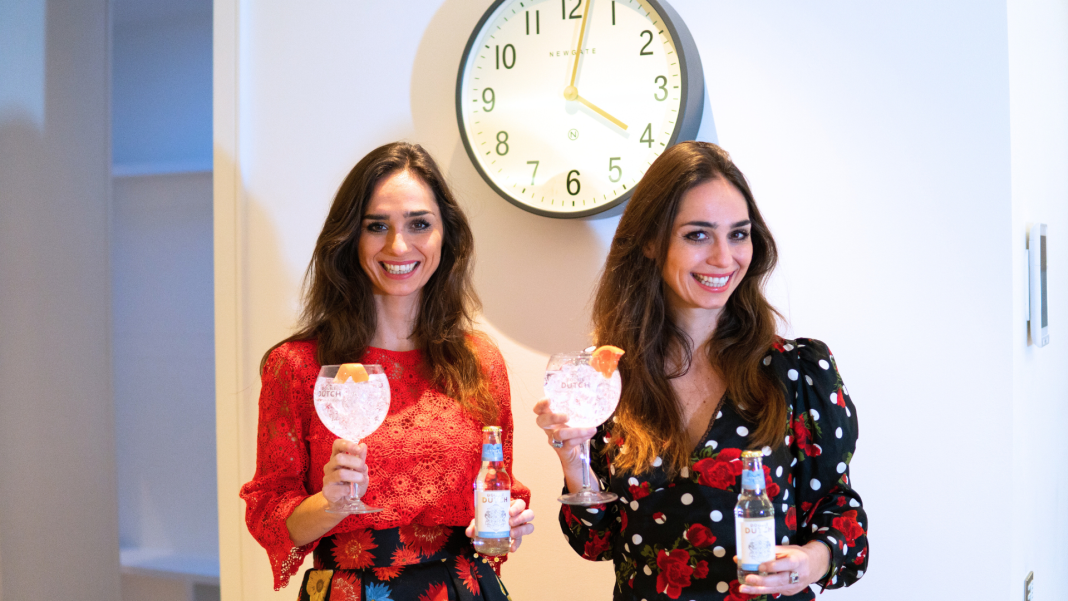
Raissa and Joyce De Haas began experimenting with homemade tonics in their student flat in Antwerp. Today, the twin sisters supply their premium mixers to 45 countries. What began as a student concoction has grown into an international success story.
The sisters grew up in a household where drinks were never far away. Their parents hosted themed evenings on the last Friday of each month – champagne, gin, tequila… Christmas always included a tasting session. “We were raised with a passion for drinks,” the twins explain. Although they hold Dutch passports, they spent their childhood on the outskirts of Antwerp.
During their university years, they carried on the tradition with house parties where they served homemade tonics, while friends brought alcohol. “The results were hit or miss,” they laugh. They soon earned the nickname “Tonic Twins”.
From thesis to business plan
After completing their Business Economics degrees, Raissa and Joyce worked briefly in the financial sector, but it didn’t make them happy. They quit their jobs, moved to London, and enrolled in a Master’s programme in Technology Entrepreneurship at University College London (UCL).
Initially, they considered a fintech start-up, but the allure of London’s hospitality scene proved irresistible. “Being a bartender in London is a proper career, not just a student job like back home. We saw hundreds of types of gin and creative cocktails, but mixers were lagging behind.” The university allowed them to focus their thesis on the mixers market. They researched why spirits were seeing innovation while mixers remained stagnant.
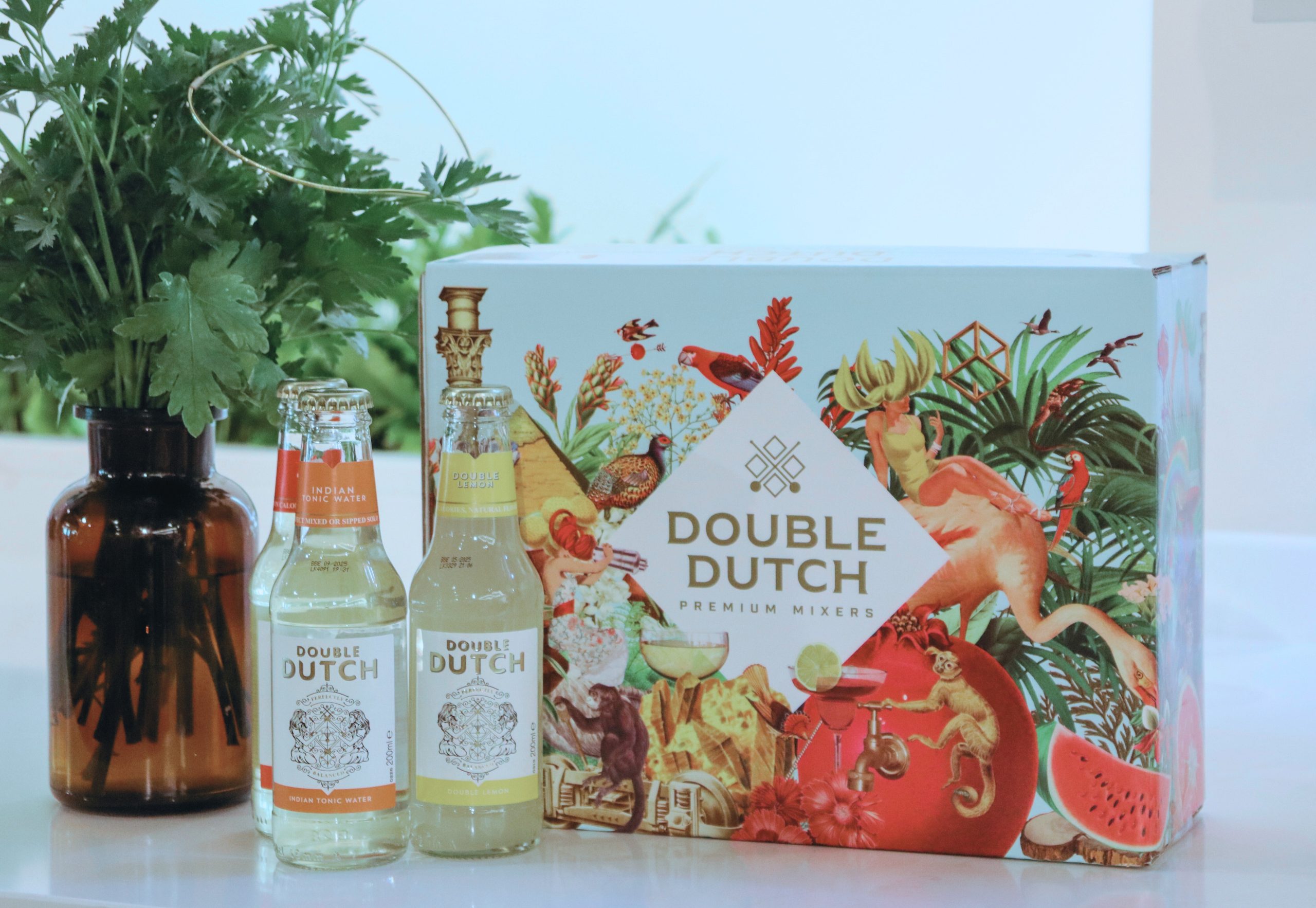
That research laid the foundation for Double Dutch: a premium mixer brand with surprising flavour combinations and less sugar. Their thesis was awarded best of the year, earning them £10,000 in prize money and a year of free office space in London. In 2015, they launched their first two flavours: cucumber & watermelon and pomegranate & basil.
Tough early years
Starting production proved challenging. “Ten years ago, you couldn’t produce in small batches,” Joyce recalls. “You had to order a million glass bottles right away. We eventually found a bottling plant that let us fill our drinks ourselves at weekends.”
They went from bar to bar in London personally to tell their story. Serendipity played its part too. “At one event, someone asked who our ideal investor would be. As a joke, we said: the Heineken family,” Joyce recounts. “Three months later we got a call – someone wanted to make an introduction.” That investment was a milestone. “It gave us both credibility and confidence.”
Another turning point was winning Richard Branson’s Virgin StartUp Foodpreneur Award, adds Raissa. “The prize didn’t just raise our visibility – Branson also gave us invaluable advice. Suddenly, people started taking us seriously.”
Learning from setbacks
In the early years, they made typical beginner’s mistakes. “We hired people we could afford, not those we really needed for the long run,” Joyce says. “That led to high turnover. Now we consciously look for quality and experience that align with our company’s future.”
Macro-economic events pushed them even further. “Brexit was tough, but at least we could prepare for it,” says Raissa. “Covid hit harder. Eighty percent of our revenue came from hospitality. When that sector came to a halt, we had to quickly pivot to e-commerce and new retail channels. But it made us more agile and adaptable.”
2022 was the hardest year, due to the war in Ukraine, rising energy prices, and inflation. Transport costs quadrupled, and sugar and glass tripled in price. “There was barely any margin left for marketing,” Raissa says. “We had to make savings. We couldn’t pass the extra costs onto customers, while supermarkets demanded lower prices. Yet we emerged stronger from the crisis. We used that period to become better negotiators with suppliers. Our cost base is now even better than before. Every cloud has a silver lining.”
Their planned expansion into the US was postponed due to new import tariffs under President Trump. But market dynamics have shifted in their favour. “Five years ago, it was all about consolidation. Now there’s renewed interest in small players. Retailers are looking for products their competitors don’t have.”
“Being the two of us helps. When one panics, the other puts things in perspective”
Despite the setbacks, giving up never crossed their minds. “Being the two of us helps,” says Raissa. “When one of us is panicking, the other can take a step back. We have a special bond and know each other inside out. It’s efficient, but also emotional. We do clash sometimes.”
Their key lessons as entrepreneurs? “Passion and perseverance,” says Joyce. “You give up a lot. If you’re not doing this out of love, you won’t last. You have to fight for every sale. Especially in the luxury market, no one says yes automatically. That’s the difference between us and the Coca-Colas of this world.”
A global focus
Today, Double Dutch sells 3.5 million bottles a month in 45 countries. Their mixers can be found in rooftop bars, casual dining venues, pubs and luxury hotels. “Not choosing supermarkets right away strengthened our premium image,” Joyce explains. “We stayed true to our niche, despite advice to launch alcoholic drinks too.”
“Friends spotting our drink on a menu in a remote Balkan village – those are the moments we think: OK, this is working”
Double Dutch now has 25 employees. Logistics, warehousing, production, PR and social media are outsourced. “Every bottle sold feels like a personal win – just like winning an award, hiring a top employee, or convincing the right investor. What really motivates us are the small daily wins. Friends spotting our drink on a menu in a remote Balkan village – those are the moments we think: OK, this is working. Global domination, down to the smallest corner.”
Their sights are now set on Latin America and Asia. “There are few premium mixers there and hardly any investment from foreign brands,” says Raissa. “It’s exactly what London looked like ten years ago.”
A sustainable future
Double Dutch is aiming not just for growth, but also for impact. “We want to modernise the mixer industry with more innovation, transparency and sustainability,” they say. Their B Corp certification for social impact helps them structure their ambitions. “We reduced plastic use by 30%, made our bottles lighter and are now 90% carbon neutral. We also try not to produce our point-of-sale materials in China anymore. These choices do come with extra costs. It’s always a balance between what’s feasible and what feels right.”
Inclusion is also a central focus for the twins. “The drinks industry is very male-dominated. That’s why we set up the Female Bartender Scholarship in the UK, which offers twelve women a free training programme each year. It’s a commercial initiative, but above all, it’s about making an impact.”