

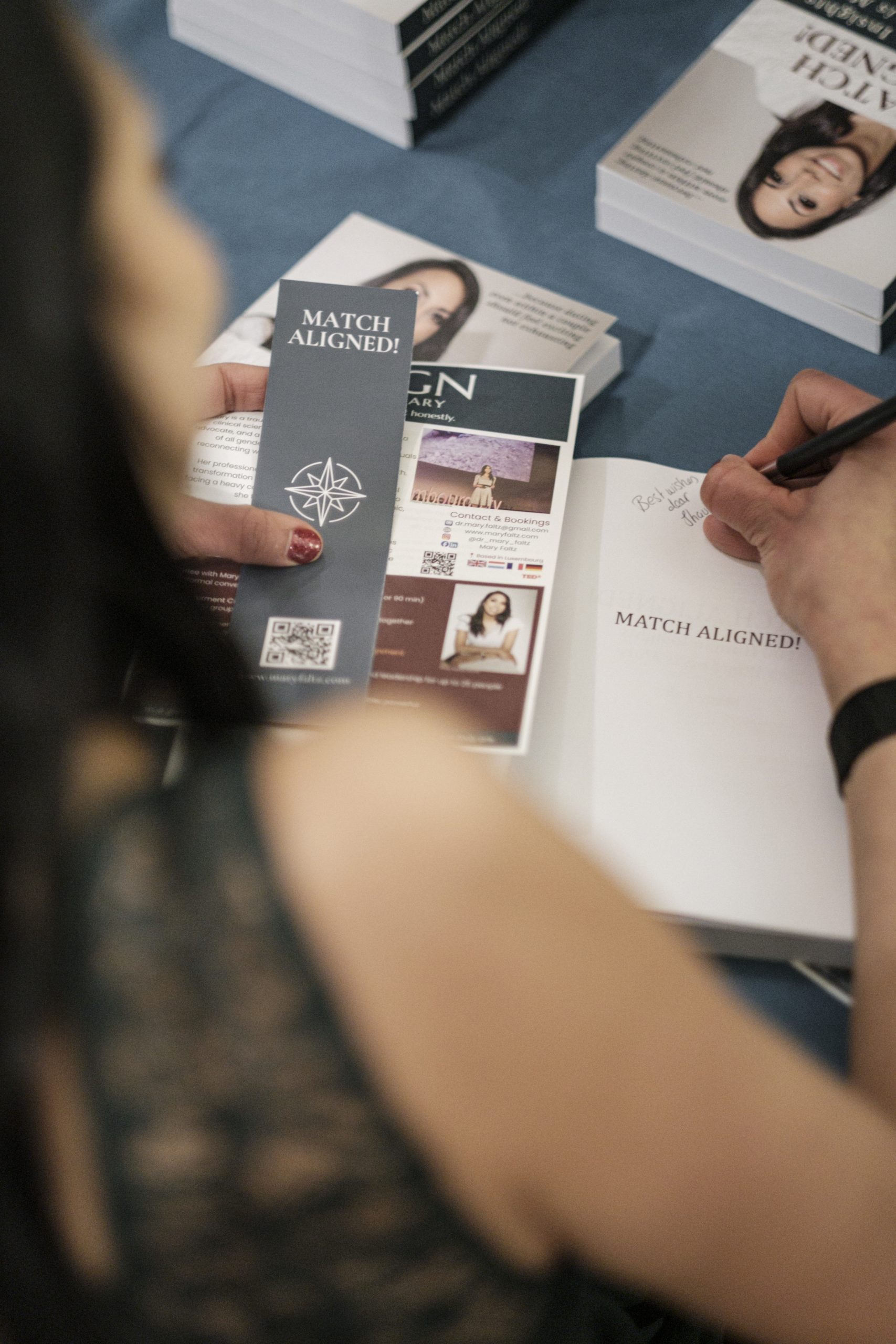
In a country that prides itself on stability, prosperity and discretion, Mary Faltz is a rare and deliberate disruptor. A clinical research scientist by training, a survivor of childhood sexual abuse and late stage cancer, and now the author of the 2026 book Match Aligned!, Faltz is on a mission to start what she calls “a public conversation”.
“I just want to wake up every day,” she says plainly. After aggressive treatment, surgeries and chemotherapy, survival is no longer an abstraction. “Everything else is a bonus.”
It is this proximity to mortality that has stripped away her filter while sharpening her emotional intelligence. Once, she says, she was living what many would recognise as the Luxembourg dream: career in clinical research, husband, children, mortgage, holidays. On paper, success. Inside, emptiness. Her diagnosis was a rupture and a catalyst.
The hidden cost of success
Faltz speaks candidly about the peculiar pressures of Luxembourg’s compact ecosystem. In a country where “everyone knows everyone”, reputation and conformity carry particular weight. The competition is often subtle, but pervasive. The right job, the right school, the right house. The image. Her central question is deceptively simple: are you aligned?
Is your job aligned with your true self, or are you clinging to it for salary, status or parental expectations? Is your partner aligned with who you have become, or who you were conditioned to be? Are your long-standing friendships still reciprocal, or maintained out of fear of being disliked?

“A major thing is the courage to be disliked,” she says. “When you are liked by everyone, you are a people pleaser.”
For executives and founders reading this, the relevance is immediate. Misalignment does not remain a private discomfort. It seeps into teams, decision making and culture. It manifests as disengagement, presenteeism and silent attrition.
From hyper vigilance to human curiosity
Faltz’s professional life in clinical research shaped her thinking, but so did her childhood. Growing up in what she describes as an unsafe environment, she developed acute hyper vigilance. She learned to read rooms, scan for risk, decode behaviour. Today, that instinct has transformed into something else: radical curiosity.
“Every person is a living book,” she says. “There is no-one who is boring.”
During her cancer treatment, that curiosity became lifesaving. Through online communities, she connected with patients and clinicians in the United States, Germany and London who pointed her towards therapeutic options not initially offered in Luxembourg. Knowledge, in her words, is power.
Yet she is also sharply critical of the digital reflex that now dominates professional and personal life. We are hyper connected, she argues, but profoundly disconnected. Phones interrupt conversations with the subtlety of a broadsheet opened mid sentence.
The advice she shares in her book is practical. For one week, smile at five strangers a day without expecting anything in return. Next week, say hello. Then initiate a micro conversation or offer a genuine compliment. In the workplace, ask better questions than the habitual “How are you?” which neither party expects to be answered truthfully. These small acts, when repeated, can rebuild self trust.
A framework for leaders
The first half of Match Aligned! introduces what Faltz calls a self-alignment framework built around awareness, acceptance, gratitude, connection and alignment. The second half translates these principles into one hundred relational insights, applicable to dating, partnerships, friendships and professional collaborations alike.
For business leaders, the implications are strategic. Emotional intelligence cannot remain a buzzword confined to continuing professional development modules. Faltz says that leaders publicly legitimise conversations about wellbeing, vulnerability and values, they grant permission. They have the power to shift the narrative from performance alone to potential.
In multicultural organisations, particularly those operating across American, European and Asian work cultures, this may feel bold. Faltz counters that it is a matter of reframing. Cultural and generational diversity is not friction to be managed but wealth to be unlocked. Meaning is constructed through narrative. The leader defines that narrative.
Her thesis is not sentimental. It is pragmatic. Aligned individuals are more creative, more engaged and more resilient. They are less governed by fear of rejection or external validation. They bring discretionary effort because they feel seen as human, not as units of productivity.
In a labour market where younger generations prioritise autonomy, purpose and psychological safety, this is not indulgence. It is a competitive advantage.
Beyond autopilot
What lingers after speaking with Mary Faltz is not a specific technique but a tone. Urgent, but generous.
“People will not remember what you said,” she reflects. “They will remember how you made them feel.”
For Luxembourg’s corporate elite, accustomed to metrics and margins, her message may initially seem intangible. Yet in a small country where reputation travels quickly and culture compounds over time, the human dimension is not peripheral. It is decisive.
In the end, her call is disarmingly simple. Look up from the phone. Ask a better question. Choose consciously. Align daily.
In a nation that has mastered external success, Faltz is inviting its leaders to consider an internal one.
Read more articles:
EmTroniX And Anywaves Merge To Boost Europe’s Space Capabilities
Misalignment: The Hidden Cost Of Success And Performance
Earnings Growth Expected To Rise In 2026, Says EFG Chief Investment Officer