
Behind nearly every meal served in Luxembourg stands La Provençale. The nation’s largest food wholesaler, born from three family enterprises, now combines tradition with technology to deliver fresh, sustainable produce to restaurants and canteens across the country.
At La Provençale’s vast headquarters in Leudelange, on the edge of Luxembourg City, refrigerated trucks glide in and out of the loading bays like clockwork. Each one bears the face of a real employee, drivers, packers, butchers, and warehouse staff, whose stories are woven into the company’s DNA. “They are not models, they work here, live here, and their faces tell the real story of who we are, there is no fake marketing here,” says owner Mr Eischen.
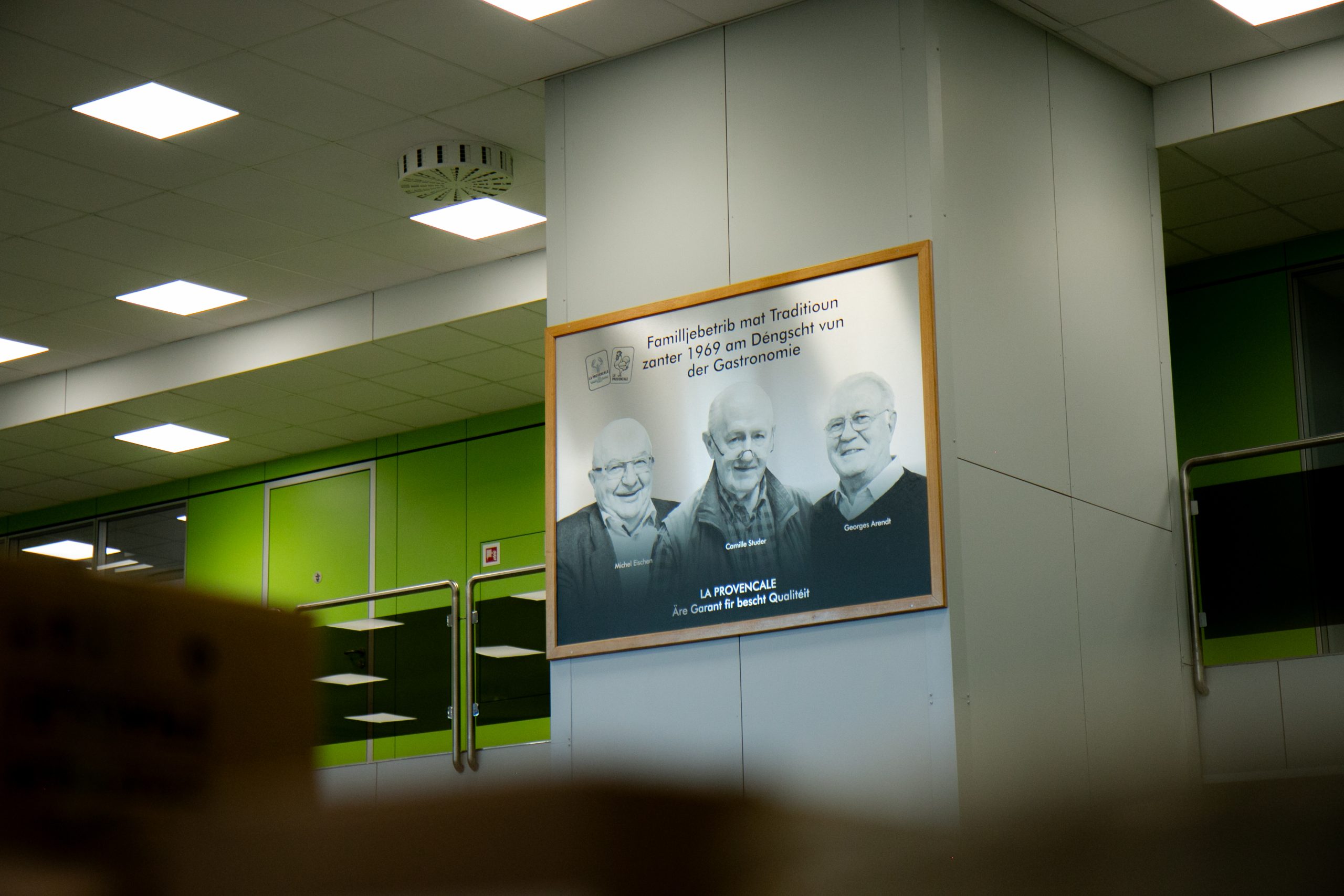
That story began with three fathers and now continues under their sons, who form the company’s second generation of leadership. “It’s not one family business, it’s a three-family business, you have six eyes instead of two, six ears instead of two, and three brains instead of one,” says Eischen. The three families share not only ownership but daily responsibility, working side by side. “We still make many of our key decisions at the morning coffee table, it’s the most expensive espresso in Luxembourg,” Eischen says.
Supporting local agriculture and culinary identity
The approach might sound old-fashioned, but it fuels a remarkably modern enterprise. La Provençale now employs more than 1,700 people, operates the country’s largest meat production facility, and has built one of Europe’s most advanced automated logistics systems. Yet behind the technology lies a deeply local vision: to sustain Luxembourg’s agriculture and protect its culinary identity.
“In Luxembourg, you only have one reputation”
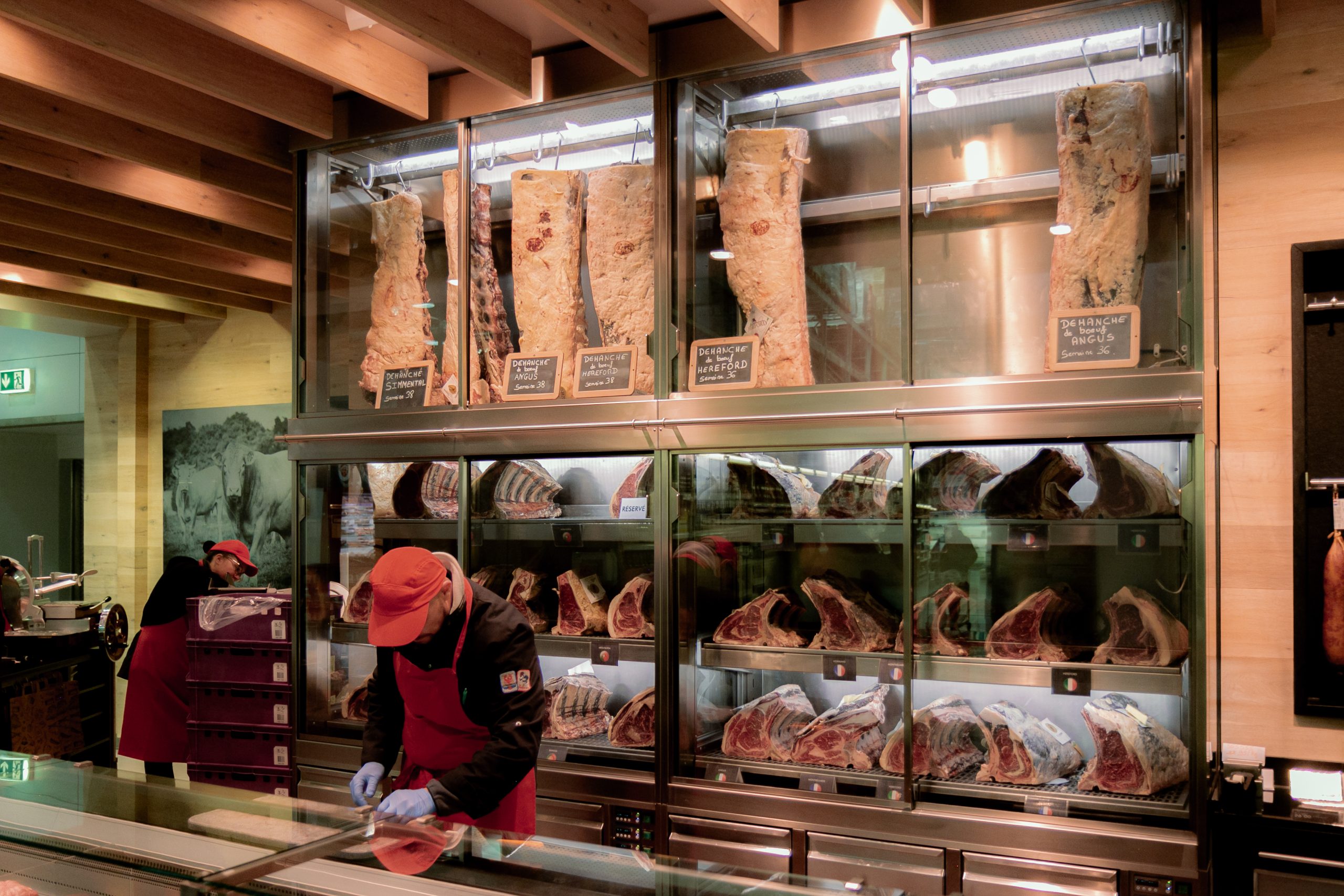
That commitment to local producers has transformed the national food landscape. “Fifteen years ago, there was no real chicken production in Luxembourg, today we produce around 400,000 chickens per year,” says Eischen. Similar partnerships have revived everything from quinoa cultivation to local soft drinks and organic pork. Under the label “Partenaire des Producteurs de la Région,” La Provençale acts as a sort of venture capitalist for small farmers, guaranteeing both prices and volumes to reduce their risk. “You need to convince people to invest in new crops or breeds, they need trust and guarantees, and in Luxembourg, you only have one reputation,” says Eischen.
A workplace where people stay and grow
The same sense of responsibility shapes how the company treats its employees. Turnover is low, and loyalty runs deep, many workers have been with La Provençale for decades, some spanning generations of the same family. “People who join us for two or three years often get infected by the Provençale virus, then there’s no cure,” says Eischen.
“People who join us for two or three years often get infected by the Provençale virus, then there’s no cure”
It’s the Luxembourgish way, that loyalty to respect and freedom. “People have room to grow, to make decisions, to find satisfaction in their work. You can only keep people until retirement if they’re fulfilled,” says Eischen. The company’s philosophy of insourcing reinforces that sense of belonging. Where many competitors outsource logistics, maintenance, or IT, La Provençale develops and controls nearly everything in-house.
“We have about 170 technical people working 24/7, they repair machines, maintain automation, fix trucks,” he says. The company develops its own software, our own warehouse management systems, even its ERP, a software system that integrates a company’s core business processes into a single, unified platform. “We have started building our own ERP system 30 years ago, and since then we have never stopped developing new software,” says Eischen.
Precision and trust: the heart of the supply chain
Technology underpins the company’s promise of accuracy. Every day, 2,500 to 3,500 orders, around 45,000 order lines, are picked, packed, and delivered. “The most important thing is to take an order without error, prepare it without error, and deliver it on time, that’s all. The challenge is doing it 300 days per year, every year,” said Eischen.
La Provençale’s margin of error is astonishingly low: only 0.4 percent of orders come back, and just 0.2 percent of products are wasted, figures most logistics firms can only dream of.
Behind the precision lies trust. Chefs across the country place their orders online after service, confident that the delivery will arrive at dawn. “If a chef orders 50 items at 11 pm for the next morning, either he’s crazy or he trusts us, and we never break that trust,” says Eischen.
Investing in Sustainable Innovation
Sustainability plays an equally central role in that reliability. The company’s warehouses are designed to minimise energy use, while its truck fleet leads Europe in nitrogen-cooled technology, a system that replaces conventional diesel refrigeration, slashing particle emissions by up to 95 percent. More than half of the fleet now runs on nitrogen, and plans for electric trucks are underway.
Even packaging follows a closed loop logic: La Provençale uses reusable plastic crates designed in Luxembourg and manufactured by Accumalux. “It’s our religion, boxes go out, boxes come back, we clean them, and they go out again. No single-use cardboard, no unnecessary waste,” said Eischen.
Thinking in generations
For the leadership, long-term thinking is second nature. “Family companies think in generations, not quarters, that changes everything. We can invest with a 20 or 30 year vision and create our own solutions,” said Eischen. That independence has led to some bold initiatives, like building employee housing in Bonnevoie, with 49 living units for staff and families. “It’s a way to take care of our people and to stand out as an employer. The market for skilled workers is tight, so we invest in people’s lives as well as their jobs,” says Eischen.
La Provençale’s capacity for innovation continues to grow with its third generation. Two members work in the business, one trained as a butcher and cook, and the second has a background in finance. Together, they are participating in the planning of the construction of a new logistics hub, equal in size to the current one, scheduled for completion in 2031. “We are a work in progress, each generation brings new energy,” says Eischen.
A Luxembourgish approach to food and the future
As for the near-future the path is clear: deeper digitalisation, closer cooperation with regional producers, and ongoing sustainability improvements. The company is developing new web-based tools to help restaurant clients manage operations more efficiently, leveraging the vast data it already collects from its logistics systems.
But beneath the data, the technology, and the buildings, La Provençale remains anchored in something older: a distinctly Luxembourgish sense of pragmatism and purpose. “In Luxembourg, we don’t focus on nonsense, we focus on what really matters, there are no fancy cars parked out front, we invest 95% of everything back into the business, just fancy trucks and systems,” says Eischen. For La Provençale, that means food that’s fresh, local, and delivered right, every single day.
This article was published in the 8th edition of Forbes Luxembourg.
Read more articles:
Brasserie Nationale: Brewing Beer With A Conscience
Meet The Scale-up Closing The $3.5 Trillion Climate Funding Gap