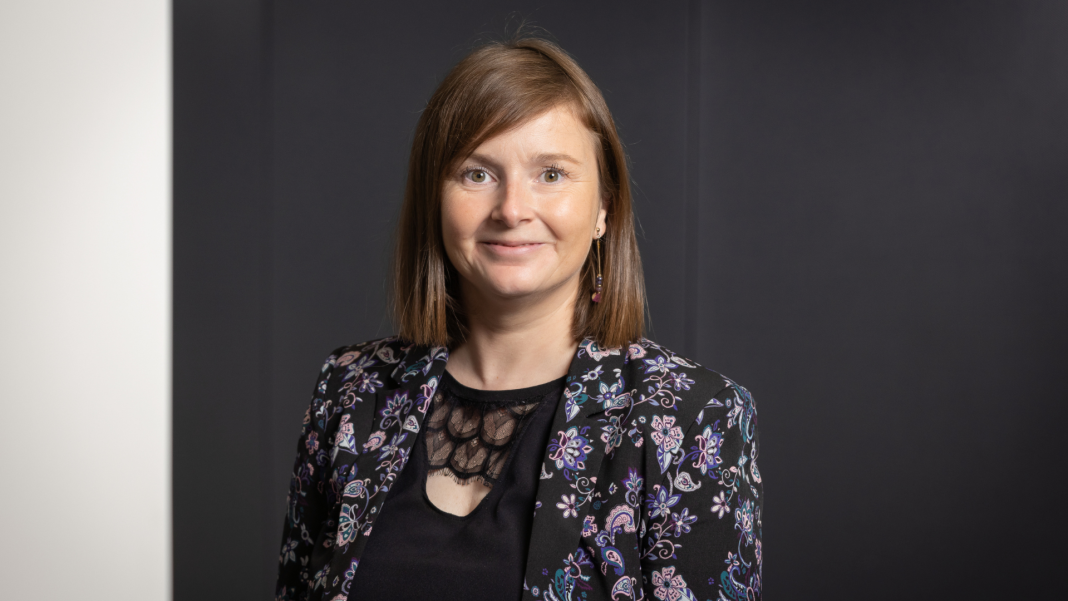
Global challenges from digitalisation to geopolitical shift are reshaping Luxembourg’s economy. Christel Chatelain, Director Economic Affairs at the Luxembourg Chamber of Commerce, explains how its economic model can remain competitive and attractive in 2026.
What megatrends do you see? And how do they impact Luxembourg companies?
Several global megatrends are reshaping economic models: hyperconnectivity, accelerated digitalisation, the climate challenge, resource scarcity, cybersecurity, quantum computing, demographic aging, geopolitical fragmentation and deglobalisation. Hyperconnectivity and accelerated digitalisation require companies to integrate e-commerce platforms, cloud solutions and social networks to offer real-time services and improve customer experience. This includes creating frictionless and seamless shopping journeys, where customers can move effortlessly from discovery to purchase across multiple channels, with personalised recommendations and instant payment options.
AI, including personalisation, automation, and predictive analytics, is disrupting their business models. Data is becoming a strategic asset that creates high value-added services. More than just a tool, it is a driver of competitiveness. Cybersecurity is now a strategic pillar for business continuity and customer trust. Tomorrow, quantum computing will disrupt encryption systems: we must therefore anticipate “post-quantum” solutions to remain resilient. Trade tensions and conflicts are pushing for regionalisation and relocation to stable and reliable countries. Companies need to diversify their sources and strengthen the resilience of their supply chains.
How can companies adapt to these challenges?
They must act simultaneously on several fronts and transform their models. They need to invest in robust digital infrastructure, adopt cloud and automated solutions, and train teams in digital skills.
A presence on social networks and the use of data analysis tools are essential to stay close to customers and remain competitive. They must also build strategies centred on AI and data to create personalised services and automate processes. It is also essential to put in place ethical and transparent policies to govern the use of AI. Companies must strengthen their IT protection systems, train their teams in risk management and anticipate the transition to “post-quantum” solutions. The implementation of continuity plans and crisis plans in the event of cyber-attacks as well as collaboration with specialised hubs are key levers.
In this context, how can Luxembourg’s economic model remain competitive and attractive in 2026?
Luxembourg has a major asset: its agility and its short decision-making circuits, which allow it to innovate quickly. This capability, combined with advanced infrastructure and pro-innovation policies, gives it the means to turn these trends into opportunities. The country can consolidate its role as a technology hub by supporting startups and accelerating the digitalisation of SMEs.
It already has state-of-the-art infrastructures such as MeluXina, soon to be completed by MeluXina-AI and an AI Factory, as well as integration into the European Quantum Communication Initiative. These assets position Luxembourg as a key player in tomorrow’s technologies.
The country ranks 11th globally and 7th in Europe in the Global Cybersecurity Index, thanks to a robust ecosystem. This position reinforces the confidence of international players and makes Luxembourg an attractive partner for companies concerned about digital security. Luxembourg has the foundations to meet the challenge of change and adapt its economy to current megatrends. It is up to it to transform the trial by continuing its efforts to become a technological hub, a champion of the environmental and energy transition, a key player in cybersecurity in Europe and a strategic logistics centre at the heart of regional trade.
Read more articles:
MAQIT At 10: The Boutique RegTech Firm Behind Luxembourg’s Quiet Transformation