
International families increasingly use Luxembourg to connect assets, investments and governance across jurisdictions, while its financial institutions put that architecture into practice.
Wealthy families are not necessarily abandoning their established banking relationships and transferring everything to Luxembourg. Their financial arrangements increasingly involve several countries, advisers and institutions, with different financial centres serving different purposes.
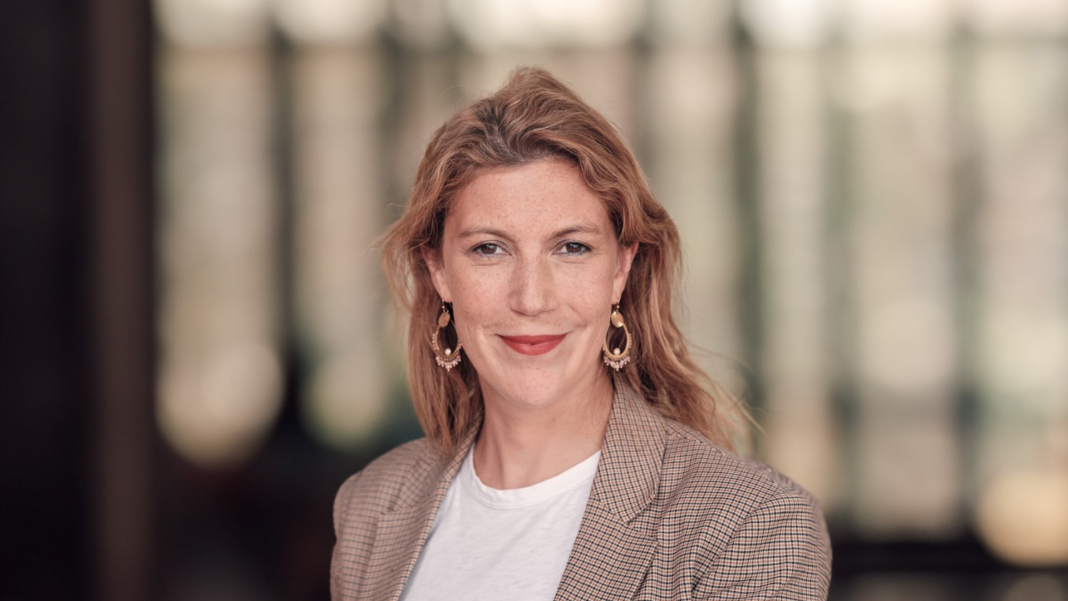
Oriane Schoonbroodt, co-founder of LIEFO, and lead author of its recent research on Benelux family capital, sees Luxembourg as the coordinating layer within this wider international arrangement. Her perspective draws on recent research into how geopolitical fragmentation, regulatory divergence and changing capital markets are reshaping family capital across the Benelux. “In many cases, they are not replacing one financial centre with another. They are adding Luxembourg as the structuring, investment and governance layer within a broader international architecture,” said Schoonbroodt.
Families may retain banks and advisers in Belgium, France, Germany, the Netherlands, Switzerland or elsewhere while using Luxembourg to organise investments, ownership structures and governance. This makes the country part of an international arrangement rather than a substitute for every other financial centre.
European families remain central to Luxembourg’s private-banking market, while its cross-border proposition is also becoming relevant to internationally mobile families from Latin America, Asia and the Middle East. Their circumstances may differ, but many face similar challenges: assets held across several jurisdictions, exposure to private markets and the need to coordinate different currencies, decision-makers and ownership structures.
Luxembourg offers these families a regulated base within the European Union. Its multilingual environment and concentration of banks, management companies, administrators, lawyers and fiduciary specialists give families access to institutional capabilities without requiring them to build every function internally.
A New Case for Luxembourg
Luxembourg’s appeal has historically been viewed through the lens of taxation. That explanation no longer adequately describes why international families use the country. “Luxembourg’s proposition is therefore no longer primarily a tax story, nor is it limited to one region. Its strength lies in making cross-border complexity manageable,” said Schoonbroodt.
Modern family fortunes can include operating companies, private-market investments, real estate and philanthropic interests spread across countries and currencies. Family members may live in different jurisdictions and hold different responsibilities. The challenge is not simply to preserve the financial value of their assets, but to prevent the family’s wider arrangements from becoming fragmented.
Political instability, sanctions, currency volatility, cyber threats and regulatory divergence create external pressure. Internally, families must contend with succession failures, generational disagreements, unclear decision-making and excessive dependence on a founder.
“In a world of greater geopolitical, technological and regulatory fragmentation, stability itself has become a product,” said Schoonbroodt. Families increasingly want legal certainty, operational resilience and confidence that their arrangements will continue functioning when either the external environment or the family itself changes.
Governance consequently becomes part of wealth preservation. Families need to determine who will make decisions, who will manage their interests and how members will participate when authority is no longer concentrated in the founder.
Succession also requires preparing people, not merely transferring ownership. “Most families spend decades preparing their wealth for the next generation. Far fewer prepare the next generation for the wealth,” said Schoonbroodt. The point extends beyond financial education: heirs need progressive responsibility and a meaningful role in defining how the family’s capital will be governed.
The Missing Pieces
Luxembourg has many of the elements required to support international family capital, including regulatory credibility, EU integration, private-market expertise and a deep network of specialist providers. “Luxembourg’s greatest opportunity is to evolve from being recognised primarily as a booking centre and fund domicile into Europe’s leading operating platform for international family capital,” said Schoonbroodt.
Reaching that position will require simpler reporting, better coordination between providers and a more integrated client experience. Luxembourg also lacks a domestic private patrimonial foundation offering an integrated framework for family ownership, succession, governance and legacy, meaning international families may still need to combine Luxembourg structures with vehicles established elsewhere.
Turning Luxembourg’s wider financial architecture into practical arrangements ultimately depends on its banks and asset servicers.
This article was published in the 11th edition of Forbes Luxembourg.
Read more articles:
Why Europe’s Wealthy Families Bank In Luxembourg