
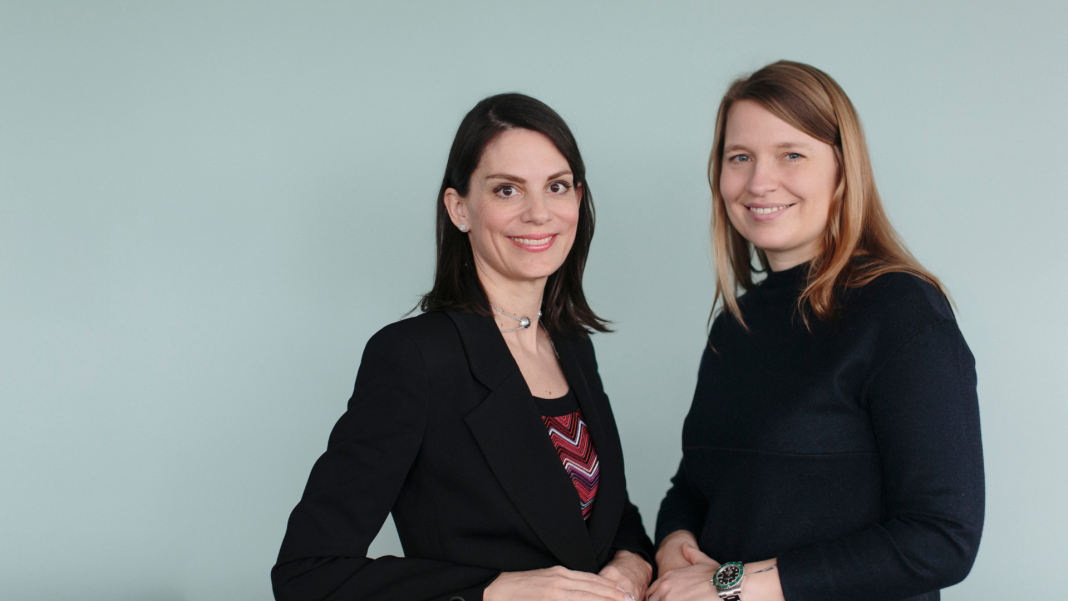
Law firms are no longer a bastion of conservative, old-fashioned traditions, say Linklaters Luxembourg corporate M&A partners Catherine Kremer and Florence Forster, as the practice’s embrace of AI and other advanced technology ideally positions it at the forefront of cross-border deal-making.
Artificial intelligence and other advanced technologies are bringing head-turning change throughout the economy and public life across the world. Nowhere is this more true than in the legal profession, once easy to caricature as fusty and old-fashioned, but today a leader in harnessing technology to carry out repetitive tasks.
Over the past two years technological advances have progressively freed up lawyers to tackle more complex work and meet clients’ increased expectations, according to Linklaters Luxembourg corporate M&A partners Catherine Kremer and Florence Forster. For their clients, this means faster turnaround times, more consistent documents and more time spent on bespoke, strategic advice rather than routine drafting.
Ms Kremer and Ms Forster highlight the role played in Linklaters’ day-to-day work of the external collaborative AI tool Legora, Microsoft’s Copilot, and its own internally developed firmwide AI assistant Laila in boosting efficiency, accuracy and speed. They also cite the firm’s Navigator platform to identify and deploy the right tools for specific tasks, and Contract Express, which streamlines drafting.
AI is making the corporate M&A practice more efficient, Ms Kremer says, in areas such as translation, reviewing for errors, comparing multiple documents and highlighting and explaining their differences, summarizing documents to provide an initial overview before subsequent deeper examination, and turning unstructured input such as handwritten notes into polished records.
Ms Forster uses Legora to identify and highlight clauses or aspects of legal agreements that require amendment, or to organise collaboration with colleagues from other Linklaters’ offices.
Ms Kremer cites the creation of databases covering interaction with individual clients or specific areas of work. “We can extract information much more easily when we are working on a new matter, building on our previous knowledge of what we have done before,” she says, “rather than having to examine everything manually or remember from past experience.”
The practice aims to ensure that all members of the team, even the most senior, are aware of and use the available technological tools.
“The Luxembourg office is among the most active users of Laila globally,” Ms Forster says.
Training in the use of generative AI also covers its risks, Ms Forster adds: “GenAI output must always be independently verified and never be relied on as a sole source, and we offer concrete examples of hallucinations we have encountered.”
Human expertise remains critical to ensure AI systems are not inventing contract clauses, learned articles or authors that do not exist, and to ensure the work fully meets the client’s needs. “Sometimes the AI output is more narrative rather than factual legal advice, when the client doesn’t want to hear a story,” Ms Kremer says.
Client confidentiality and data protection remain critical. Ms Forster says “We follow strict internal guidelines to ensure that client data is handled securely and that confidential information is never exposed to external systems.”
Ms Forster will have been with Linklaters for 15 years in June; for Ms Kremer, it is coming up 14, including spells with a different practice. They say one of the main differences from the early days is how the Luxembourg office is now adding much more value in corporate M&A transactions originating outside the country.
Adds Ms Kremer: “The pace of work has increased greatly in recent years.” That also reflects a significant increase in the volume of business, with a boom in private equity transactions in 2022 and 2023 followed by a surge in structuring work for corporate groups with a large footprint in Luxembourg.
The practice has doubled in size over the past five or six years to handle the growth in complex cross-border mandates and demand for higher-value, technology-enabled advice.
In the future, Ms Kremer believes, “the complexity of work will continue to increase, and clients will require tailor-made solutions that entail much sharper thinking. As transactions become more multi-faceted but also faster, you will need to be more creative and precise.”
Both partners’ message to younger colleagues starting out in corporate law is clear: progression is possible, and the nature of the work is evolving. “We want our careers to show you can build a long-term future here,” Ms Forster says, “and that the next generation will have even more opportunity to do so.”
This sponsored content was published in the 9th edition of Forbes Luxembourg.
Read more articles:
Forbes Luxembourg Cover Story: Alex Giorgetti – Building For Generations
“Radio Luxembourg – Ghosts Of The Villa” Immersive Experience Extended
When The Ground Speaks Before The Crisis: The Human Impact Of Mergers And Acquisitions