
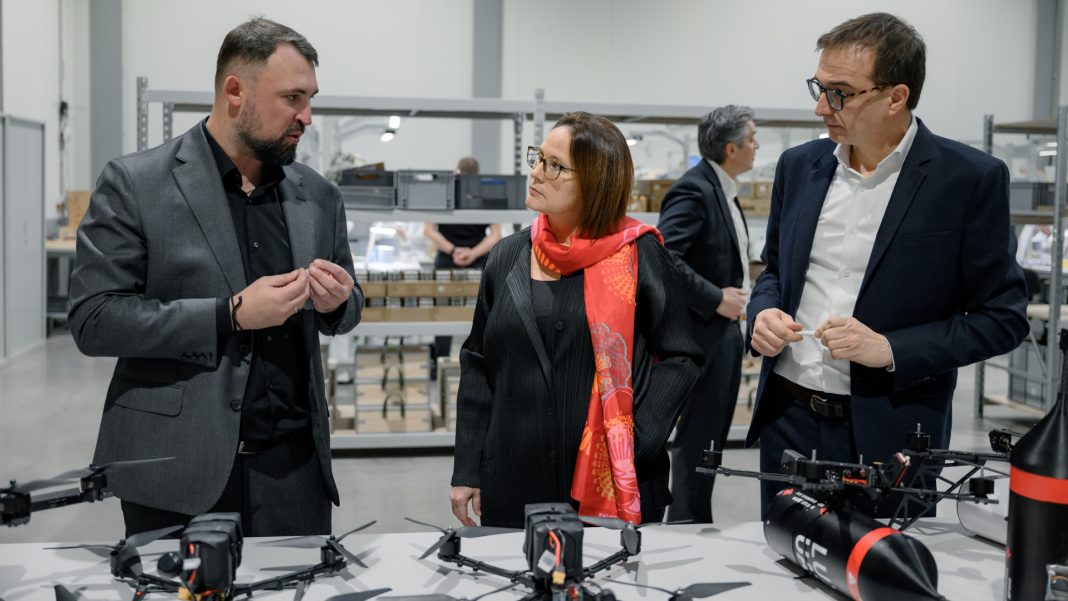
In just one year, a Luxembourg-based company specialising in the production of drone platforms, communication systems, and unmanned aerial vehicles has grown from six to 36 employees and expanded its production facilities. But it’s not stopping there.
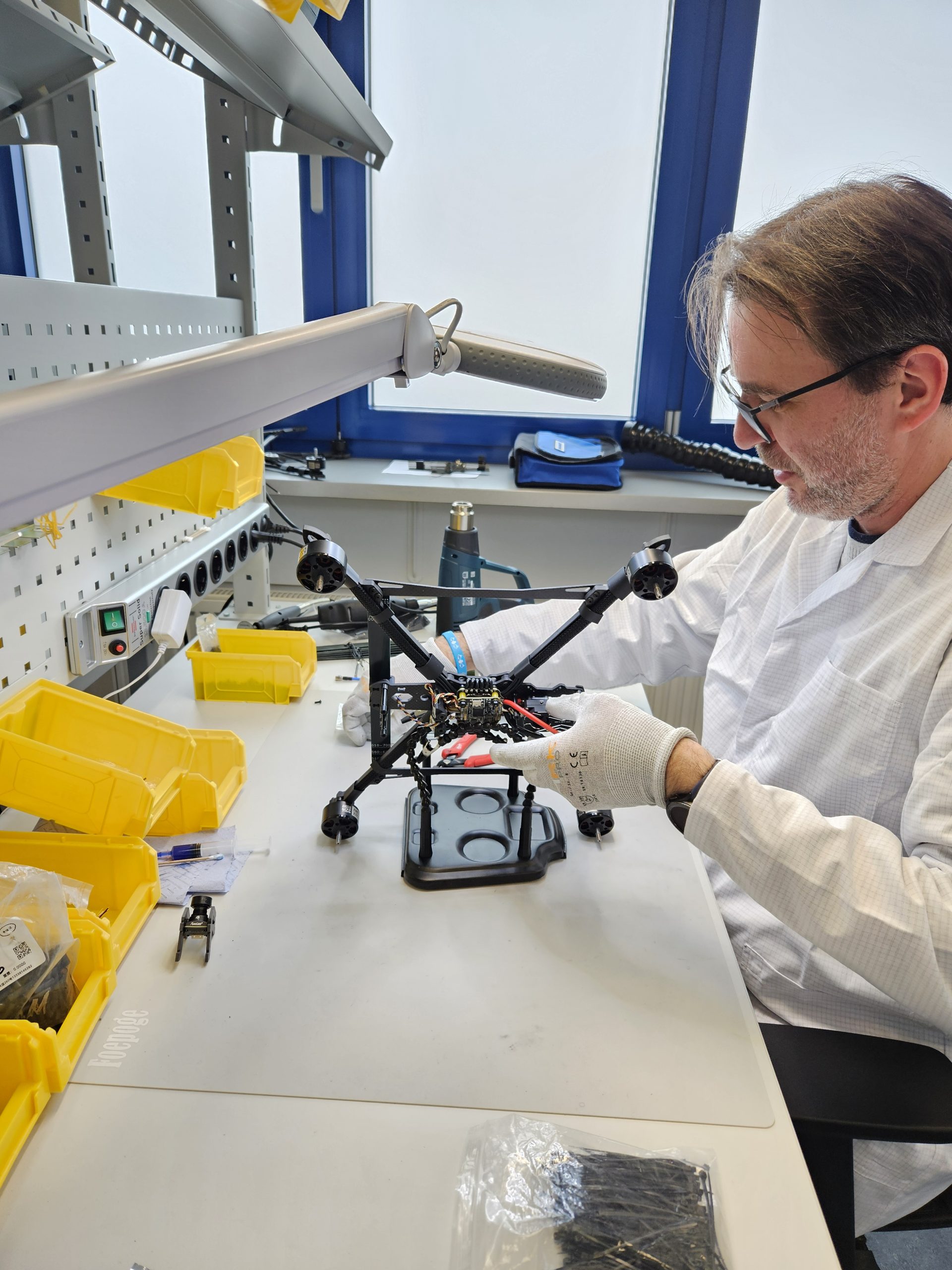
LUXUAV received the keys to its first manufacturing facility in February 2025. In just one year, the company has already delivered thousands of its products to Ukraine (it supplies UAVs to the Luxembourg Directorate of Defence, which delivers them to the Ukrainian Armed Forces), expanded its team sixfold, and is looking for additional space.
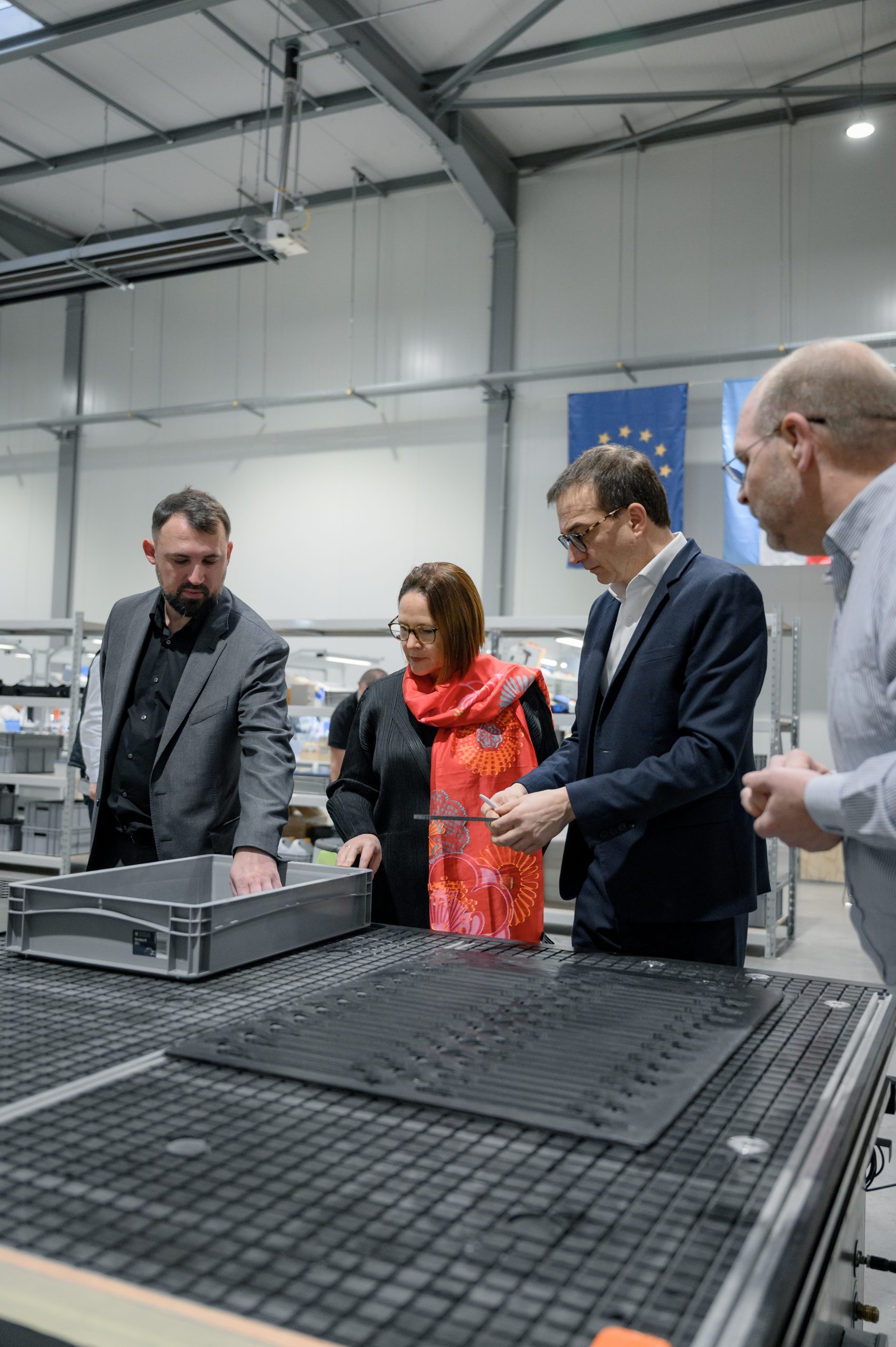
“We had 200 square metres and six or eight employees” in May 2025, explains CEO Nicolas Zharov. When defence minister Yuriko Backes visited the company’s Foetz facilities in January, LUXUAV had over 30 staff members and a production hall of 1,000 square metres; the initial space of 200 square metres now focuses on research and development activities.
The bootstrapped company, which was profitable “from day zero”, also has production plants and team members that handle maintenance in Ukraine, and is exploring production facilities in other countries. Zharov expects to make announcements regarding new products and C-level appointments this summer, and hopes to employ 60 people by the end of the year.
“We are already lacking space, and we need to scale more,” says Zharov, who’s also vice president of the Luxembourg Drone Federation. But it takes time to build industrial halls in Luxembourg, he adds; even obtaining the authorisation to build can take quite some time. “We are trying to bring our point that if we want to scale, we need to invest, to solve regulatory issues, and to have a fast track for disruptive technologies, whether it’s AI or UAVs or other critical manufacturing.”
Technology evolves fast, and it can sometimes seem like a “cat-and-mouse” game, with new innovations emerging quickly in order to meet battlefield needs. Speed, adaptability, and rapid scaleup are key lessons to learn from Ukraine. There, he points out, development cycles are counted in weeks. But the permitting process alone can take months in the rest of Europe.
EU actions don’t yet match ambitions
Although the European Commission is trying to streamline processes and trim regulation through its omnibus package, rejuvenating European manufacturing and making the continent more competitive will take more than just bureaucratic simplification.
Former Italian prime minister Mario Draghi was tasked by the European Commission to produce a report on how to make the European Union more competitive and boost its economy. Published in September 2024, Draghi’s report called for €800 billion in investment per year, urgent reforms, and action in key areas like closing the innovation gap or strengthening security and reducing dependencies. One year later, the European Policy Innovation Council in September 2025 found that the EU had only fully delivered 11.2% of Draghi’s recommendations.
The reality is that things are still overly regulated. “The technology will not appear because we drafted a roadmap. We need implementation and simplification of bureaucratic systems that we have created,” says Zharov. “Are we moving in the right direction? We are.”
But there are not enough testing grounds, argues Zharov, and “we don’t have a clear understanding of what rapid iteration cycles are. In order to have rapid iteration cycles, you need to have use cases, you need to use those technologies. That means producing in quantity, having more data to analyse, returning that data to the manufacturers, keeping in mind that supply chain disruptions exist.”
Increase local capabilities and boost resilience
Supply chain disruptions, such as those seen during the COVID-19 pandemic or caused by tariffs and changes in trade policies, pose serious risks to European industry. So do dependencies on external actors, as seen by a long-term reliance on cheap Russian oil and gas or critical raw materials supplied by China or the US defence shield. As Draghi put it in his report, “Rising geopolitical risks can increase uncertainty and dampen investment, while major geopolitical shocks or sudden stops in trade can be extremely disruptive. As the era of geopolitical stability fades, the risk of rising insecurity becoming a threat to growth and freedom is rising.”
Driven by its desire to manufacture in Europe, along with its capacity to scale up quickly and implement expertise from Ukraine, LUXUAV fits well in this evolving landscape. “Europe needs reindustrialisation and Europe needs these [advanced] technologies. We have to increase local capabilities and not only rely on alliances that fail,” says Zharov. “We cannot patch the hole in the system; we need to reorganise completely.”
“The big mission of LUXUAV is to restore European industrial sovereignty in our sector: the sector of unmanned technologies,” says Zharov. “It’s not an easy task. But if you really want this to happen, everything is possible.”
Read more articles:
Luxembourg: A Strategic Hub For Corporate Banking In Europe
Luxembourg’s Competitiveness Strategy: Beyond Cost And Taxation
