
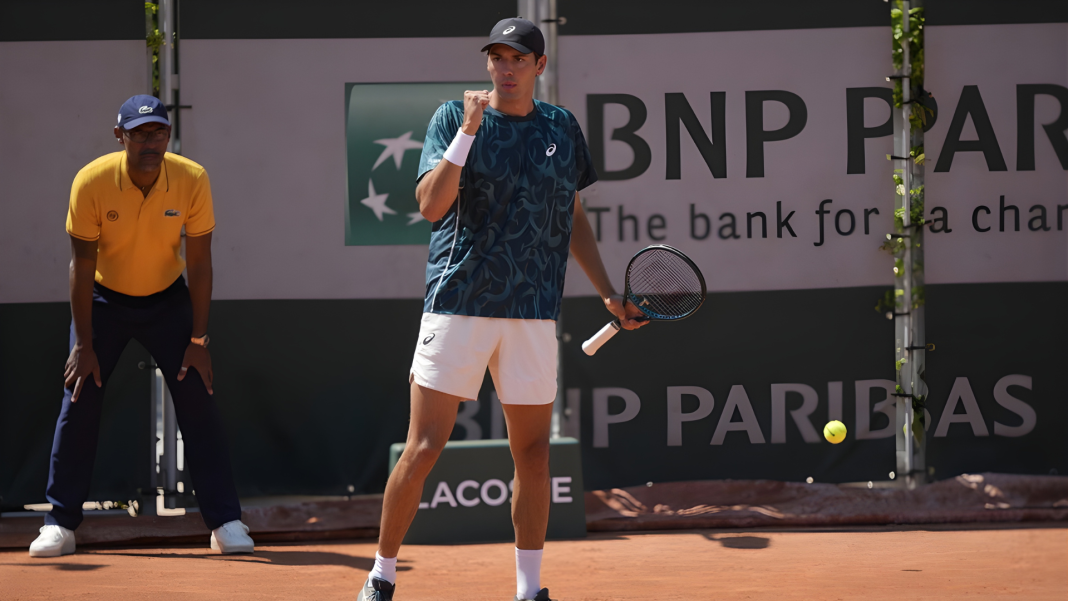
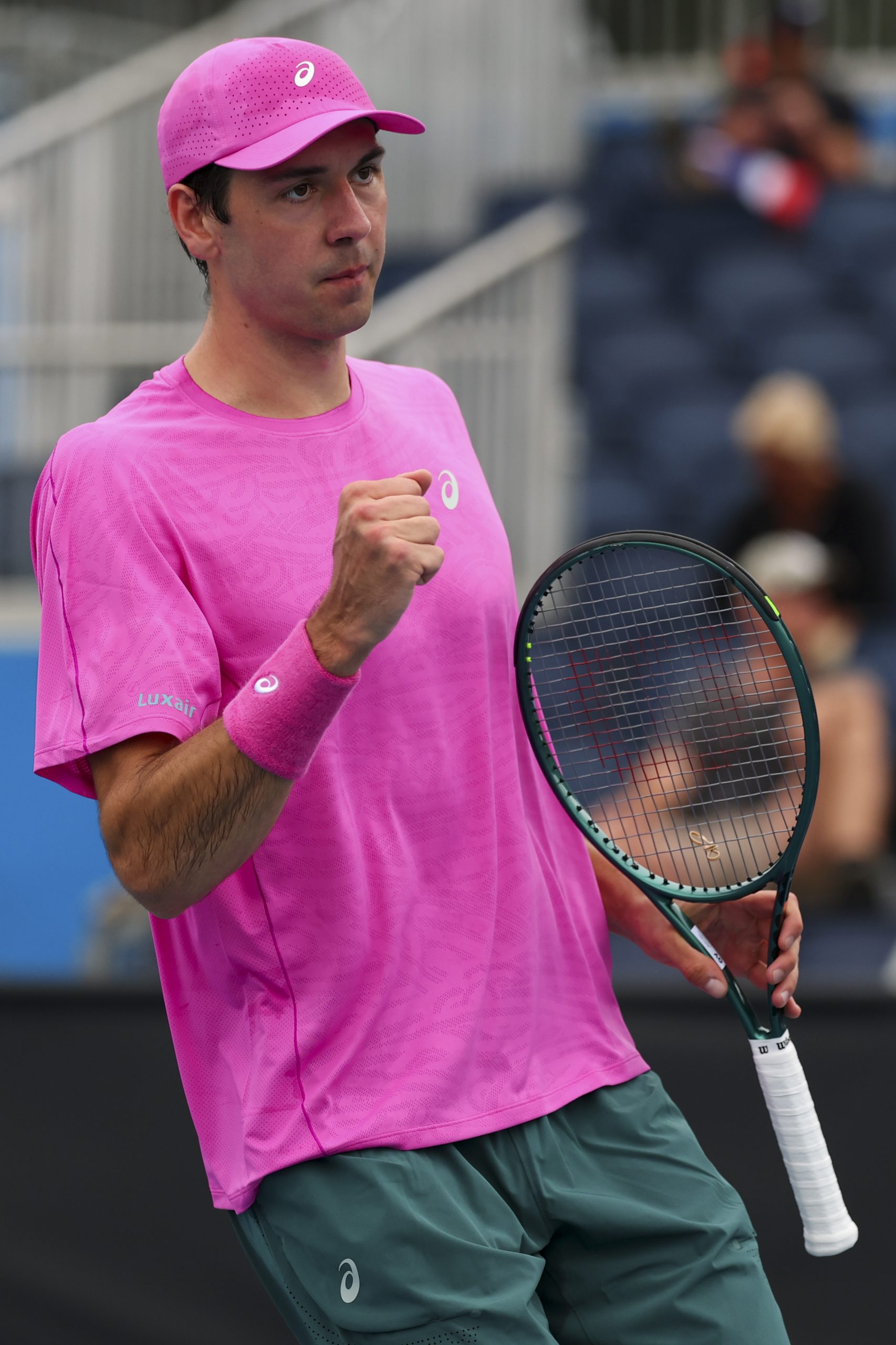
Luxembourg tennis player Chris Rodesch is ranked 137th in the world by the ATP as of 2 March 2026, his highest ranking to date. The 24-year-old also recently won his second Challenger title in Oeiras in January, achievements that matter, of course, but which ultimately may count less than the journey to get there.
For Rodesch, tennis is a sport in which learning early to surround oneself with the right people, to invest, to organise, and to make decisions may be just as important as the game itself. It is also a sport where progress depends on a material reality that he believes is still widely underestimated.
Inevitably, he is asked whether a milestone like the title in Oeiras is a true game-changer. Rodesch expresses his pride, then immediately looks ahead. “I know this isn’t my final goal. I want to go even further.” The title gave him confidence early in the season, but an injury after the Davis Cup interrupted a momentum he felt was building. “I really had a good rhythm,” he says, one he would have liked to maintain. His focus remains clear: “I think it’s very important to stay focused, calm, and humble.”
A Sustained Ambition
His goal? “The top 100. It’s the holy grail for a tennis player,” he says without hesitation. The statement clearly defines his ambitions, but it doesn’t fully capture what drives him. Rodesch also speaks of reaching his maximum potential, that precise point where a player knows they have pushed themselves as far as they can go. “Whether my best level takes me to 120th or 50th in the world, the essential thing will be to have fully exploited my potential.” This mindset aligns perfectly with his worldview. The ranking matters, of course, but the real battle is fought elsewhere: in consistency, attitude, and how he approaches each day of work.
For Rodesch, mental strength is built through a concrete framework of routine, discipline, relationships, and attention to what preserves balance. “I’m very happy to be surrounded by good people. It’s very important to maintain genuine connections. Social media, especially for athletes, can be very toxic, so you have to know how to step back to protect your mental health. Having a good daily routine, good habits, and staying positive, it all counts. With the mental game, it’s all the little details you do every day.”
Building a Support Network
The tennis Rodesch describes is far from a solitary duel with the court. Around him are Anders Johansson in Luxembourg, Peter Karlsson, Gilles Muller, two travelling coaches, a physical trainer, a physiotherapist, and an American agency handling contracts and sponsors. This team isn’t just an addition to his career, it’s an integral part of it. They support not only his level of play but also the logistics, schedule, and physical and economic endurance that Rodesch knows inside out.
The terms he uses to describe this role are far from trivial. “I always call the player an ‘independent contractor’ in English. I see myself more as an entrepreneur.” At 24, Rodesch talks about his profession as both a sport and an organisation to manage. As a shrewd strategist, he must choose the right people, surround himself with them, move forward together, and make decisions. “By becoming more mature, by realising I can’t do it all alone,” he says of this awareness. He recalls tournaments played alone, then the moment when that was no longer enough. “As the level rose, I understood that I needed help,” he says.
This progression through his support network adds another layer to his profile. Rodesch frames his development within a broader context of work, relationships, and patient construction. He speaks of discussions, sometimes involving adjustments, and the importance of having “good people around you” and people “with real human values.” His tennis is built on this closeness. “I sincerely believe that with this support, I can achieve my goals 100%.”
The Cost of High Performance
Finances enter the conversation with striking clarity. Rodesch describes tennis as a sport that is “so international, so competitive,” and for which the scale of resources required to nurture talent is still largely underestimated. He doesn’t shy away from discussing figures. “Between the ages of 12 and 18, you need at least €250,000,” he says.
He also cites Dominic Thiem, who recently mentioned “at least one million euros” for a young player. Rodesch immediately qualifies this estimate, noting that costs vary by country, coach fees, and available support. The core point remains: a young career is built with time, resources, and support, all of which come at a very high cost long before any returns are seen.
This economic reality doesn’t prevent him from speaking gratefully about Luxembourg. He mentions the federation, the ESTESS Academy, the COSL, and the sports lycée. “The Luxembourg system, it’s a good system,” he says. This framework has been important in his trajectory, but it also fuels broader reflection on how to leverage these resources. Rodesch points to sports that are “financially lucrative,” like tennis, basketball, or football, which he believes deserve more intention and vision.
Rodesch describes a high level where players like Carlos Alcaraz or Novak Djokovic still work on infinitesimal gains of 0.1%. He places his own progression at a different stage: “I have 95% of my potential, and I’m searching for the last 5%.” That final margin requires “increasingly competent” people, more experience, more presence, and more time. The world’s best can afford the best coaches. Players in the top 200 also now travel more often with multiple staff members. The tennis he describes is one of extreme precision, where details are honed collectively, and every additional detail comes at a cost.
Luxembourg as a Springboard
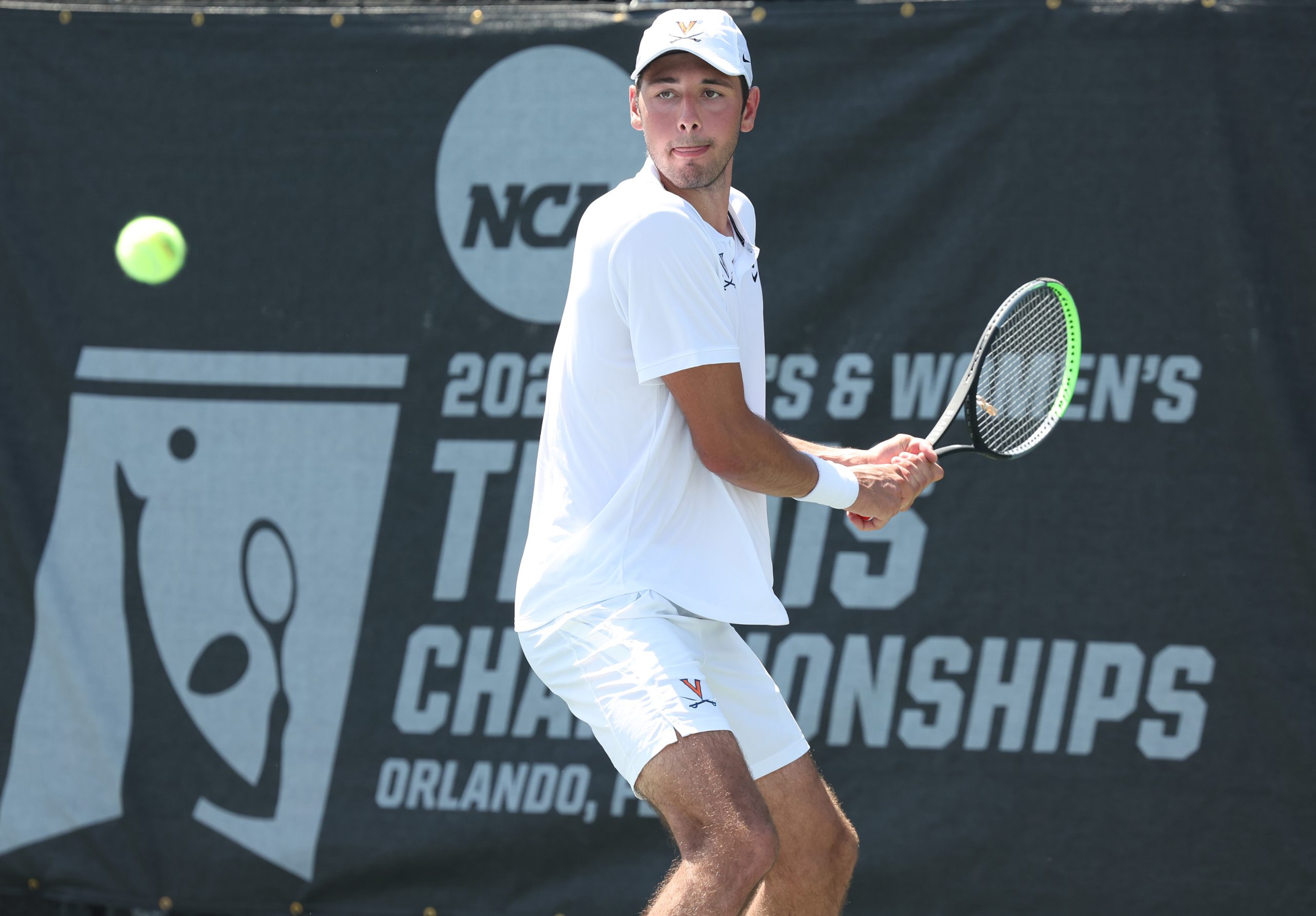
In his journey, his time in America stands out as a decisive formative experience, far beyond just tennis, a place where sport, studies, and professional development advanced together. The University of Virginia played a key role in his athletic progression, but also in broadening his perspective. “It was really important for me to get out of Luxembourg, to see another world, a world that’s maybe a bit bigger.” Rodesch speaks of excellent training, the people he met there, and classmates now working on Wall Street, in private equity, at Bain, or Goldman Sachs. He links this to a way of growing, of developing “one percent every day,” both on and off the court.
American college tennis holds an important place in this narrative. He sees it as a system that has become highly credible, offering both a solid academic education and access to coaches, physical trainers, physiotherapists, and now additional income through Name, Image and Likeness deals. Some players, he notes, can earn “$200,000 a year” on top of their scholarships.
It is from this experience that he now views Luxembourg. Once again, his perspective is practical. He speaks of a country that is economically and politically stable, safe, well-located, with real advantages for young people. “But I think we need to dream bigger.” When he discusses the possibility of a larger tournament in Luxembourg, Rodesch immediately ties it to resources: “It would be fantastic to invest in having a bigger tournament in Luxembourg.” For him, the issue is about financial means, but above all about young players and “Luxembourgish hope.”
We end by asking if he’s already thinking about life after tennis. The degree he earned in the US leaves him with several options, including an MBA at Darden, where he has already been accepted. Tennis, in another role, also remains in the back of his mind. “I have a few ideas, and I definitely want to challenge myself further after tennis.” And then, tomorrow is still far away.
Read more articles:
Selling Without Exiting: How LuxNetwork’s Founder Bet On European Scale
Luxembourg’s Competitiveness Strategy: Beyond Cost And Taxation
From The Ring To Luxury: Stéphane Tihal’s Journey To Building A Luxury Fragrance Brand
